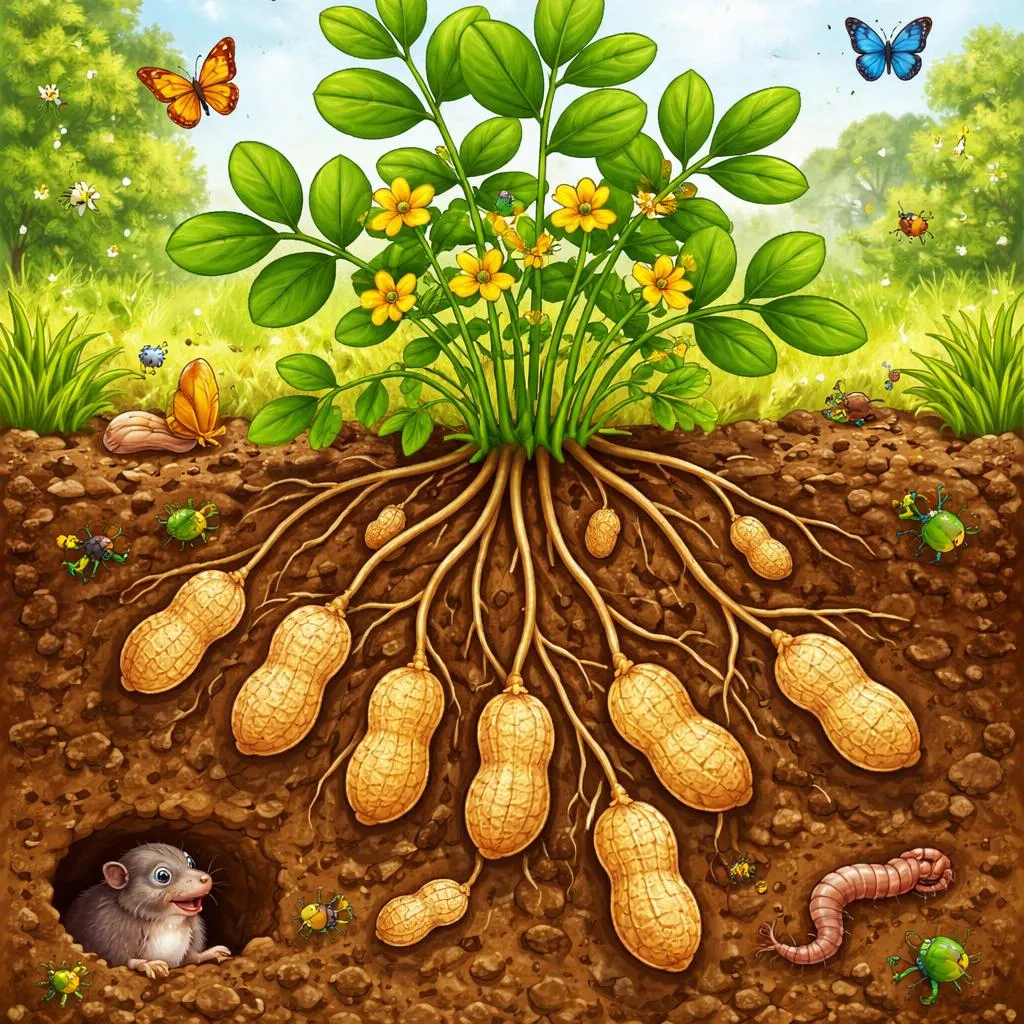

Have you ever eaten a crunchy, salty peanut or a smooth, creamy spoonful of peanut butter? Did you know that the peanuts we eat don’t grow on a tree or hang from a vine? They grow in a very special and surprising way! The plant is a small, leafy bush with pretty yellow flowers. But after the flower is pollinated, it does something amazing—it sends a stalk down into the soil to bury its growing fruit! Let’s dig into the incredible story of the Peanut plant.
Let’s Learn the Word! – Open the Treasure Box of Language
Formal Name and Pronunciation
This clever plant is called the Peanut. Its scientific name is Arachis hypogaea. You can say it like this: /ˈpiː.nʌt/ (PEE-nut). The “Pea” is like the vegetable, and “nut” is, well, a nut! Pea-nut. Say it: Peanut. It’s a fun, simple word.
The Etymology Tale
The name is a bit of a trick! It’s called a “peanut” because the seed looks and tastes a bit like a nut, but the plant is actually a legume, related to peas and beans! The “pea” part hints at its true family. The scientific name Arachis comes from Greek, and hypogaea means “under the earth,” which perfectly describes its secret growth.
Nicknames and Friendly Aliases
Peanuts have many playful names. In the southern United States, they are often called Goobers or Goober Peas. Because they grow underground, they are called Groundnuts or Earthnuts. In some places, they are called Monkey Nuts. The famous spread is, of course, Peanut Butter.
Building Your Word Web: Core Parts
Let’s learn the words for a Peanut’s sneaky body. The Plant is a low, bushy annual. The Leaf is made of four small leaflets (it’s compound). The Flower is a small, delicate, yellow bloom. The Peg is the most special part—it’s the stalk that grows from the flower down into the soil. The Pod is the wrinkled shell that develops underground. Inside are the Seeds—the peanuts we eat! The Root has nodules that host helpful bacteria.
Action and State Words
Peanut plants are masters of hide-and-seek. The flower blooms above ground. After pollination, a peg forms and bends down. The peg burrows or digs into the soil. The peanut develops and matures underground. Farmers dig up or harvest the whole plant. A peanut plant is low-growing, geocarpic (fruit grows underground), nutritious, and warm-loving.
Ecosystem Friends Vocabulary
The peanut field is a quiet place of partnership. Bees and other insects visit the flowers. The most important friends are underground—the Rhizobia bacteria in the root nodules. They grab nitrogen from the air and feed the plant, which in turn enriches the soil. Small animals might eat leftover peanuts after harvest, but the main ecological work is soil improvement.
Cultural Imprint in Language
Peanuts are a symbol of humble sustenance, innovation, and fun. A common saying is, “Even the smallest peanut can make a big difference,” meaning that anyone, no matter how small, can be important. The famous scientist George Washington Carver found over 300 uses for the peanut! There’s a fun song: “Peanut, peanut butter… and jelly!” Peanuts are linked to baseball games, circuses, and everyday snacks.
Ready for Discovery
We know its tricky, ground-hiding name. Are you ready to be a soil detective and uncover the underground secret of this plant? Let’s explore the hidden life of the Peanut plant.
Discover the Plant’s Secrets! – A Nature Detective’s Notebook
The Plant Passport
The peanut belongs to the legume family, Fabaceae. Its genus is Arachis. It is a low, spreading annual plant, usually about 1 to 2 feet tall. The leaves are bright green and made of four leaflets. The flowers are yellow and look like small sweet pea flowers. The fruit is a hard, wrinkled pod that grows underground, containing 1 to 4 seeds. It needs a long, warm growing season with plenty of sunshine and prefers sandy, well-drained soil.
Survival Smarts
The peanut’s superpower is geocarpy—making its fruit underground. After the flower is pollinated, the base of the ovary grows a long stalk called a peg. This peg is positively geotropic, meaning it grows toward gravity, down into the soil. Once underground, the tip of the peg swells and forms the peanut pod. This brilliant trick protects the developing seeds from dry air, predators, and even frost. Like other legumes, it also fixes nitrogen in the soil with its root nodules.
Its Role and Gifts
Peanuts are fantastic soil enrichers, preparing the land for other crops. Their most famous gift is, of course, the peanut. It is a powerhouse of protein, healthy fats, and vitamins. We eat them roasted, as butter, in candy, and as oil. The leftover plant material (hay) is excellent animal feed. Peanuts are a major global crop, providing food and oil for millions.
Human History and Cultural Symbol
Peanuts were first domesticated in South America over 7,000 years ago. Spanish and Portuguese explorers took them to Africa and Asia. They became a crucial crop in the southern United States. The work of George Washington Carver in the early 1900s saved southern farms by promoting peanuts as a soil-restoring crop, leading to hundreds of new uses. Today, they symbolize agricultural science, resilience, and simple, hearty food.
Fun “Wow!” Facts
Get ready for a butter fact! It takes about 540 peanuts to make one 12-ounce jar of peanut butter! And here’s a space fact: Peanuts were chosen as a high-energy, non-perishable snack for astronauts on early space missions. They are truly an out-of-this-world food!
From Flower to Underground Treasure
The story of the Peanut plant is one of clever growth. Would you like to grow your own hidden treasure? You can grow peanuts in a sunny garden or a large pot! Let’s see how.
Let’s Grow It Together! – A Little Guardian’s Action Guide
Good for Home Growing?
Yes, if you have a long, hot summer! Peanuts need 4-5 months of warm, frost-free weather. You can grow them in a large, deep pot or a sunny garden bed with very loose, sandy soil. They are a fun and surprising plant to grow, and harvesting is like a treasure hunt!
Little Gardener’s Toolkit
You will need raw, uncooked peanuts still in their shells (from a garden store or a health food store—do NOT use roasted or salted ones!). Get a very wide, deep pot or find a sunny garden spot. Use loose, sandy potting mix. Have a watering can, some compost, and a sunny spot ready.
Step-by-Step Growing Guide
Planting Your Underground Treasure
Plant peanuts in late spring, after all danger of frost has passed and the soil is very warm. Shell the peanuts, keeping the red papery skin on the seed. Plant the seeds 1-2 inches deep and about 8 inches apart. If in a pot, plant 3-4 seeds in a large, wide container. Water well. They need heat to sprout.
Care Calendar
Keep the soil moist but not soggy until the plants sprout. Once growing, water regularly, but let the soil dry a bit between waterings. They need full sun. When you see yellow flowers appear, mound up some loose soil or compost around the base of the plant. This “hilling” makes it easier for the pegs to bury themselves.
Watch and Be Friends
Watch for the first broad leaves. Look for the pretty yellow flowers. The magic starts after the flowers fade—look closely for the green “pegs” growing from the flower stems and bending down toward the soil. Watch them disappear into the ground! The plant will keep growing and flowering. In late summer, the plant’s leaves will start to turn yellow—this is a sign the peanuts are maturing underground.
Problem Diagnosis
If leaves turn yellow early, it might be overwatering or a nitrogen deficiency (even though they fix nitrogen, they need a little at the start). If you see holes in leaves, look for caterpillars; pick them off. The most common problem is not enough heat or a growing season that is too short.
Your Rewards and Gifts
Your gift is the thrill of the harvest. You are learning about one of nature’s most unique growing methods, patience, and the joy of unearthing your own food. Caring for peanuts teaches observation, responsibility, and a deep appreciation for the clever designs in nature. You become a grower of surprises.
Creative Fun
Start a Peanut Pioneer Journal. Draw the plant, the flower, and the peg. Write about the day you saw the first peg bend toward the soil. When you harvest, draw the peanuts fresh from the ground. Make a simple bird feeder by threading unsalted peanuts in the shell onto a string. Research George Washington Carver and make a poster about his peanut discoveries. With an adult, make homemade peanut butter in a food processor. Build a simple diorama showing the peanut plant above and below the soil.
Growing a Buried Treasure
By planting peanuts, you are not just growing a snack. You are growing a lesson in botany and history, a sense of wonder, and a tasty reward for your patience. You are a cultivator of curiosity.
Conclusion and Forever Curiosity
What a surprising, burrowing, and delicious journey! You started to learn about the Peanut plant, you discovered its secrets as the ground-burying, nitrogen-fixing legume, and you learned how to grow your own patch of this clever crop. You now know the Peanut plant is not a nut tree; it is a soil scientist, a master of geocarpy, a nutritional powerhouse, and a symbol of agricultural ingenuity. Remember, its true treasure is hidden, waiting to be discovered. Your curiosity is like a peanut peg—it seeks knowledge beneath the surface. Keep digging for answers, planting seeds of all kinds, and savoring the wonders of the natural world. Your adventure to learn about the Peanut plant shows us that sometimes the best treasures are hidden right under our feet.