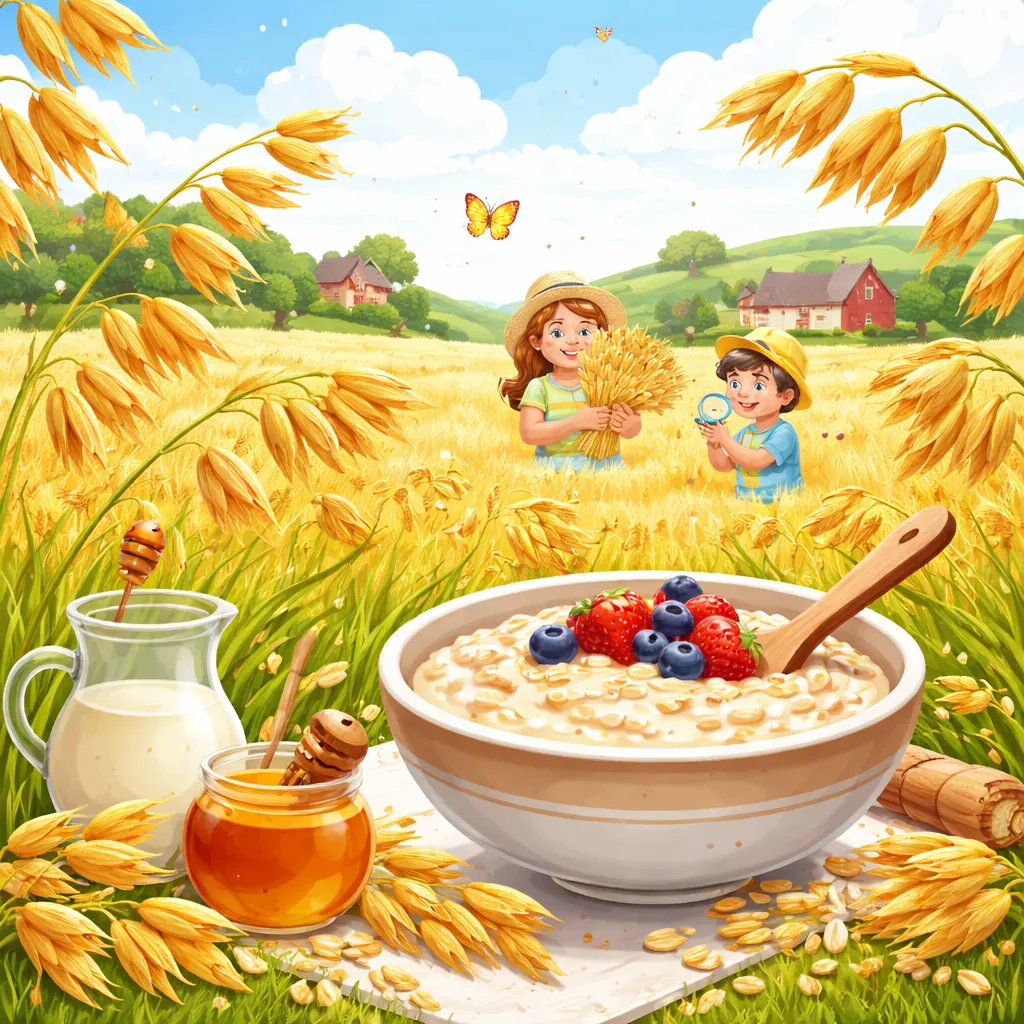

Do you know what makes a warm, cozy bowl of oatmeal for breakfast? Those soft, creamy flakes come from the seeds of a beautiful, swaying grass. Picture a cool, breezy field. The plants are tall and slender, with graceful stems that bow and dance in the wind. At the top of each stem, they hold loose, airy clusters of seeds that look like little hanging ornaments. This plant loves cooler weather and gives us a super-healthy and hearty food. Let’s take a walk in a crisp, green field to learn about the Oat plant.
Let’s Learn the Word! – Open the Treasure Box of Language
Formal Name and Pronunciation This dancing grain is called Oat. Its scientific name is Avena sativa. You can say it like this: /oʊt/ (oht). It rhymes with “boat” and “note.” Oat. Say it: Oat. It’s a short, round, friendly-sounding word.
The Etymology Tale The word “Oat” comes from the Old English word “āte.” This word is very old and is related to words in other languages, like the Dutch “haver” and the German “Hafer.” The name has been used for this important grain for over a thousand years. It’s a simple, ancient name for a simple, ancient food.
Nicknames and Friendly Aliases Oats have names that tell us how we eat them. The seeds are called Oat Groats. Rolled flat, they are Rolled Oats or Old-Fashioned Oats. Cut into pieces, they are Steel-Cut Oats. Because they are so good for you, they are sometimes called a Heart-Healthy Grain. The plant itself is sometimes called Common Oat or Cultivated Oat.
Building Your Word Web: Core Parts Let’s learn the words for an Oat plant’s graceful body. The Culm is the tall, slender, hollow stem. The Panicle is the beautiful, loose, branching flower head where the seeds grow; it looks like a delicate, hanging mobile. A single Grain is the oat seed, wrapped in a tough husk. The Floret is a tiny individual flower on the panicle. The Leaf is long, narrow, and flat. The Husk or Hull is the inedible, papery shell around the grain. A Field of oats is an oatfield.
Action and State Words Oat plants are gentle dancers. They sway, nod, and rustle in the breeze. They grow quickly in cool, moist weather. Farmers harvest the golden panicles. The grains are rolled, cut, or ground into flour. Oats provide lasting energy. An oat plant is graceful, cool-season, nutritious, and hardy.
Ecosystem Friends Vocabulary An oat field is a seasonal home for wildlife. Small birds like sparrows and finches feast on the seeds. Mice and voles find shelter and food among the stems. Bees and other insects visit the flowers. The plants help hold the soil in place. After harvest, the leftover straw provides cover for the ground and food for soil creatures.
Cultural Imprint in Language Oats are linked to strength, perseverance, and simple goodness. A famous quote often attributed to Samuel Johnson is, “Oats: a grain which in England is generally given to horses, but in Scotland supports the people.” This was a funny way of talking about different food traditions! The poet William Wordsworth wrote of the “sweetest poet” of the fields, and the sight of waving grain like oats surely inspired such thoughts. In stories, oats represent humble, honest nourishment.
Ready for Discovery We know its hearty, wholesome name. Are you ready to discover how this waving grass gives us energy for our day? Let’s explore the life of the Oat plant.
Discover the Plant’s Secrets! – A Nature Detective’s Notebook
The Plant Passport Oats belong to the grass family, Poaceae. Their genus is Avena. The oat plant is an annual grass, usually growing 2 to 4 feet tall. The stems are smooth and hollow. The leaves are long and slender. The flower head is an open, branching panicle that nods gracefully. Each tiny flower can produce a grain enclosed in a tough, hairy husk. Oats grow best in cool, moist climates like those found in Northern Europe and North America. They are planted in spring and harvested in late summer.
Survival Smarts Oats are tough cookies for cool weather! They can germinate and grow in cooler soil than many other grains, like wheat. This lets farmers plant them early. They also grow quickly, which helps them beat the summer heat. The way the seeds hang in loose panicles helps them dry evenly in the wind and sun after they ripen. Oats are also good at growing in poorer soils where other crops might struggle, making them a reliable friend to farmers.
Its Role and Gifts In the field, oats prevent soil erosion with their network of roots. They are often planted as a “cover crop” or “nurse crop” to protect the soil. Their most famous gift is as food. Oat grains are packed with fiber, especially a special kind called beta-glucan, which is very good for heart health. We eat them as oatmeal, granola, and in baked goods. Oats are also a superb food for horses and other livestock, giving them energy and shiny coats.
Human History and Cultural Symbol Oats were one of the last major grains to be domesticated, around 3,000 years ago in Europe. They likely started as a weed in wheat and barley fields! People saw they grew well in cool, wet conditions and started to cultivate them. They became a staple in Scotland, Ireland, and Scandinavia. Oats powered armies and workers throughout history with their slow-burning energy. They symbolize resilience, health, and the ability to thrive in challenging conditions.
Fun “Wow!” Facts Get ready for a husky fact! The oat grain we harvest is covered in a tough, inedible husk. This husk is not tightly attached like on wheat. In the old days, people would spread oats on a stone floor and beat them with a flail to knock the grains loose—this was called threshing! And here’s a health fact: the soluble fiber in oats can help lower cholesterol, which is why oatmeal is called a “heart-smart” breakfast.
From Cool Field to Your Container The Oat plant’s story is one of cool-weather strength. Would you like to grow your own patch of waving grain? You can grow oats in a pot or a garden bed! Let’s see how.
Let’s Grow It Together! – A Little Guardian’s Action Guide
Good for Home Growing? Absolutely! Oats are one of the easiest grains to grow at home. They don’t need a lot of space or perfect soil. You can grow a nice patch in a large, wide pot or a small sunny garden bed. You won’t get enough to fill your cereal box for the year, but you will get to see the beautiful panicles and harvest a handful of your own grains. It’s a perfect first grain-growing project.
Little Gardener’s Toolkit You will need a packet of oat seeds (often called “oat groats” for planting from a garden store). Get a wide, shallow pot or find a sunny garden spot. Use regular potting soil or garden soil. Have a watering can and a sunny spot ready. That’s it!
Step-by-Step Growing Guide
Planting Your Graceful Grass Oats love cool weather. Plant them in early spring as soon as you can work the soil, or in early fall. Scatter the seeds evenly over the soil in your pot or bed. Cover them lightly with about half an inch to an inch of soil. Gently pat the soil down. Water the area well so the soil is moist.
Care Calendar Keep the soil moist until the seeds sprout, which takes about a week. Oats are not very thirsty once established, but water them if the weather is dry. They love full sun but can handle a little shade. You don’t need to fertilize much; they are not picky eaters. Just watch them grow tall and green!
Watch and Be Friends Watch for the grass-like green shoots. They will grow into graceful clumps. The most wonderful part is when the panicles emerge. They start green and then wave gracefully on their stems. Watch them change from green to a golden-tan color as they ripen. Gently touch a panicle to feel the seeds inside. Listen to the lovely rustling sound they make in the wind.
Problem Diagnosis If the plants look yellow and stunted, the soil might be too poor; you can add a little compost. Birds might try to eat the seeds as they ripen; you can cover the panicles with a lightweight mesh bag or net. The most common “problem” is they grow so easily you might have more than you expected!
Your Rewards and Gifts Your gift is growing your own breakfast from seed! You are learning about the life cycle of a grain, from a tiny seed to a waving panicle to a bowl of oatmeal. Caring for oats teaches simplicity, patience, and a direct connection to the food that gives you energy. You become a grower of wholesome power.
Creative Fun Start a Breakfast Gardener’s Journal. Draw the stages of your oat plant. When the panicles are golden, cut a few and dry them to use in autumn decorations. Try threshing your tiny harvest by rubbing the dry panicles between your hands over a bowl. You can even try rolling a few grains with a rolling pin (with adult help) to make your own instant oats! Write a recipe for “Magic Morning Porridge” using your homegrown oats. Draw a picture of a horse enjoying a snack of oat straw.
Growing Wholesome Energy By planting oats, you are not just growing grass. You are growing a lesson in nutrition, a touch of the countryside, and the satisfaction of tending a useful and beautiful plant. You are a cultivator of health and simplicity.
Conclusion and Forever Curiosity What a graceful, nourishing journey! You started by learning the word “Oat,” you discovered its secrets as the cool-weather, dancing grain of the fields, and you learned how to grow your own patch of this healthy grass. You now know the Oat plant is not just for porridge; it is a symbol of resilience, a package of slow-burning energy, a friend to the soil, and a quiet hero of cool climates. Remember, its power is in its gentle strength and wholesome gift. Your curiosity helps you appreciate the simple, powerful plants that fuel our days. Keep exploring where your food comes from, planting seeds of knowledge, and tasting the goodness of the earth. Your adventure to learn about the Oat plant shows us that great energy and health can come from the most graceful and humble of grasses.