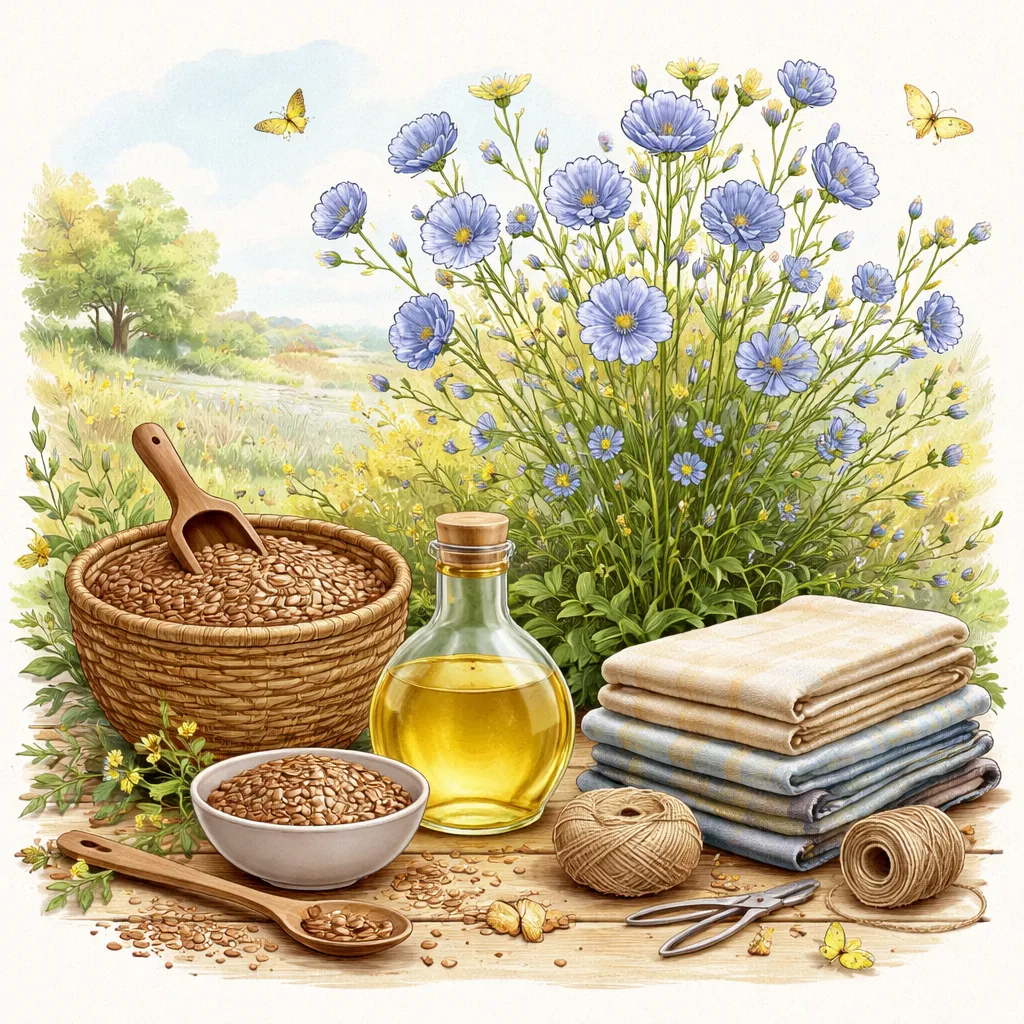

Have you ever worn a cool, smooth linen shirt in the summer? Or have you seen tiny, shiny brown seeds on top of a salad or in a breakfast cereal? Believe it or not, they both come from the same amazing plant! This plant is tall and slender, with delicate blue flowers that wave in the breeze. Its stems are incredibly strong, and people have been using them for thousands of years to make cloth, ropes, and paper. Let’s unravel the story of the wonderful and useful Flax plant.
Let’s Learn the Word! – Open the Treasure Box of Language
Formal Name and Pronunciation
This versatile plant is called Flax. Its scientific name is Linum usitatissimum. You can say it like this: /flæks/ (flaks). It rhymes with “tracks” and “sax.” Flax. Say it: Flax. It’s a short, strong-sounding word.
The Etymology Tale
The word “Flax” is very old. It comes from the Old English word “fleax.” This word is related to an older word that meant “to plait” or “to weave,” which is exactly what people do with its fibers! Its scientific name Linum is the Latin word for flax, and usitatissimum means “most useful.” Its name tells us it is a plant made for weaving and using.
Nicknames and Friendly Aliases
Flax is known by names that describe its gifts. When grown for its strong stems, it is called Fiber Flax or Textile Flax. When grown for its seeds, it is called Seed Flax or Linseed. The cloth made from it is Linen. Because of its beautiful flower, it is sometimes called the Blue Flower Crop. The seeds are often called Flaxseeds.
Building Your Word Web: Core Parts
Let’s learn the words for a Flax plant’s body. The Stem is tall, straight, and slender, filled with strong fibers. The Fiber is the long, tough thread inside the stem. The Flower is a delicate, five-petaled bloom, usually sky blue. The Seed Capsule is a small, round pod that holds the seeds. A single Seed is the small, flat, shiny flaxseed. The Root is a thin taproot. A Field of blooming flax is a flax field.
Action and State Words
Flax plants are elegant and useful. They grow straight and tall. They wave gracefully in the wind. The stems are harvested and retted (soaked) to loosen the fibers. The fibers are spun into linen thread. The seeds are pressed to make oil. A flax plant is tall, slender, fibrous, and annual.
Ecosystem Friends Vocabulary
A flax field is a gentle habitat. Bees and other pollinators visit the pretty blue flowers. Butterflies may also stop by. The flowers provide nectar. After harvest, the leftover plant parts break down and feed the soil. It is a quiet, helpful member of the farm ecosystem.
Cultural Imprint in Language
Flax is woven into our history and sayings. An old proverb says, “You must sow before you can reap,” and flax farmers know this well. The process of turning rough stems into smooth linen is where we get the phrase “spinning a yarn,” which means telling a long story. In fairy tales like “Rumpelstiltskin,” spinning straw into gold is a magical version of spinning flax into linen. It represents patience, skill, and transformation.
Ready for Discovery
We know its useful, weaving name. Are you ready to be a field detective and discover how this plant makes both cloth and health food? Let’s explore the secrets of the Flax plant.
Discover the Plant’s Secrets! – A Nature Detective’s Notebook
The Plant Passport
Flax belongs to the Linaceae family. Its genus is Linum. It is an annual plant that grows 2 to 4 feet tall. The stem is thin, straight, and has few branches. The leaves are small, narrow, and green. The flowers are most commonly a beautiful sky blue, but can also be white. The fruit is a small, round capsule. The seeds inside are small, flat, and shiny. It grows in temperate climates and likes cool, moist weather to start.
Survival Smarts
Flax’s superpower is in its stem. The outer layer contains incredibly long, strong bast fibers. These fibers give the stem support to stand tall in the wind and rain. For the seed, its trick is nutrition. Each tiny seed is packed with oil and has a hard coat to protect it. The plant grows quickly, going from seed to harvest in about 100 days. This lets it complete its life cycle in one short, cool season.
Its Role and Gifts
Flax is a gift of two treasures. First, the stem fibers are processed to make linen—a strong, cool, and absorbent fabric for clothing, sheets, and canvases for painting. The fibers are also used in rope and paper. Second, the seeds are nutritional powerhouses, full of healthy omega-3 fats and fiber. They are eaten whole, ground, or pressed to make linseed oil for wood finishing and in paints.
Human History and Cultural Symbol
Flax is one of the oldest cultivated plants. Ancient Egyptians wrapped mummies in linen made from flax. People have grown it for over 10,000 years! It was so important that laws were made about it. Before cotton became common, most people’s clothes and sheets were made from linen. The flax plant represents ancient technology, sustainable living, and the patient work of turning a plant into something beautiful and useful.
Fun “Wow!” Facts
Get ready for a strength fact! Linen fabric from flax is two to three times stronger than cotton! And here’s a seed fact: Flaxseeds are one of the richest plant sources of omega-3 fatty acids, which are very good for your brain and heart. That’s why they’re called a “superfood”!
From Ancient Field to Your Garden
The story of the Flax plant is one of dual gifts. Would you like to grow your own patch of blue flowers and useful stems? You can grow flax in a garden bed or container! Let’s see how.
Let’s Grow It Together! – A Little Guardian’s Action Guide
Good for Home Growing?
Yes, absolutely! Flax is easy and quick to grow. It doesn’t need a lot of space. You can grow a beautiful patch of blue flowers in a sunny garden bed or even in a large, wide pot. You can grow it for the beautiful flowers, to see the seed pods, or even to try processing a little fiber. It’s a perfect garden project.
Little Gardener’s Toolkit
You will need a packet of flax seeds (look for “common flax” or Linum usitatissimum). Get a wide, shallow pot or a sunny garden spot. Use average, well-draining garden soil. Have a watering can and a sunny spot ready. That’s all!
Step-by-Step Growing Guide
Planting Your Sky-Blue Friend
Flax likes cool weather to start. Plant the seeds in early spring, as soon as the soil can be worked. Scatter the seeds thinly over the soil. Barely cover them with a sprinkle of soil—they need light to germinate! Gently pat the soil and water with a fine mist. Keep the soil moist.
Care Calendar
Keep the soil moist until the seedlings are a few inches tall. Once established, flax is quite drought-tolerant. Water it during long dry spells. It loves full sun. You don’t need to fertilize; too much food makes it grow leaves but fewer flowers and weaker stems. The plants will support each other as they grow in a patch.
Watch and Be Friends
Watch for the thin, delicate seedlings. They will grow straight up. In a few weeks, you will see buds, and then the stunning sky-blue flowers will open! They often bloom in the morning. Watch the flowers fade and the small, round seed pods form. Watch the pods turn from green to gold or brown. Gently shake a dry pod—you should hear the seeds rattle inside!
Problem Diagnosis
If plants are stunted and pale, the soil might be too poor; add a little compost. If they fall over, they might be planted too close together; thin them next time. They have very few pests. The most common issue is planting the seeds too deep. Remember, just a light sprinkle of soil on top!
Your Rewards and Gifts
Your gift is a field of blue in your own backyard. You are growing a plant that connects you to ancient history, art, and healthy eating. Caring for flax teaches patience, observation, and the wonder of a plant that gives us both beauty and utility. You become a grower of connections.
Creative Fun
Start a Flax Farmer’s Journal. Draw the growth stages. Press a beautiful blue flower. When the pods are dry, crush a few in a cloth to collect seeds for next year’s planting. Try the “rub and snap” test: take a dry stem and try to break it—the strong fibers will make it hard to snap cleanly! Research ancient Egyptian art and draw a picture of people harvesting flax. With an adult, add a spoonful of store-bought flaxseed to a muffin recipe. Weave a small piece of “cloth” on a cardboard loom with yarn, imagining it’s linen.
Growing a Piece of History
By planting flax, you are not just growing flowers. You are growing a living piece of human history, a lesson in sustainable resources, and a beautiful garden friend. You are a cultivator of heritage.
Conclusion and Forever Curiosity
What a graceful, strong, and dual-purpose journey! You started to learn about the Flax plant, you discovered its secrets as the sky-blue bearer of strong fiber and nutritious seeds, and you learned how to grow your own patch of this ancient crop. You now know the Flax plant is not just a pretty flower; it is a weaver’s ally, a nutritional treasure, a symbol of patient craftsmanship, and a quiet hero of agriculture. Remember, its strength is hidden inside its slender stem, and its nutrition is packed inside a tiny seed. Your curiosity helps you see the many hidden gifts in the plants around you. Keep exploring the stories behind everyday things, from your clothes to your food, and planting seeds of discovery. Your adventure to learn about the Flax plant shows us that true usefulness often comes in a beautiful, sky-blue package.