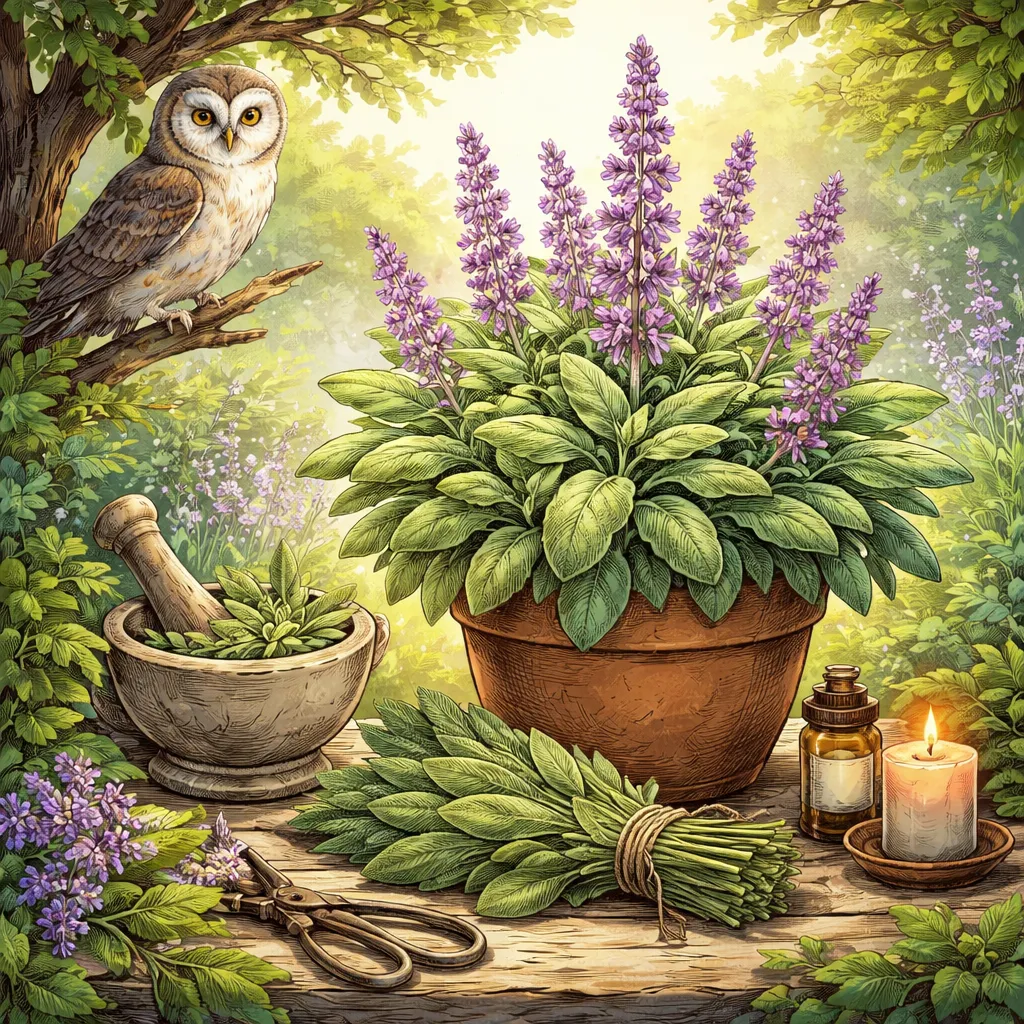

Have you ever helped in the kitchen and smelled a wonderful, warm, earthy scent coming from a pot of soup or stuffing? That rich, comforting smell might come from a soft, gray-green leaf. This plant is famous not just for its flavor, but for its long history. For thousands of years, people have linked it to wisdom, good health, and long life. It’s a hardy, bushy plant that feels soft and fuzzy to touch. Let’s discover the story of the wise and wonderful Sage plant.
Let’s Learn the Word! – Open the Treasure Box of Language
Formal Name and Pronunciation
This wise herb is called Sage. Its scientific name is Salvia officinalis. You can say it like this: /seɪdʒ/ (sayj). It sounds exactly like the word “page.” Sage. Say it: Sage. It’s a short, strong-sounding word.
The Etymology Tale
The word “Sage” is all about wisdom! It comes from the Latin word “salvere,” which means “to be saved” or “to be healthy.” The scientific name Salvia comes from the same word. The English word “sage” also means a very wise person. So, this plant’s name means “the healer” or “the wise one.” Its name tells of its history as a helpful, respected plant.
Nicknames and Friendly Aliases
Sage is known by grand and useful names. The common type is Garden Sage or Common Sage. Because of its color, it’s called Gray Sage. The pretty purple-leaf kind is Purple Sage. The variegated kind is Tricolor Sage. In some traditions, it is called the Sacred Herb or the Herb of Wisdom.
Building Your Word Web: Core Parts
Let’s learn the words for a Sage plant’s wise body. The Leaf is oval, textured, and covered in soft, tiny fuzz, making it look gray-green. The Stem is square and becomes woody. The Flower is lovely, shaped like a little tube, and is usually blue, purple, or pink. The Shrub is the whole rounded, bushy plant. A Sprig is a small stem with leaves. The Scent is the warm, earthy, slightly peppery smell.
Action and State Words
Sage plants are steady growers. They grow into a neat, rounded shrub. The leaves can be harvested by picking. They are dried for storage or used fresh in cooking. The plant is pruned to keep it bushy. A sage plant is aromatic, drought-tolerant, woody, and perennial.
Ecosystem Friends Vocabulary
A sage bush is a busy spot in the garden. Bees, butterflies, and hummingbirds are crazy for the beautiful, nectar-rich flowers. The strong scent of the leaves helps protect it from deer and rabbits that might want to eat it. It provides good shelter for small, helpful insects. It is a wonderful plant for a wildlife garden.
Cultural Imprint in Language
Sage is deeply linked to wisdom, health, and cleansing. A famous old Latin saying is, “Cur moriatur homo cui Salvia crescit in horto?” which means, “Why should a man die whilst sage grows in his garden?” This shows how much people believed in its health-giving power. The phrase “as wise as sage” connects the plant to knowledge. In some Native American traditions, burning sage (smudging) is a way to cleanse a space.
Ready for Discovery
We know its wise, healing name. Are you ready to be a garden historian and uncover the strengths of this ancient, fuzzy-leaved plant? Let’s explore the secrets of the Sage plant.
Discover the Plant’s Secrets! – A Nature Detective’s Notebook
The Plant Passport
Sage belongs to the mint family, Lamiaceae. Its genus is Salvia. It is an evergreen perennial shrub. The leaves are oblong, pebbly-textured, and covered with fine, woolly hairs that give them a soft, gray look. The stems are square. The flowers grow on tall spikes. It is native to the sunny, rocky hills of the Mediterranean region. It loves full sun and well-drained, even somewhat poor, soil.
Survival Smarts
Sage is built for dry, sunny places. Its soft, fuzzy leaves are covered in tiny hairs. These hairs help trap moisture near the leaf and protect it from the harsh, drying sun and wind. This makes it very drought-tolerant. The strong essential oils in the leaves defend it against insects and grazing animals. It’s a tough, resilient plant that thrives on neglect rather than too much care.
Its Role and Gifts
In the garden, sage adds beautiful structure and color. Its flowers are a vital food source for pollinators. Its most famous gift is its leaf. Sage is a classic culinary herb for rich dishes like stuffing, sausages, and sauces. It is also used in teas and has a long history in traditional medicine. The plant is both a kitchen staple and a beautiful, low-care garden shrub.
Human History and Cultural Symbol
Sage has been used since ancient Roman times. The Romans considered it a sacred herb and used it in ceremonies. In the Middle Ages, it was a key plant in monastery gardens for both cooking and healing. It was so valued that Chinese traders in the 17th century would trade three crates of Chinese tea for one crate of European sage leaves! It represents centuries of tradition, health, and respect for nature’s gifts.
Fun “Wow!” Facts
Get ready for a family fact! The Sage plant’s genus, Salvia, includes over 900 species! This family includes many beautiful garden flowers, not just cooking herbs. And here’s a kitchen fact: Sage is one of the main herbs in “poultry seasoning.” That’s why it smells so much like a holiday dinner!
From Ancient Garden to Your Patio
The story of the Sage plant is one of enduring usefulness. Would you like to grow your own bush of wisdom? You can grow sage easily in a pot or garden! Let’s see how.
Let’s Grow It Together! – A Little Guardian’s Action Guide
Good for Home Growing?
Absolutely! Sage is a perfect, easy-care plant. It grows happily in a pot on a sunny patio or in a garden bed. It doesn’t need much water, grows slowly into a nice shape, and you can harvest leaves for years. It’s a wonderful first shrub for a young gardener.
Little Gardener’s Toolkit
You will need a small sage plant from a garden center. Get a medium-sized pot with good drainage holes. Use well-draining, gritty potting soil. Have a watering can, a pair of scissors, and the sunniest spot you can find ready.
Step-by-Step Growing Guide
Planting Your Wise Shrub
Plant in spring or early fall. Place your little plant in the pot. Fill around it with soil, leaving a little space at the top. Water it well to help the roots settle. Place the pot in a spot that gets at least 6-8 hours of direct sun. Sage loves to soak up the sunshine.
Care Calendar
Do not overwater! This is the most important rule. Let the soil dry out completely between waterings. Sage loves to be on the dry side. It needs full sun. You only need to feed it with a little liquid fertilizer once in the spring. In late winter or early spring, you can give it a light trim to remove any dead stems and encourage new bushy growth.
Watch and Be Friends
Watch your plant grow steadily into a nice, round shape. Feel how soft and fuzzy the leaves are. Rub one and smell the wonderful, warm scent. Watch for the beautiful flower spikes in late spring or summer, and see the bees visit. You can snip a leaf or a small sprig anytime you need it for cooking. Your plant will be a steady, fragrant friend for many seasons.
Problem Diagnosis
If the leaves turn yellow, you are probably overwatering. Let the soil get very dry. If the plant gets tall, leggy, and floppy, it needs more direct sun. The most common problem is too much kindness with the watering can. Remember, it’s a tough plant from dry hillsides.
Your Rewards and Gifts
Your gift is a plant that teaches resilience and history. You are learning about Mediterranean plants, simple care, and the long relationship between people and herbs. Caring for sage teaches patience, observation, and the satisfaction of growing a plant that is both beautiful and useful. You become a grower of tradition.
Creative Fun
Start a Wisdom Keeper’s Journal. Draw your sage plant through the seasons. Press a fuzzy leaf. Make a simple dried sage bundle (with adult help) to smell. With an adult, use one fresh leaf in a simple brown butter sauce for pasta. Research a historical figure who might have used sage and draw a picture. Write a recipe for “Wisdom Tea” (a pretend tea that makes you wise). Create a “coat of arms” for your family and include a sage leaf on it for wisdom.
Growing a Living Library
By planting sage, you are not just growing an herb. You are growing a living piece of history, a lesson in self-sufficiency, and a sensory link to ancient kitchens and apothecaries. You are a cultivator of wisdom and well-being.
Conclusion and Forever Curiosity
What a wise, fragrant, and enduring journey! You started to learn about the Sage plant, you discovered its secrets as the fuzzy-leaved, drought-defying herb of wisdom, and you learned how to be a perfect guardian for this ancient friend. You now know the Sage plant is not just for cooking; it is a lesson in thriving with less, a banquet for pollinators, a library of historical uses, and a living symbol of health and knowledge. Remember, its power is in its steady growth and its warm, comforting scent. Your curiosity helps you connect to the deep roots of human history and the natural world. Keep exploring the stories of plants, asking about their traditional uses, and growing your own garden of knowledge and resilience. Your adventure to learn about the Sage plant shows us that true wisdom is often found in growing, caring for, and learning from the natural world around us.