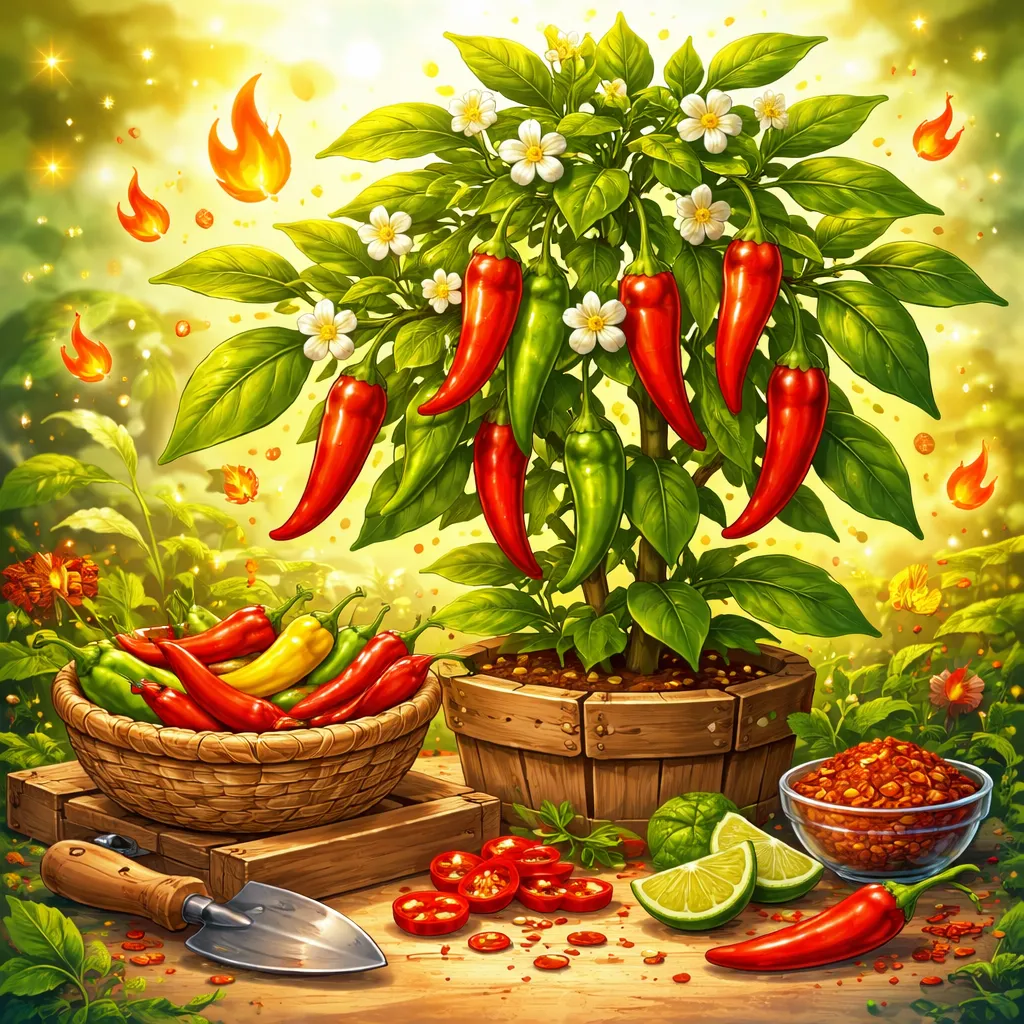

Have you ever taken a bite of something so spicy it made your tongue tingle and your mouth feel like it’s dancing? That exciting, fiery heat comes from a very special plant. In gardens and markets, you might see bright red, green, or yellow peppers hanging like little lanterns or pointing up like tiny rockets. These are chili peppers! They grow on small, leafy bushes and come in all shapes, sizes, and heat levels. Some are mild and sweet, while others are super-hot! Let’s dive into the sizzling, colorful world of the Chili Pepper plant.
Let’s Learn the Word! – Open the Treasure Box of Language
Formal Name and Pronunciation
This fiery friend is called a Chili Pepper. Its scientific name is Capsicum annuum. You can say it like this: /ˈtʃɪli ˈpɛp.ər/ (CHIL-ee PEP-er). The “Chili” sounds like “chilly” but means hot, and “Pepper” is like the spice. Chil-ee Pep-per. Say it: Chili Pepper. It’s a fun, zippy word.
The Etymology Tale
The word “Chili” comes from the Nahuatl word “chīlli,” used by the Aztecs in ancient Mexico. Spanish explorers took this word around the world. The word “Pepper” is a bit tricky! When Europeans first tasted chilies, they thought the heat was like black pepper, so they called it “pepper” too. Its name is a mix of ancient American and European words.
Nicknames and Friendly Aliases
Chili peppers have many colorful names. They are often called Chilies, Chillies, or Hot Peppers. Specific types have names like Jalapeño, Habanero, Cayenne, or Bell Pepper (which is mild!). Because of their heat, they are called Fire Peppers or Spice Peppers. The powder is Chili Powder.
Building Your Word Web: Core Parts
Let’s learn the words for a Chili Pepper plant’s fiery body. The Fruit is the pepper itself—it can be long, round, or wrinkled. The Stem is the woody part that holds the plant up. The Leaf is green, oval, and slightly shiny. The Flower is small, white, and star-shaped. The Seed is inside the fruit, flat and pale. The Capsaicin is the amazing chemical that makes the heat. A Plant full of peppers is a chili plant.
Action and State Words
Chili Pepper plants are sun-loving and productive. They grow in warm weather. The flowers bloom and are pollinated. The fruits ripen from green to red, yellow, or purple. Peppers are harvested by picking. They are chopped, dried, or cooked. A chili plant is spicy, colorful, warm-loving, and annual.
Ecosystem Friends Vocabulary
A chili pepper plant is a smart defender. The capsaicin in the fruit makes it taste very hot to mammals, so animals like squirrels won’t eat it. But birds don’t feel the heat! They eat the peppers and spread the seeds in their droppings. This helps the plant grow in new places. Bees visit the flowers to pollinate them.
Cultural Imprint in Language
Chili peppers are symbols of excitement, passion, and flavor. A common saying is, “Variety is the spice of life,” and chilies sure add variety! In some cultures, giving someone a chili means wishing them good luck. The phrase “hot-headed” means someone gets angry quickly, just like a chili is hot! They represent energy, courage, and adding zest to life.
Ready for Discovery
We know its spicy, global name. Are you ready to be a heat detective and discover the secret behind the fire in these peppers? Let’s explore the amazing world of the Chili Pepper plant.
Discover the Plant’s Secrets! – A Nature Detective’s Notebook
The Plant Passport
Chili Peppers belong to the nightshade family, Solanaceae. Their genus is Capsicum. They are perennial plants in hot climates but often grown as annuals. The plant is a small shrub with green, branching stems. The leaves are smooth and pointed. The flowers are usually white or purple. The fruit is a berry that can be sweet or extremely hot. They love hot, sunny weather and are grown all over the world.
Survival Smarts
The chili pepper’s superpower is capsaicin. This chemical makes the fruit taste very hot to mammals. Why? It protects the seeds from being chewed and destroyed by mammals. But birds don’t feel the burn! They eat the peppers, fly away, and poop out the seeds, helping the plant spread far and wide. The bright colors of ripe peppers, like red and yellow, are like flags to birds saying, “Eat me!”
Its Role and Gifts
In nature, chili peppers are part of the ecosystem, providing food for birds and insects. Their greatest gift to people is flavor and heat. Chilies are used fresh, dried, or powdered in cuisines worldwide, from Mexican salsas to Indian curries. The capsaicin is also used in medicines for pain relief. They are a key ingredient that makes food exciting and delicious.
Human History and Cultural Symbol
Chili peppers were first grown in the Americas over 6,000 years ago. Christopher Columbus brought them to Europe, and they spread rapidly along trade routes to Asia and Africa. Today, they are essential in many global cuisines. They symbolize cultural exchange, adventure, and the human love for bold flavors. In some places, chili eating contests show bravery!
Fun “Wow!” Facts
Get ready for a heat fact! The heat of chili peppers is measured on the Scoville Scale. A bell pepper has 0 units, while a Carolina Reaper can have over 2 million! And here’s a bird fact: Birds don’t have the receptors to feel capsaicin’s burn, so they can eat the hottest peppers without any problem. They’re nature’s perfect seed spreaders!
From Tiny Seed to Fiery Fruit
The story of the Chili Pepper plant is one of sun, heat, and patience. Would you like to grow your own colorful, spicy peppers? You can grow chili peppers in a pot or garden! Let’s see how.
Let’s Grow It Together! – A Little Guardian’s Action Guide
Good for Home Growing?
Yes, absolutely! Chili peppers are fantastic for home gardens. They can grow in a medium-sized pot on a sunny patio, balcony, or in a garden bed. They need lots of sun and warmth. Even kids can grow them with a little help. You’ll love watching the peppers change color as they ripen.
Little Gardener’s Toolkit
You will need chili pepper seeds from a garden store (choose a mild variety like ‘Jalapeño’ or ‘Poblano’ for starters). Get a medium to large pot with drainage holes. Use rich, well-draining potting soil. Have a watering can, liquid fertilizer, and the sunniest spot you can find ready.
Step-by-Step Growing Guide
Planting Your Spicy Friend
Start seeds indoors 8-10 weeks before the last frost. Plant seeds ¼ inch deep in small pots. Keep the soil warm (75-85°F) and moist. When seedlings have a few leaves, transplant them to bigger pots. After all danger of frost, place the pots outside in full sun. Chili peppers love heat!
Care Calendar
Keep the soil evenly moist but not soggy. Water when the top inch of soil is dry. They need at least 6-8 hours of direct sun daily. Feed them with a balanced liquid fertilizer every two weeks. As the plant grows, you may need a small stick to support it. Watch for flowers, then tiny green peppers!
Watch and Be Friends
Watch for the first green shoots. See the true leaves form. Look for the pretty white flowers. After pollination, tiny green peppers will appear. Watch them grow bigger and change color—from green to red, yellow, or orange. Measure the peppers as they grow. Gently touch the leaves and stems, but be careful not to touch your eyes after handling hot peppers!
Problem Diagnosis
If leaves turn yellow, it might need more nitrogen fertilizer. If flowers fall off without making fruit, it might need more sun or pollination—gently shake the plant to help. Aphids or whiteflies might visit; spray them off with water or use insecticidal soap. The most common problem is not enough sun or too much water.
Your Rewards and Gifts
Your gift is growing your own spice! You are learning about plant life cycles, pollination, and where our food comes from. Caring for chili peppers teaches patience, responsibility, and the thrill of harvesting something you grew yourself. You become a grower of bold flavors.
Creative Fun
Start a Heat Seeker’s Journal. Draw your plant’s growth stages. Press a flower or leaf. With an adult, taste a tiny piece of your homegrown pepper (if it’s mild!) and describe the heat. Create a “Scoville Scale” poster with drawings of different peppers. Research a country famous for chili cuisine and make a mini flag. Write a superhero story about “Capsaicin Man” who saves the day with spice. Make pepper prints by dipping a cut pepper in paint.
Growing a Pot of Fire
By planting chili peppers, you are not just growing a plant. You are growing a lesson in science and culture, a connection to global kitchens, and a beautiful, edible decoration. You are a cultivator of adventure.
Conclusion and Forever Curiosity
What a spicy, colorful, and exciting journey! You started to learn about the Chili Pepper plant, you discovered its secrets as the capsaicin-packed, bird-friendly fireball of the garden, and you learned how to nurture your own patch of heat. You now know the Chili Pepper plant is not just for hot sauce; it is a chemical genius, a global traveler, a teacher of ecology, and a symbol of daring flavor. Remember, its power is in the tiny seeds and the amazing capsaicin that protects them. Your curiosity helps you explore the science behind the spice and the stories in every bite. Keep planting seeds of wonder, tasting the world with care, and asking why things are the way they are. Your adventure to learn about the Chili Pepper plant shows us that sometimes, the smallest things can bring the biggest, most flavorful surprises.