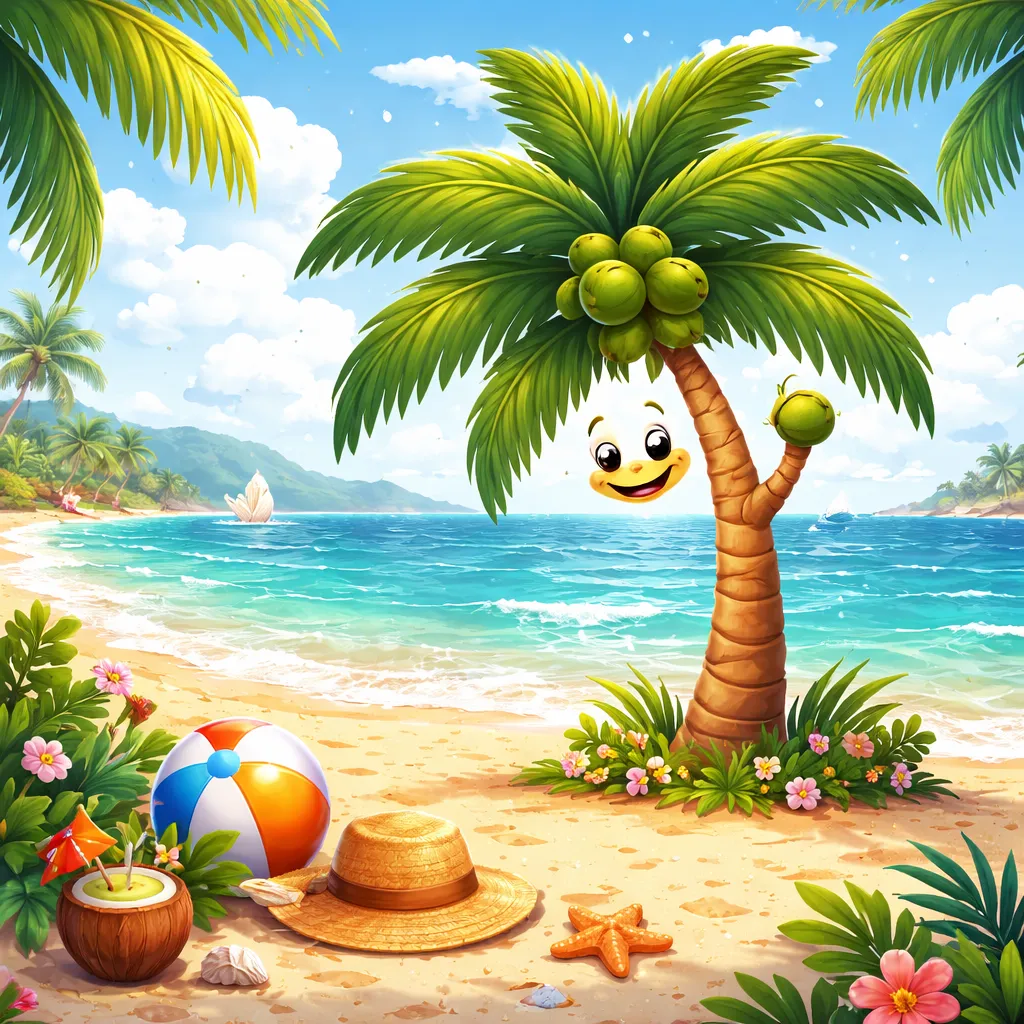

Have you ever seen a tall, skinny tree with a bunch of big, green leaves at the very top, waving slowly in the warm breeze? It stands on white sandy beaches or in hot, dry deserts, looking like a giant green feather dancer. This plant makes us think of vacations, tropical islands, and sunny days. But did you know there are thousands of kinds, and some don’t even look like trees? They give us delicious food, useful materials, and shady spots to rest. Let’s take a sunny adventure to learn about the amazing Palm plant.
Let’s Learn the Word! – Open the Treasure Box of Language
Formal Name and Pronunciation This sunny friend is called a Palm. You can say it like this: /pɑːm/ (pahm). It rhymes with “calm” and “balm.” Palm. Say it with a smile: Palm. It’s a short, soft word that makes you think of open hands and warm places.
The Etymology Tale The word “Palm” comes from a very old Latin word, “palma.” This word meant the palm of your hand. Why? Because the leaves of many palm plants look like the fingers and palm of a hand spreading out! Long ago, people saw the shape and named it after something familiar. So, the name is a picture of its leaf.
Nicknames and Friendly Aliases Palms have many fun names based on what they do or how they look. The Coconut Palm gives us coconuts. The Date Palm gives us sweet dates. Some are called Fan Palms because their leaves look like giant fans. Others are called Feather Palms because their leaves look like long, green feathers. Because they provide so much, they are often called the Tree of Life.
Building Your Word Web: Core Parts Let’s learn the words for a Palm’s body. The Trunk is often tall, straight, and rough, sometimes with diamond patterns or old leaf scars. A Frond is the special word for a palm leaf. It can be shaped like a fan or a feather. The Crown is the top of the tree where all the fronds grow out, like a green fountain. The Fruit can be a coconut, a date, or another nut or berry. The Roots are often thick and spread out wide to drink water. A Seed is what grows into a new palm, and it can be huge, like a coconut. The Bark is sometimes smooth, sometimes shaggy.
Action and State Words Palms are graceful movers. Their fronds sway and rustle in the wind. They provide shade and food. They grow tall towards the sun. Some palms bend in storms but don’t break. A palm plant is tall, graceful, sun-loving, and resilient.
Ecosystem Friends Vocabulary The palm is a busy hotel and restaurant in hot places. Parrots and other birds nest in its crown and eat its fruit. Monkeys swing from its fronds to grab snacks. Bats visit its flowers at night for nectar. Crabs, like the robber crab, climb palm trunks to get coconuts. Even insects and lizards find homes in its rough bark.
Cultural Imprint in Language In many cultures, the palm is a symbol of victory, peace, and life. A famous saying from the Bible is “The righteous shall flourish like a palm tree,” meaning good people grow strong and upright, just like a palm. In songs and stories, palms often mean a happy, peaceful place. We use the phrase “palm-fringed beach” to describe a perfect, tropical paradise.
Ready for Discovery We know its sunny name and waving shape. Are you ready to be a beach detective and uncover the secrets of this versatile plant? Let’s dive into the world of the Palm plant.
Discover the Plant’s Secrets! – A Nature Detective’s Notebook
The Plant Passport Palms belong to a big plant family called Arecaceae. They are not true trees like oaks or pines; they are more like giant grasses with woody stems. A palm often has one tall, unbranched trunk with a crown of large leaves at the top. The leaves are its fronds—either fan-shaped or feather-shaped. Its flowers are usually small and grow on big branches among the leaves. The fruits can be tiny or huge, like coconuts. Palms grow in warm places all over the world and can live for many decades, some even over a hundred years.
Survival Smarts Palms are experts at living in tough, sunny places. Many have deep taproots or wide, shallow roots to find water far underground or catch rain quickly. Their trunks are flexible, so they can bend in strong winds and hurricanes without snapping. Their fronds are often waxy to reduce water loss in the hot sun. Some, like the coconut palm, have seeds that float on water to travel to new beaches.
Its Role and Gifts The palm is a superstar provider. Its fruits and nuts give food to animals and people. Its fronds provide shade for smaller plants and animals underneath. As an environmental helper, palm roots hold sandy soil together, stopping erosion on beaches and in deserts. People use almost every part: fronds for thatching roofs and weaving baskets, trunks for building, sap for sugar, and fruits for eating and making oil.
Human History and Cultural Symbol For thousands of years, palms have been symbols of life and celebration. Ancient Egyptians used palm fronds in festivals. In Rome, palm leaves were symbols of victory for gladiators. Today, palm branches are used in Palm Sunday celebrations. Dates from date palms have been a staple food in the Middle East for millennia. Coconuts from coconut palms are crucial for island communities. The palm represents resilience, hospitality, and abundance across the globe.
Fun “Wow!” Facts Get ready for a blooming surprise! The Corypha or Talipot palm grows for 30 to 80 years, flowers one gigantic time with millions of flowers, and then dies. It’s called a monocarpic palm. And here’s a height fact: The Quindio wax palm in Colombia is the tallest palm in the world, growing as tall as a 20-story building!
From Tropical Beach to Your Home The Palm plant’s story is all about sunshine and survival. Would you like to bring a little bit of that tropical vibe to your space? You can grow your own palm friend. Let’s see how.
Let’s Grow It Together! – A Little Guardian’s Action Guide
Good for Home Growing? Yes, absolutely! Many smaller palm varieties are perfect for growing in pots indoors or on a sunny balcony. The Parlor Palm or Areca Palm are great indoor friends. If you have a warm garden, you might try a Windmill Palm or Sago Palm (which is not a true palm but looks like one). They need space for their roots and lots of bright, indirect light.
Little Gardener’s Toolkit You will need a small palm plant from a garden store or fresh palm seeds (like date pits). Get a pot with drainage holes that’s a bit bigger than the root ball. Use a well-draining potting mix, like one for cacti or palms. Have a watering can, a spray bottle for misting, and some liquid fertilizer for palms ready.
Step-by-Step Growing Guide
Planting Your Sunny Friend If you have a seed, like a date pit, clean it and soak it in water for a day. Plant it about an inch deep in the potting mix. If you have a small plant, place it in the pot and fill around it with soil. Water it well to help it settle. Place your pot in a warm spot with bright, indirect sunlight.
Care Calendar Palms like their soil to dry out a bit between waterings. Stick your finger in the soil; if the top inch is dry, it’s time to water. They love humidity, so misting the leaves with water makes them happy. Feed your palm with a weak liquid fertilizer made for palms once a month in spring and summer. In winter, let it rest and water less.
Watch and Be Friends Watch how the new fronds unfurl from the center, like a slow green gift. Wipe the leaves with a damp cloth to keep them shiny. Measure your palm’s height every few months. Notice if it leans towards the light and turn the pot a little so it grows straight. Talk to your palm about sunny beaches.
Problem Diagnosis If the leaf tips turn brown, the air might be too dry. Mist the leaves more often. If leaves turn yellow, you might be watering too much. Let the soil dry out more. If you see tiny webs or bugs, wipe the leaves with soapy water. Palms are tough but don’t like soggy feet.
Your Rewards and Gifts Your gift is a living piece of the tropics. You are growing a plant that teaches you about different climates and patient care. Caring for a palm teaches responsibility, observation, and the joy of bringing a green, waving friend into your home. You become a caretaker of a symbol of relaxation and strength.
Creative Fun Start a Palm Paradise Journal. Draw your plant and write about its growth. Make leaf rubbings of the fronds to see their beautiful patterns. Build a tiny beach scene in a box with your palm as the main tree. Learn about a country where palms are important and draw its flag with a palm on it. Write a short poem about a palm tree dancing in the wind.
Growing Your Own Sunshine By planting a palm, you are not just growing a plant. You are growing a reminder of sunny places, a lesson in resilience, and a green friend that purifies your air. You are a grower of happiness.
Conclusion and Forever Curiosity What a wonderful journey from the beach to your living room! You started by learning the word “Palm,” you discovered its secrets as a sunny, providing friend of hot climates, and you learned how to care for one in your own home. You now know the Palm plant is not just a decoration; it is a symbol of life and victory, a provider of food and shelter, a master of survival, and a bringer of tropical joy. Remember, its strength is in its ability to stand tall and provide, no matter where it grows. Your curiosity is like a palm root, always searching for more knowledge. Keep looking at the plants around you, wondering about their stories, and maybe even growing your own. Your adventure to learn about the Palm plant shows us that with a little care and sunshine, we can all grow something wonderful.