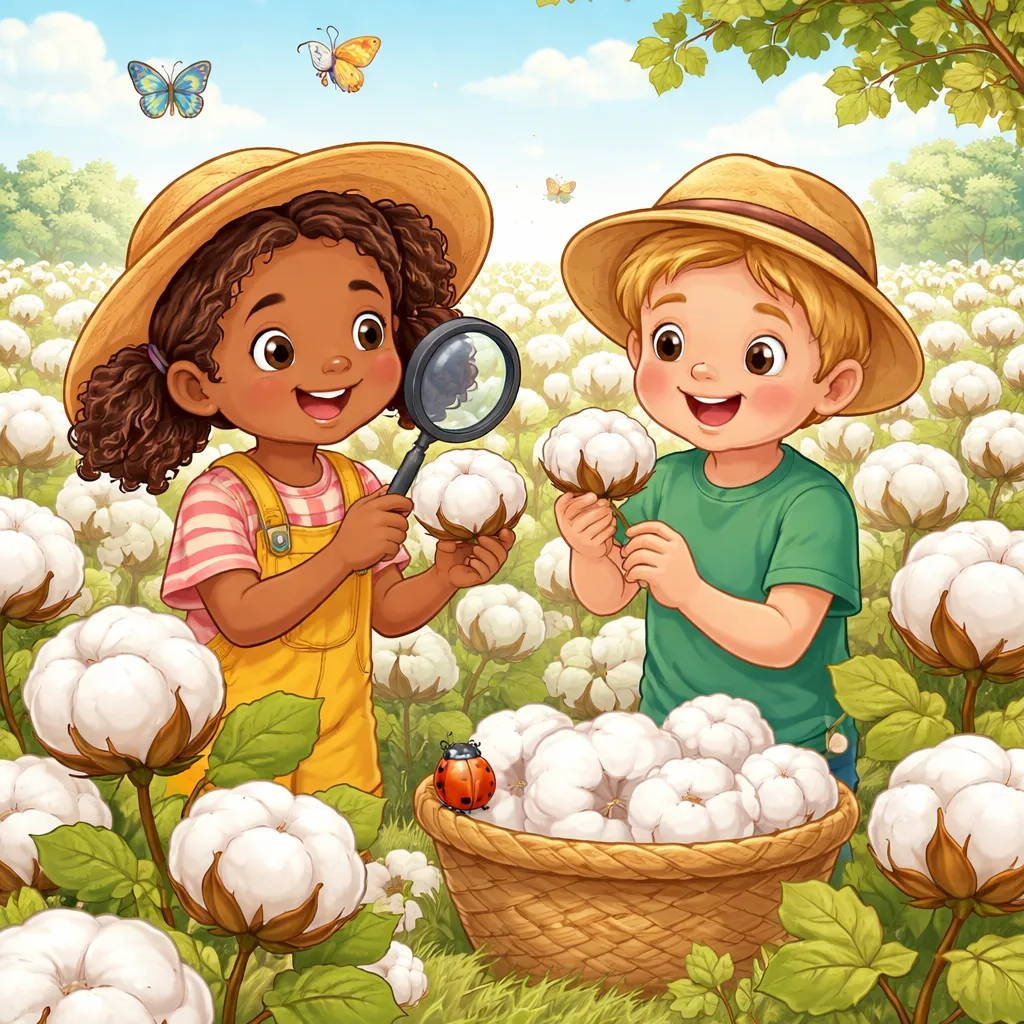

Look at the soft t-shirt you are wearing. Or feel the fluffy cotton ball in the bathroom. That soft, white, fluffy material comes from a very special plant! In late summer, you might see fields of green plants that look like they are covered in little white puffs of cloud. Each puff grows from a flower and wraps around the seeds to protect them. This plant gives us the most important natural fiber in the world. Let’s begin a soft and strong adventure to learn about the Cotton plant.
Let’s Learn the Word! – Open the Treasure Box of Language
Formal Name and Pronunciation
This fluffy friend is called Cotton. Its scientific name is Gossypium hirsutum. You can say it like this: /ˈkɒt.ən/ (COT-n). The “Cot” rhymes with “hot,” and the “ton” is quick. Cot-ton. Say it: Cotton. It’s a soft, comforting word.
The Etymology Tale
The word “Cotton” has traveled a long way. It comes from the Arabic word “qutn” or “qutun.” This word passed into Old Spanish as “coton” and then into Old French as “coton,” before arriving in English. Its name is a record of ancient trade routes that carried this precious fiber across continents.
Nicknames and Friendly Aliases
Cotton is known by grand and descriptive names. Because it was so valuable in the American South, it was called King Cotton. Its high quality makes it White Gold. The long, silky fibers of one type are called Pima Cotton or Egyptian Cotton. Because it is a plant, it is sometimes called the Cotton Shrub.
Building Your Word Web: Core Parts
Let’s learn the words for a Cotton plant’s wonderful body. The Boll is the most famous part—the round, fluffy fruit that holds the fibers and seeds. The Lint is the long, soft, white fibers we spin into thread. The Seed is inside the boll, and it is used for oil and animal feed. The Leaf is broad, green, and has three to five lobes. The Flower starts as a creamy yellow blossom that turns pink and then red. The Stem is woody and branching. A Field of cotton is a cotton field.
Action and State Words
Cotton plants are busy and seasonal. They grow tall in the hot sun. The flowers bloom and then fall off. The boll forms and swells. When ripe, the boll splits open and the fluffy lint puffs out. Farmers harvest the cotton. The fibers are ginned to separate them from the seeds. A cotton plant is thirsty, sun-loving, fibrous, and annual.
Ecosystem Friends Vocabulary
A cotton field is a habitat. Bees and other insects visit the flowers for nectar. Birds may eat the seeds or insects on the plant. Spiders might build webs between the stems. The plant provides food and shelter for many small creatures. It is a part of the farm’s living community.
Cultural Imprint in Language
Cotton is woven into our language and history. A famous historical saying in the American South was “Cotton is King,” showing its huge economic power. The phrase “to cotton on” means to begin to understand or like something, perhaps from the idea of fibers sticking together. Many work songs, called field hollers or spirituals, were sung by people working in cotton fields, telling stories of hardship and hope.
Ready for Discovery
We know its soft, strong, and historical name. Are you ready to be a field detective and unravel the secrets of this plant that clothes the world? Let’s explore the life of the Cotton plant.
Discover the Plant’s Secrets! – A Nature Detective’s Notebook
The Plant Passport
Cotton belongs to the Mallow family, Malvaceae, related to hibiscus and okra. Its genus is Gossypium. It is a shrubby plant that can grow 3 to 6 feet tall. The leaves are broad and lobed. The flower looks like a delicate hibiscus and changes color. The fruit is the boll, a hard capsule that splits open to reveal the fluffy fibers protecting the seeds. It needs a long, hot growing season and is mostly grown in warm regions around the world.
Survival Smarts
The cotton plant’s genius is in its boll. The fluffy lint fibers are attached to the seeds. In the wild, this fluff helps the seeds catch the wind and travel to new places to grow. The plant is also very drought-tolerant once established, with a deep taproot to find water. Its flowers change color to signal to pollinators—first yellow to say “nectar here,” then red to say “already pollinated, move along!”
Its Role and Gifts
Cotton is an environmental citizen. It provides habitat and food for insects and birds. Its greatest gift is the lint fiber. This natural fiber is spun into yarn to make fabrics for clothes, towels, and bedsheets. The seeds are crushed to make cottonseed oil for cooking and the leftover meal for animal feed. Almost every part of the plant is used, making it a very important crop.
Human History and Cultural Symbol
Cotton was independently domesticated in both the Old World and the New World thousands of years ago. It fueled the Industrial Revolution with the invention of the cotton gin. Its history is complex, including periods of great hardship for the people who cultivated it. Today, it remains the world’s most important natural fiber, representing both human ingenuity and the ongoing journey towards fair and sustainable farming.
Fun “Wow!” Facts
Get ready for a fiber fact! Each cotton boll can contain up to 500,000 individual fibers! And here’s a water fact: It takes about 713 gallons (2,700 liters) of water to grow the cotton for one single t-shirt. That’s why growing cotton sustainably is so important.
From Tiny Seed to Soft T-Shirt
The story of the Cotton plant is one of transformation. Would you like to grow your own fluffy bolls? You can grow a cotton plant in a sunny garden or a large pot! Let’s see how.
Let’s Grow It Together! – A Little Guardian’s Action Guide
Good for Home Growing?
Yes, as a fascinating educational plant! Cotton needs a long, hot summer (at least 5-6 months of frost-free weather). It can grow in a very large pot or a sunny garden bed. You won’t get enough for a t-shirt, but you will get to see the amazing life cycle and touch real homegrown cotton! Check your local rules, as growing cotton is restricted in some areas to control pests.
Little Gardener’s Toolkit
You will need cotton seeds from a garden supplier (they are often sold as “green cotton” or “ornamental cotton”). Get a very large, deep pot. Use rich, well-draining potting soil. Have a watering can, liquid fertilizer, and the sunniest spot you can find ready.
Step-by-Step Growing Guide
Planting Your Fluffy Friend
Plant cotton seeds in spring, well after the last frost, when the soil is very warm. Soak the seeds in water overnight to help them sprout. Plant them 1 inch deep and 4-6 inches apart. If in a pot, plant 2-3 seeds. Water well. They need heat to germinate, so a sunny windowsill or a warm greenhouse is perfect to start.
Care Calendar
Keep the soil moist but not soggy. Once the plants are a few inches tall, they become more drought-tolerant. Water deeply but less often. They need full, blazing sun. Feed them with a balanced liquid fertilizer every two weeks during the growing season. Watch them grow into bushy plants.
Watch and Be Friends
Watch for the first leaves. The plant will grow into a small shrub. Look for the beautiful, hibiscus-like flowers and watch them change color. After the flower falls, a small, green, oval boll will form. Watch the boll grow and slowly turn brown. The most exciting day is when the brown boll splits open, and you see the white fluff inside! Gently feel the fibers.
Problem Diagnosis
If leaves turn yellow, it might need more nitrogen fertilizer. Cotton can get aphids or spider mites; spray them off with water or use insecticidal soap. The most common problem is not enough heat or sun, which can stop the bolls from forming properly. Be patient, it needs a long season.
Your Rewards and Gifts
Your gift is touching the source of cloth. You are learning about botany, history, and sustainable choices. Caring for a cotton plant teaches patience, responsibility, and a deep connection to the everyday things we use. You become a grower of knowledge and appreciation.
Creative Fun
Start a Fiber Farmer’s Journal. Draw your plant each week. When a boll opens, carefully pick it and remove the seeds to feel the raw lint. Try twisting a few fibers between your fingers to make a short, weak thread—this is how spinning began! Make a collage of different fabrics from your home. Research how cotton is made into cloth and draw a comic strip of the process. Write a poem about the softness of a cotton shirt.
Growing a Connection
By planting cotton, you are not just growing a shrub. You are growing a living lesson in history, economics, and ecology. You are a cultivator of understanding.
Conclusion and Forever Curiosity
What a soft, strong, and thoughtful journey! You started to learn about the Cotton plant, you discovered its secrets as the fluffy, fiber-filled gift of the sun, and you learned how to nurture this historic plant. You now know the Cotton plant is not just a source of fabric; it is a lesson in plant biology, a chapter in human history, a gift of the seed and the soil, and a symbol of the clothes on our backs. Remember, its true value is in the long journey from a tiny seed to the shirt you wear. Your curiosity helps you see the stories woven into everything around you. Keep asking where things come from, making thoughtful choices, and planting seeds of awareness. Your adventure to learn about the Cotton plant shows us that the most ordinary things have extraordinary stories waiting to be unraveled.