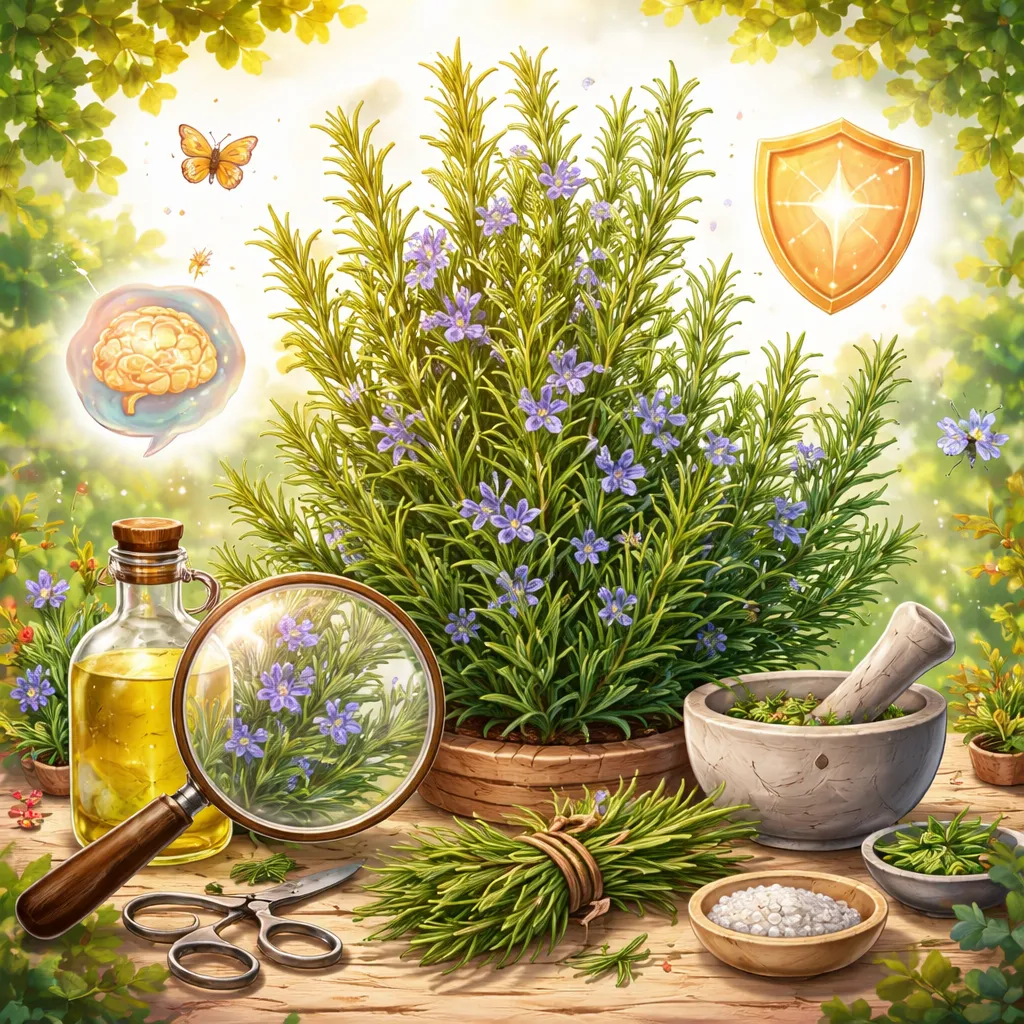

Have you ever smelled a wonderful scent that reminds you of a pine forest, fresh air, and a cozy kitchen all at once? This amazing smell comes from a tough, evergreen bush with little leaves that look like soft, green needles. In many stories, this plant is a symbol of good memory, friendship, and protection. People cook with it, decorate with it, and bees love its tiny flowers. Let’s explore the world of the sturdy and fragrant Rosemary plant.
Let’s Learn the Word! – Open the Treasure Box of Language
Formal Name and Pronunciation
This fragrant bush is called Rosemary. Its scientific name is Rosmarinus officinalis. You can say it like this: /ˈrəʊz.mer.i/ (ROZE-mair-ee). The “Rose” is like the flower, and “Mary” is a name. Rose-mary. Say it: Rosemary. It’s a beautiful, melodic name.
The Etymology Tale
The name “Rosemary” is poetic! It comes from the Latin words “ros” (dew) and “marinus” (of the sea). So, its name means “dew of the sea.” Why? Because in its Mediterranean home, it often grows by the sea, and its scent is as fresh as morning dew. Its name paints a picture of its salty, misty home.
Nicknames and Friendly Aliases
Rosemary is known by names from its home and use. It is often called the Herb of Remembrance. Because of its origin, it’s Dew of the Sea. The type used in cooking is Garden Rosemary or Culinary Rosemary. Because it’s an evergreen, it’s sometimes called the Christmas Herb.
Building Your Word Web: Core Parts
Let’s learn the words for a Rosemary plant’s tough body. The Leaf is a small, narrow “needle” that is dark green on top and silvery underneath. The Stem is woody and becomes hard like a small tree branch. The Flower is tiny, delicate, and usually a pale, pretty blue. The Scent is the strong, piney, fresh smell that comes from the leaves. The Shrub is the whole bushy plant. A Spray is a small branch with leaves.
Action and State Words
Rosemary plants are strong and steady. They grow slowly into a woody shrub. The leaves release their scent when you rub them. The plant tolerates hot sun and dry soil. You can prune it to keep its shape. The leaves are harvested for cooking. A rosemary plant is aromatic, drought-tolerant, woody, and perennial.
Ecosystem Friends Vocabulary
A rosemary bush is a favorite spot for pollinators. Bees absolutely love the tiny blue flowers and visit them for nectar. The strong smell of the leaves can help confuse pest insects, protecting nearby plants in the garden. In the wild, it provides shelter for small creatures. It is a helpful and popular garden friend.
Cultural Imprint in Language
Rosemary is wrapped in stories of memory and loyalty. A famous line from Shakespeare’s play Hamlet is, “There’s rosemary, that’s for remembrance.” People once carried it at weddings and funerals to remember love and those who had passed. An old saying is, “Where rosemary thrives, the woman rules the house,” which was a funny, old-fashioned compliment! It symbolizes loyalty, remembrance, and protection.
Ready for Discovery
We know its memorable, sea-dew name. Are you ready to be a garden detective and uncover the strengths of this tough, fragrant shrub? Let’s explore the secrets of the Rosemary plant.
Discover the Plant’s Secrets! – A Nature Detective’s Notebook
The Plant Passport
Rosemary belongs to the mint family, Lamiaceae. Its scientific name is Salvia rosmarinus (but many still use Rosmarinus). It is an evergreen perennial shrub. The leaves are like stiff, aromatic needles. The stems are woody and gnarled as the plant ages. The flowers are small, two-lipped, and usually a beautiful shade of blue. It is native to the dry, rocky hills near the Mediterranean Sea and loves lots of sun and well-drained soil.
Survival Smarts
Rosemary is a champion of dry places. Its thin, needle-like leaves have a waxy coating. This special design helps the plant lose very little water, even in the hot, baking sun and wind. This is called being drought-tolerant. The strong aromatic oils in the leaves protect it from being eaten by deer and many insects. It is a tough survivor that prefers to be a little bit thirsty rather than too wet.
Its Role and Gifts
In the garden, rosemary helps prevent soil erosion on slopes. Its flowers are a vital early and late source of food for bees. Its most famous gifts are its scent and flavor. The needle-like leaves are used to season roasted meats, potatoes, and bread. The essential oil is used in soaps, lotions, and perfumes. It is also grown as a beautiful, fragrant ornamental shrub in gardens.
Human History and Cultural Symbol
Rosemary has been used since ancient times. Egyptians placed it in tombs. Greeks and Romans associated it with memory and used it in ceremonies. In the Middle Ages, it was burned to clean the air and placed under pillows to ward off bad dreams. It was a symbol of fidelity and was carried by brides. Today, it remains a powerful symbol of remembrance, used on Anzac Day and Remembrance Day in some countries.
Fun “Wow!” Facts
Get ready for a wedding fact! In Europe long ago, rosemary was often woven into a bride’s bouquet or wreath as a sign of love and loyalty. And here’s a memory fact: Some studies suggest that just smelling the scent of rosemary might help people concentrate and remember things a little better! It’s like the plant lives up to its old stories.
From Sunny Hillside to Your Patio
The story of the Rosemary plant is one of strength and scent. Would you like to grow your own tough, fragrant bush? You can grow rosemary in a pot or garden very easily! Let’s see how.
Let’s Grow It Together! – A Little Guardian’s Action Guide
Good for Home Growing?
Yes, it’s wonderful! Rosemary is a perfect, low-care plant for a sunny spot. It grows well in a pot on a patio or in a garden bed. It doesn’t need much water or fuss. It grows slowly, so it won’t take over. You can have fresh rosemary for cooking all year round. It’s a great first woody herb for a gardener.
Little Gardener’s Toolkit
You will need a small rosemary plant from a garden center (it’s much easier than growing from seed). Get a medium to large pot with excellent drainage holes. Use gritty, well-draining potting soil (cactus mix works well). Have a watering can and the sunniest spot you can find ready.
Step-by-Step Growing Guide
Planting Your Tough Friend
You can plant rosemary in spring or early fall. Place your little plant in the center of the pot. Fill around it with the gritty soil. Water it well to settle the soil. Place the pot in a spot that gets at least 6-8 hours of direct, hot sun every day. It loves to bake in the sunshine.
Care Calendar
The golden rule is: do not overwater! Let the soil dry out completely between waterings. It is much happier being too dry than too wet. It loves full, hot sun. You only need to feed it with a little liquid fertilizer once or twice during the spring and summer. In winter, protect it from very hard frosts if you can.
Watch and Be Friends
Watch your plant grow slowly and steadily. Notice how the stems get woodier. Rub a needle between your fingers and smell the wonderful scent. Look for the tiny blue flowers—they are a sign your plant is very happy. You can snip a sprig anytime you need it for cooking. Your plant will be your fragrant friend for years.
Problem Diagnosis
If the lower leaves turn yellow or brown and drop, you are probably overwatering. Let it dry out! If the plant looks weak and spindly, it needs more sun. The most common problem is too much love in the form of water. Remember, it’s a tough plant from dry hillsides.
Your Rewards and Gifts
Your gift is a plant that teaches resilience. You are learning about Mediterranean plants, water conservation, and patience. Caring for rosemary teaches observation, gentle care, and the long-term joy of nurturing a plant that gives back fragrance and flavor for years. You become a grower of strength.
Creative Fun
Start a Remembrance Gardener’s Journal. Draw your rosemary plant through the seasons. Press a few needles and a flower. Make a simple scent bag by drying a few sprigs. With an adult, use a sprig to flavor roasted vegetables. Research the symbols on Anzac Day or Remembrance Day and draw a picture. Write a short story about a bee’s journey to a rosemary flower. Make a “memory” card for someone special and attach a tiny sprig.
Growing a Living Memory
By planting rosemary, you are not just growing an herb. You are growing a living piece of history, a lesson in adaptation, and a sensory reminder of nature’s toughness and beauty. You are a cultivator of tradition and strength.
Conclusion and Forever Curiosity
What a fragrant, strong, and memorable journey! You started to learn about the Rosemary plant, you discovered its secrets as the drought-tolerant, memory-filled herb of the seashore, and you learned how to be a perfect guardian for this undemanding friend. You now know the Rosemary plant is not just for cooking; it is a lesson in survival, a beacon for bees, a living symbol of history and remembrance, and a teacher of gentle, patient care. Remember, its power is in its quiet strength and its unforgettable scent. Your curiosity helps you connect stories, science, and the senses. Keep exploring the plants in your world, asking about their histories, and growing your own garden of knowledge and resilience. Your adventure to learn about the Rosemary plant shows us that the most enduring things are often tough, fragrant, and full of meaning.