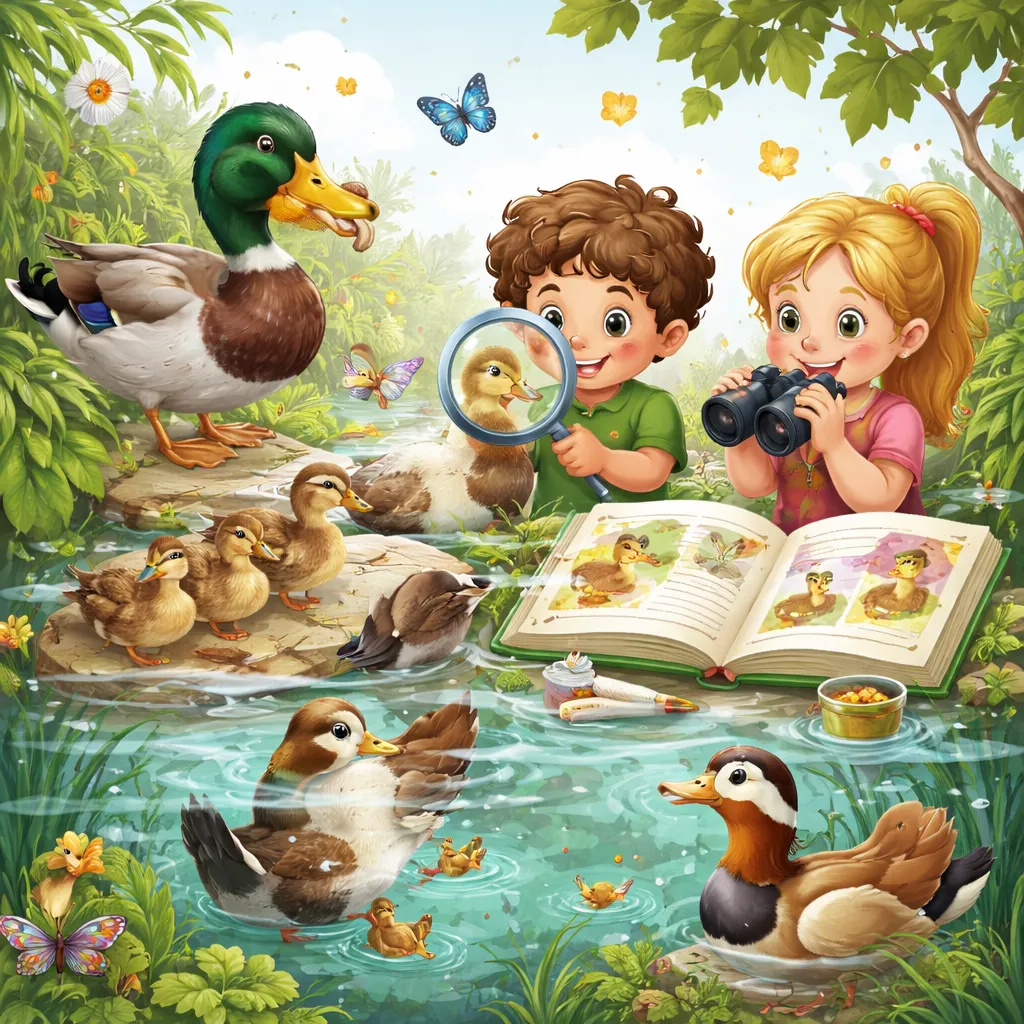

Have you ever visited a park with a pond and seen a duck swimming, waddling, or quacking happily? Ducks are friendly, common birds that live near water all over the world. They are fun to watch and are full of interesting secrets. Learning about ducks is a splashy adventure that takes us to ponds, lakes, and rivers. Let’s begin our journey of learning about duck life and habits.
English Language Learning
Vocabulary and Spelling Our water-loving friend is called a duck. The word "duck" is a noun. A noun names a person, place, or thing. So, a duck is a thing—a feathered, living bird. Spelling "duck" is short: D-U-C-K. The 'D' starts the word, the 'U' is in the middle, and it ends with 'C-K'. D-U-C-K spells duck.
Sound and Pronunciation Let’s say the word correctly. It sounds like this: /dʌk/. We can say it in one clear part. First, say "duh". It’s a soft sound. Then, add a "k" sound at the end. "Duh" + "k". Now, blend it together! Duck! Great! The word "duck" has just one beat, or one syllable. Clap your hands once: Duck! It’s a short, quick word.
Related Words Learning about ducks is more fun with new words! Here are some important ones. Baby: A baby duck is called a duckling. Body Part: A duck’s flat, wide mouth is called a bill. Its feet with skin between the toes are webbed feet. Sound: The sound a duck makes is a quack.
A Famous Saying There is a common phrase: "Like water off a duck’s back." This means that criticism or trouble does not bother someone. It comes from how water slides off a duck’s waterproof feathers. It reminds us to let negative things slide away and not upset us. Say the saying with me: "Like water off a duck’s back." It’s a way to talk about staying unbothered.
Now you know the word "duck"! Are you ready to waddle into some amazing facts? Let’s swim from words to wonderful knowledge!
Animal Knowledge
Who Are They? – Family and Group What kind of animal is a duck? Ducks are birds. They are warm-blooded, have feathers, and lay eggs. They are part of the waterfowl family, called Anatidae. Their close cousins are geese and swans. There are many types of ducks, like Mallards, Wood Ducks, and Pekin Ducks.
What Do They Look Like? – Amazing Bodies Ducks can be many sizes, from as small as your hand to as big as a cat. They usually have a wide, flat bill, a round body, and short legs. Their most famous features are their webbed feet and their waterproof feathers. Their webbed feet are like paddles, perfect for swimming. Their feathers are kept waterproof by oil from a gland near their tail. They spread this oil with their bill when they preen. This keeps them warm and dry in the water. Ducks have special adaptations. Their bills have tiny edges called lamellae that act like a sieve to filter food from the water. They have good eyesight and can see in color.
Where Do They Live and How? – Home and Habits Ducks live all over the world, except Antarctica. Their homes are near ponds, lakes, rivers, marshes, and sometimes by the sea. They need water to swim and find food. Ducks are omnivores. This means they eat both plants and animals. They eat water plants, seeds, insects, small fish, and worms. They "dabble" by tipping their tails up to reach food underwater. Ducks are very social and live in groups. A group on water is called a paddling or a raft. A group in flight is a flock. They are active during the day. They spend their time swimming, dabbling for food, preening, and resting.
A Duck’s Life Story – Growing Up A baby duck is called a duckling. Ducks are birds, so ducklings hatch from eggs. A mother duck, called a hen, usually lays 8 to 12 eggs in a nest hidden in grass or reeds. The mother duck is a caring parent. She keeps the eggs warm. When the ducklings hatch, they can walk and swim within a day. They follow their mother everywhere to learn where to find food and stay safe. Ducklings are born with soft, yellow or brown down feathers. They cannot fly. They stay with their mother for about two months, growing their adult feathers and learning to fly. Then, they are ready to be on their own.
How Do They "Talk"? – Communication Ducks talk with many sounds. The most famous is the quack, but they also whistle, grunt, and peep. Female Mallards have the loud quack. Males often make softer sounds. They use body language. A duck might bob its head or flap its wings to show it is happy or to get attention. They preen each other’s feathers as a friendly act. Their best senses are their eyesight and hearing. They can see well both in the air and underwater. Their ears are hidden under their feathers but are very good at hearing calls and danger.
Are They Okay? – Taking Care of Them Many duck species are common, but some are threatened or endangered. This is because of habitat loss and pollution. The main threats are people draining wetlands and marshes for building, pollution in the water, and sometimes being hunted. Plastic trash and fishing lines can also hurt them. You can be a duck friend! You can enjoy watching them from a distance. You can help keep ponds clean by not littering. If you feed ducks, give them healthy food like cracked corn or duck pellets, never bread, as bread is bad for their health. Support groups that protect wetlands.
Life Connections and Inspiration
How to Be With Them – Safety and Love Ducks are wild animals. They are usually gentle, but we must always respect them and their home. The rule is: Watch quietly and do not disturb. If you see ducks at a pond, watch from the bank. Never chase, grab, or try to pick up a duck or duckling. If you feed them, use the right food and only a little. Keep dogs on a leash so they don’t scare the ducks. We show our love by protecting the clean water and safe shores they need to live. We can be voices for healthy parks and ponds.
Super Qualities We Learn from Them Ducks teach us wonderful things. One super quality is adaptability and resilience. Ducks can live on water and land, in cities and wild places. They deal with rain and cold thanks to their waterproof feathers. They teach us to adapt to different situations and to let problems slide away, "like water off a duck’s back." Another quality is community and caring. Ducks often stay together in groups for safety. Mothers take excellent care of their ducklings. This reminds us of the importance of sticking together, caring for our family, and looking out for each other. Think about it: How can you adapt when your plans change, like a duck moving from water to land? How can you show you care for your family or friends, like a mother duck cares for her ducklings?
Take Action! – Your "Duck Pond" Project Let’s do a fun and caring activity! Your project is to create a model of a healthy duck habitat. Take a shallow tray or a large plate. Use blue paper or paint for the pond. Make the land around it with green paper, pebbles, and real grass or moss. Create a simple duck from clay or paper. Make a nest with some twigs and cotton balls for eggs. Draw and cut out some healthy duck food, like corn or water plants, to place around. This shows what a duck needs to be happy and safe.
Closing Learning about duck life is a delightful and wet adventure! We learned the word "duck" and how to say its one-syllable name. We discovered amazing facts about their webbed feet, waterproof feathers, and their life in a paddling. We know that ducks are adaptable, social birds who need clean water to thrive. You can use your new words to share stories about these quacking friends. You can use your knowledge to be a responsible pond visitor and a protector of wetlands. The animal world is full of adaptable and caring teachers. Always remember to respect wildlife from a safe distance, adapt to changes with a smile, and care for your community. Keep exploring with curiosity, let troubles slide away, and be a friend to the wild. Your thoughtful actions and caring spirit make you a true friend to the amazing duck.