
What Is This Animal?
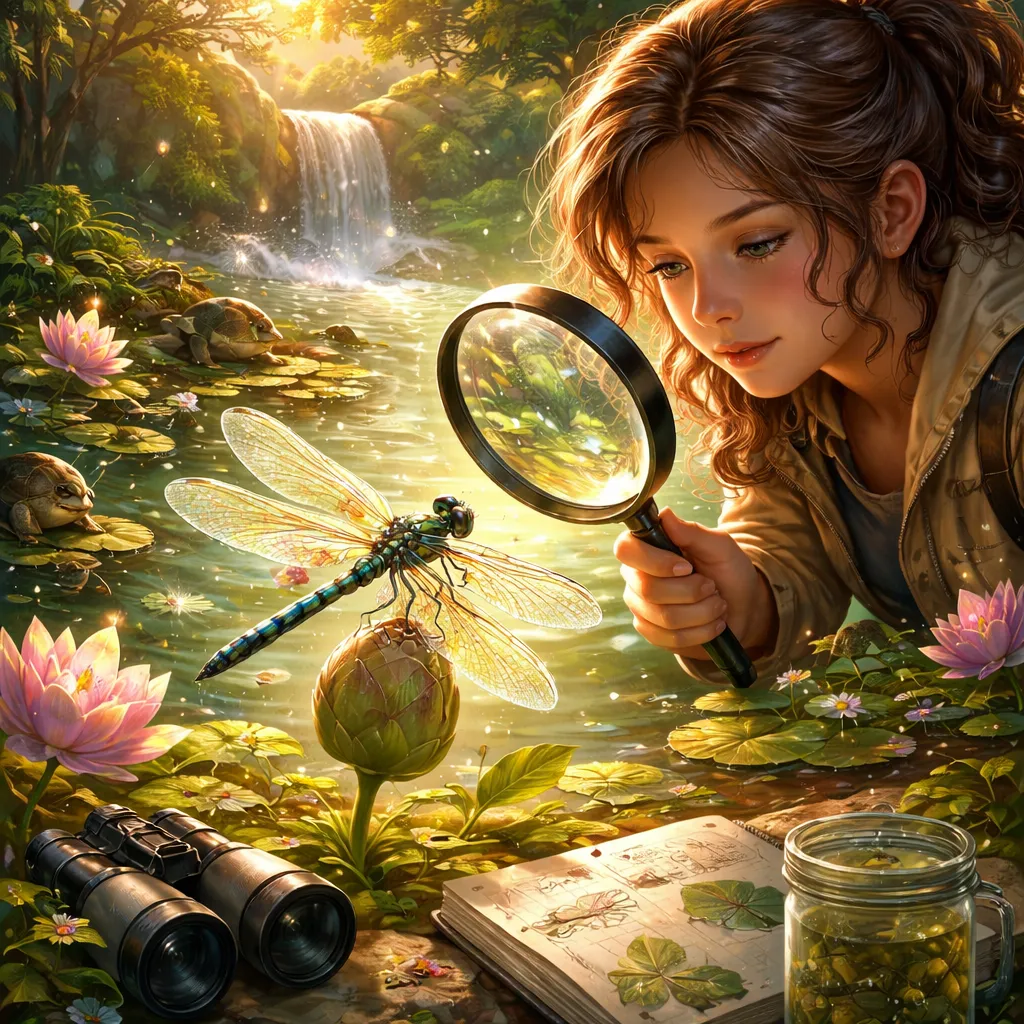
A dragonfly is an insect with long, slender body and two pairs of large wings. Its wings are clear and look like stained glass. They shimmer in the sunlight. Dragonflies have huge eyes that take up most of their head. They can see in almost every direction at once.
Dragonflies are strong fliers. They hover in one spot. They fly backward. They turn quickly in the air. No other insect flies with such skill. They catch their food while flying. Mosquitoes, flies, and small insects become their meal.
These insects live near water. You find them by ponds, lakes, and slow rivers. Their young live underwater. The adults spend most of their time in the air. Dragonflies have been on Earth for a very long time. Ancient dragonflies were much larger than the ones we see today.
For children, dragonflies look like tiny helicopters. Their bright colors and fast movements catch the eye. Watching a dragonfly dart across a pond feels magical. They bring a sense of wonder to any outdoor adventure.
English Learning About This Animal
Let us learn the English word dragonfly. We say it like this: /ˈdræɡənflaɪ/. The word has two parts. Dragon sounds like “drag-un.” Fly sounds like “flie.” Put them together: dragonfly. Say it three times. Dragonfly. Dragonfly. Dragonfly.
Now let us learn words about a dragonfly’s body. The eyes are large and compound. They contain thousands of tiny lenses. The thorax is the strong middle part where wings attach. The abdomen is the long, thin tail section. The wings are clear with dark veins. The legs are spiny and form a basket for catching prey.
There is a lovely Japanese proverb about dragonflies. It says, “The dragonfly changes its form but never loses its spirit.” This refers to the dragonfly’s transformation from water creature to flying insect. Another simple saying is, “A dragonfly brings the spirit of summer.” In many cultures, dragonflies symbolize joy, change, and lightness.
These English words help children describe this amazing insect. When they say compound eyes, they learn about a special kind of vision. When they say abdomen, they understand the long part of the body. Parents can practice these words while watching dragonflies near a pond. Point to the parts in pictures. Say the words together.
Animal Facts and Science Knowledge
Dragonflies belong to the insect order Odonata. This name comes from Greek. It means “toothed ones.” Dragonflies have strong jaws for catching prey. They are insects. They have six legs. They have two pairs of wings. Their wings move independently. This allows incredible flight control.
Dragonflies begin life in water. The female lays eggs in or near water. The young are called nymphs or naiads. They live underwater for months or even years. Nymphs breathe through gills. They hunt small fish, tadpoles, and other insects. They have a special lower lip that shoots out to grab prey.
When a nymph is ready, it climbs out of the water. It finds a plant stem or rock. Its skin splits open. The adult dragonfly pulls itself out. It expands its wings. It waits for its body to harden. Then it flies away. This transformation happens in a few hours.
Dragonflies have special abilities. They are among the fastest insects. Some fly up to thirty miles per hour. They catch prey in midair with ninety-five percent success. Their eyes have nearly thirty thousand lenses. They see colors humans cannot see. They detect movement from far away.
Dragonflies eat mosquitoes, flies, and small insects. A single dragonfly can eat hundreds of mosquitoes in one day. They are valuable helpers around ponds and gardens. Dragonflies do not sting or bite humans. They are harmless to people. They only chase food they want to eat.
How to Interact With This Animal Safely
Dragonflies are wild insects. They do not come close to people often. They are busy hunting. If you see a dragonfly, watch it from a distance. Notice how it flies. Watch it hover. Observe how it rests on a plant. Do not try to catch it.
If a dragonfly lands near your child, stay still. It may rest on a hand or shoulder. Dragonflies sometimes land on people near water. They are curious. They do not bite. Let it sit. Enjoy the moment. It will fly away when ready.
Teach children not to chase dragonflies with nets. Chasing stresses the insect. It can damage its delicate wings. If you want a closer look, use binoculars. Bring a magnifying glass to examine plants where dragonflies rest. This way, children observe without causing harm.
Never take a dragonfly home. Dragonflies need open space to fly. They need to hunt live prey. They cannot survive indoors. If your family finds a dragonfly indoors, open a window. Turn off lights. The dragonfly will fly toward the light and leave.
Teach children to protect dragonfly homes. Keep ponds and streams clean. Do not throw trash in water. Avoid using pesticides near water. These chemicals harm dragonfly nymphs. When we care for water, we care for dragonflies. This teaches children to be good stewards of nature.
What Can We Learn From This Animal
Dragonflies teach us to be adaptable. They live in water as young. They fly in the air as adults. They thrive in two worlds. Children learn that change is part of life. Moving to a new place, trying new activities, and meeting new people are all ways to adapt and grow.
Dragonflies teach us to focus. They hunt with great concentration. They track their prey with precision. Children learn that paying attention helps them succeed. Listening to a story, finishing a puzzle, or learning a new skill all require focus. Like the dragonfly, we can give our full attention to what matters.
Dragonflies teach us to move with purpose. They do not waste energy. Every flight has a reason. Children learn to use their energy wisely. Playing, learning, and resting all have their place. Being active and being still are both important.
Dragonflies teach us to see the bigger picture. Their eyes see almost everything around them. Children learn to notice more than just what is in front of them. Looking around, listening to others, and understanding different views make us more aware of the world.
Fun Learning Activities
Let us make learning about dragonfly fun. One activity is the dragonfly flight game. Ask your child to stand with arms out like wings. Fly around the room. Hover in place. Fly backward. Turn quickly. Say “dragonfly hovers” and “dragonfly turns fast.” This builds coordination and vocabulary.
Another activity is creating a dragonfly life cycle chart. Draw four circles. In the first, draw eggs in water. In the second, draw a nymph. In the third, draw the nymph climbing out. In the fourth, draw an adult dragonfly. Talk about each stage. Use words like “egg,” “nymph,” and “adult.”
Draw a dragonfly and label its parts. Draw the compound eyes, thorax, abdomen, wings, and legs. Write the words next to each part. Say them aloud. For younger children, draw the dragonfly first. Let them point to the parts as you say the words.
Create a story about a dragonfly’s first flight. Ask your child what the dragonfly sees from the air. Does it see the pond? Does it see flowers? Does it catch a mosquito? Write a few sentences together. Let your child draw pictures. Read the story aloud.
Visit a pond or stream together. Bring a sketchbook. Sit quietly near the water. Watch for dragonflies. Count how many you see. Notice their colors. Draw what you observe. This quiet activity builds patience and observation skills.
These simple activities bring learning to life. Children build English vocabulary while playing. They learn science through direct observation. They connect with nature in peaceful ways. Learning about dragonfly becomes a shared adventure. Each moment spent together strengthens language, curiosity, and a lasting appreciation for the delicate wonders that fly above the water.