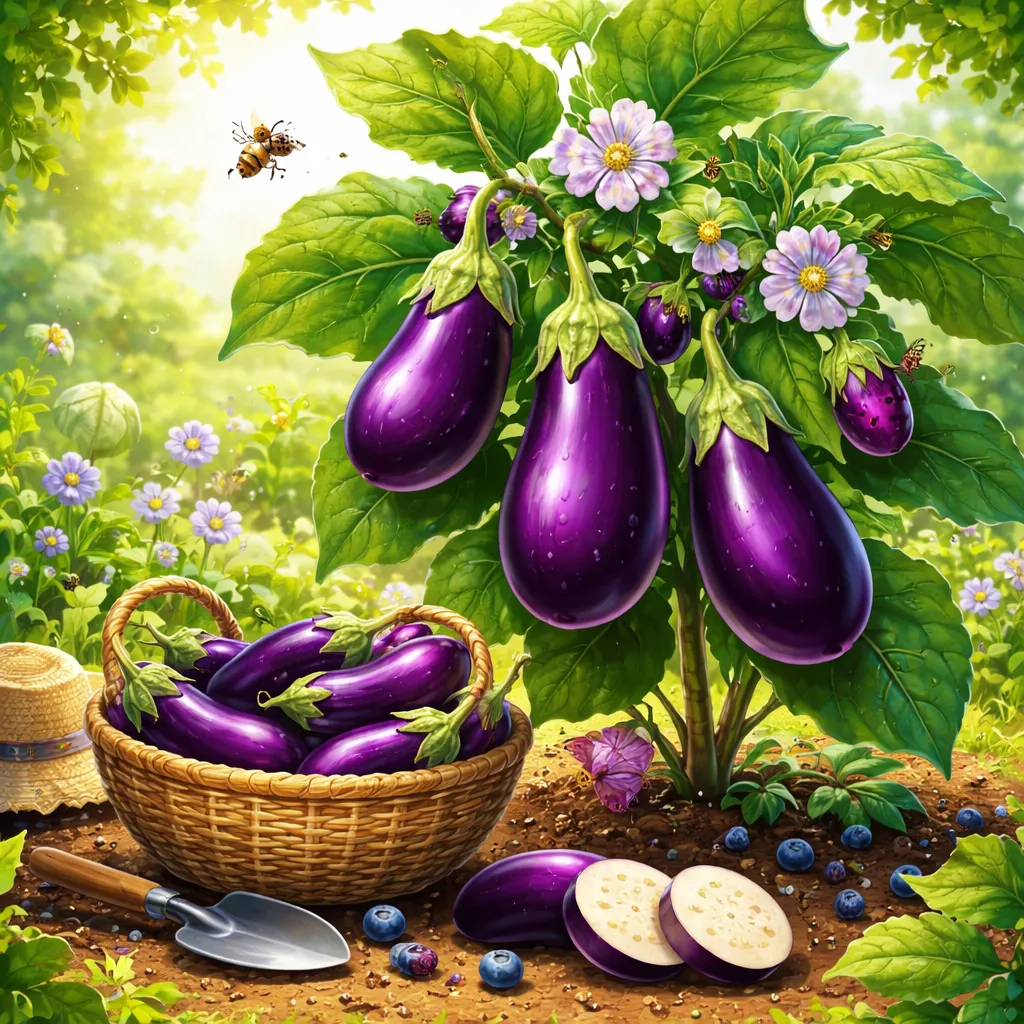

Have you ever seen a big, shiny, deep purple vegetable at the market? It has a smooth skin and a funny green hat on top. This is an eggplant! People love to slice it, cook it, and use it in dishes like eggplant parmesan, ratatouille, or baba ghanoush. But here’s a secret: it’s not a vegetable at all! Botanists say it is a fruit, and a berry too! It grows on a small, sturdy bush with pretty flowers. Let’s discover the shiny and surprising world of the Eggplant plant.
Let’s Learn the Word! – Open the Treasure Box of Language
Formal Name and Pronunciation
This shiny fruit is called an Eggplant. Its scientific name is Solanum melongena. You can say it like this: /ˈeɡ.plænt/ (EG-plant). The “Egg” is like the chicken egg, and “plant” is the growing thing. Egg-plant. Say it: Eggplant. In many countries, it is called Aubergine.
The Etymology Tale
The name “Eggplant” tells a funny story! In the 1700s, some of the first varieties grown in Europe and America were small, white, and oval. They looked just like goose or chicken eggs hanging on the plant! So, people called them “egg-plants.” Its name is a perfect picture of its history.
Nicknames and Friendly Aliases
Eggplants have colorful names from around the world. The common purple one is the Globe Eggplant. Long, thin ones are Japanese or Chinese Eggplants. Small, green ones are Thai Eggplants. The British and French call it Aubergine. In South Asia, it is Brinjal. Sometimes, it’s called the Guinea Squash.
Building Your Word Web: Core Parts
Let’s learn the words for an Eggplant plant’s shiny body. The Fruit is the eggplant itself—a big, beautiful berry! The Skin is the smooth, shiny, purple (or white, or green) outer layer. The Flesh is the soft, white inside. The Seeds are the small, flat, brown dots inside the flesh. The Calyx is the green, star-shaped “hat” on top. The Plant is a bushy shrub with woody stems. A Garden with eggplants is an eggplant patch.
Action and State Words
Eggplant plants are sun-loving and steady. They grow into a bushy plant. The flowers bloom and are pollinated. The fruit forms and swells. It is harvested by cutting the stem. The fruit is sliced, diced, or roasted. An eggplant plant is shiny, meaty, heat-loving, and perennial in hot places but grown as an annual.
Ecosystem Friends Vocabulary
An eggplant patch is a quiet part of the garden. The flowers can attract bees for pollination. The leaves have tiny hairs and produce mild chemicals that help deter some pests. However, flea beetles might make tiny holes in the leaves. Ladybugs might visit to eat aphids. It is a tough plant that can handle a little bug trouble.
Cultural Imprint in Language
Eggplants are symbols of prosperity, luck, and good food in many cultures. In some parts of Asia, eggplants are thought to bring good fortune. An Italian saying is, “La melanzana fa bene alla salute” – “Eggplant is good for your health.” The phrase “like an eggplant in the sun” means something is thriving and glossy. It represents abundance and delicious possibilities.
Ready for Discovery
We know its eggy, shiny name. Are you ready to be a garden scientist and discover why this fruit is so meaty and comes in so many colors? Let’s explore the secrets of the Eggplant plant.
Discover the Plant’s Secrets! – A Nature Detective’s Notebook
The Plant Passport
Eggplant belongs to the nightshade family, Solanaceae. Its genus is Solanum, making it a cousin to tomatoes, potatoes, and peppers. It is a tropical perennial but grown as an annual in cooler places. The plant is a small shrub, about 2 to 4 feet tall. The leaves are large, lobed, and sometimes prickly. The flowers are pretty, star-shaped, and purple. The fruit is a berry that can be purple, white, green, or even striped. It loves hot weather, full sun, and rich soil.
Survival Smarts
The eggplant’s trick is its toughness. The plant has small prickles on its stems and leaves, which can discourage animals from eating it. The fruit contains very small amounts of a compound called solanine, which makes it slightly bitter and protects it from some pests. (But don’t worry, cooking makes it perfectly safe and delicious!) The plant grows best in intense heat, which helps it produce lots of fruit and outcompete weeds.
Its Role and Gifts
In the garden, eggplants are productive and beautiful. Their greatest gift is the fruit. Eggplant has a unique, spongy texture that soaks up flavors like a delicious sponge. It is used in countless dishes worldwide: Italian parmigiana, French ratatouille, Middle Eastern baba ghanoush, Asian stir-fries, and more. It is low in calories and a good source of fiber. It is a culinary superstar.
Human History and Cultural Symbol
Eggplants were first domesticated in India and Southeast Asia over 2,000 years ago. They spread to the Middle East and Africa along ancient trade routes. In medieval Europe, people were suspicious of them and called them “mad apples,” thinking they caused insanity! It took centuries for them to become beloved. Today, they are a global kitchen essential. They represent the journey of a food from fear to fame.
Fun “Wow!” Facts
Get ready for a color fact! The deep purple color of most eggplants comes from a powerful antioxidant called nasunin, which is great for your brain. And here’s a family fact: An eggplant is technically a berry, just like a tomato or a banana! Botanically, a berry is a fruit that grows from a single flower and has seeds inside.
From Pretty Flower to Glossy Fruit
The story of the Eggplant plant is one of heat and patience. Would you like to grow your own shiny, purple fruits? You can grow eggplants in a large pot or garden! Let’s see how.
Let’s Grow It Together! – A Little Guardian’s Action Guide
Good for Home Growing?
Yes, absolutely! Eggplants are perfect for a sunny patio or garden. They do need a large pot and a long, hot summer to produce well. You can grow a compact variety in a big container. There’s nothing like harvesting your own glossy eggplant. It’s a very satisfying plant for a young gardener.
Little Gardener’s Toolkit
You will need eggplant seeds or a seedling from a garden center. Get a large pot (at least 5 gallons) with drainage holes. Use rich, well-draining potting soil. Have a watering can, liquid fertilizer, a sunny spot, and maybe a small stake for support ready.
Step-by-Step Growing Guide
Planting Your Shiny Friend
Start seeds indoors 8-10 weeks before the last frost. Plant them ¼ inch deep. Transplant your seedling outside only when the weather is consistently warm, both day and night. Eggplants hate the cold. Plant it in the pot, water it well, and place it in the sunniest, hottest spot you have. They love to bake in the sun.
Care Calendar
Water regularly to keep the soil moist, especially when fruits are forming. They are heavy feeders, so give them liquid fertilizer every two weeks. They need full sun—at least 6-8 hours daily. As the plant grows, it might get top-heavy with fruit; you can use a small stake to tie the main stem for support. Pinch off the first few flowers to encourage the plant to grow bigger before fruiting.
Watch and Be Friends
Watch the plant grow into a sturdy bush. See the pretty purple flowers. After pollination, a tiny green fruit will form behind the flower. Watch it grow bigger and shinier every day. The skin will become very glossy when it’s ready. Harvest by cutting the stem with scissors or a knife when the fruit is firm and shiny. Don’t wait until the skin turns dull.
Problem Diagnosis
If leaves have many tiny holes, flea beetles might be visiting. Use floating row covers when plants are young. If flowers fall off without making fruit, the weather might be too cool or too hot, or it needs better pollination. Gently shake the plant to help. If fruits are small, the plant might need more fertilizer or water. The most common problem is not enough heat or sun.
Your Rewards and Gifts
Your gift is the pride of growing a beautiful, edible jewel. You are learning about plant care, pollination, and the patience needed for fruiting plants. Caring for eggplants teaches consistency, observation, and the joy of cooking with something you grew yourself. You become a grower of gourmet food.
Creative Fun
Start a Glossy Garden Journal. Draw your plant and the shiny fruits. Press a dried flower. With an adult, make a simple roasted eggplant dip. Create a “color chart” of all the eggplant varieties you can find online—purple, white, green, striped! Research the journey of the eggplant from India to your country and draw a map. Have a “shine contest” to see which of your eggplants is the glossiest. Write a funny story about a “mad apple” that wasn’t mad at all.
Growing a Pot of Purple Shine
By planting eggplants, you are not just growing a fruit. You are growing a lesson in history and botany, a connection to world cuisines, and a beautiful, productive garden plant. You are a cultivator of beauty and taste.
Conclusion and Forever Curiosity
What a shiny, surprising, and delicious journey from flower to berry! You started to learn about the Eggplant plant, you discovered its secrets as the heat-loving, nasunin-packed jewel of the nightshade family, and you learned how to nurture your own patch of purple shine. You now know the Eggplant plant is not just a vegetable; it is a botanical berry, a lesson in plant defense, a traveler through culinary history, and a symbol of transforming fear into feast. Remember, its true beauty is in its glossy skin and its ability to soak up wonderful flavors. Your curiosity helps you see the amazing stories behind the foods on your plate. Keep planting seeds of knowledge, savoring the fruits of your labor, and asking questions about the colorful world of plants. Your adventure to learn about the Eggplant plant shows us that sometimes, the most ordinary-looking foods have the most extraordinary stories and secrets.