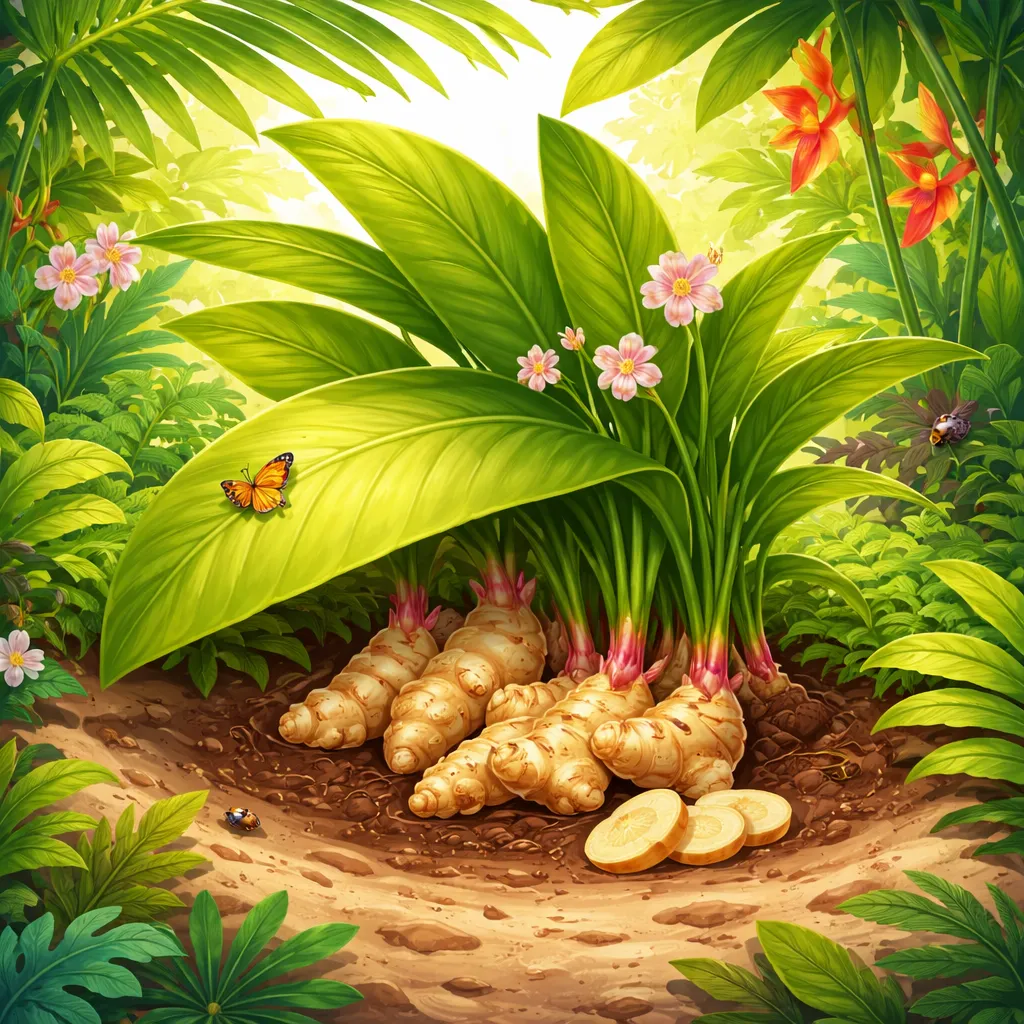

Have you ever had a warm, spicy gingerbread cookie that makes your tongue tingle? Or maybe you’ve drunk a fizzy ginger ale when your tummy felt funny? That special, zingy, warm flavor comes from a knobby, brown root that grows hidden under the soil. But above the ground, the plant is a beautiful, tropical beauty with long, green leaves and a strange, cone-shaped flower. Let’s go on a tropical adventure to dig up the secrets of the amazing Ginger plant.
Let’s Learn the Word! – Open the Treasure Box of Language
Formal Name and Pronunciation This spicy wonder is called Ginger. Its scientific name is Zingiber officinale. You can say it like this: /ˈdʒɪn.dʒər/ (JIN-jer). The “Gin” sounds like the word “gin,” and “ger” rhymes with “her.” Gin-ger. Say it: Ginger. It’s a spicy, fun word.
The Etymology Tale The word “Ginger” has traveled the world! It comes from the ancient Sanskrit word “srngaveram,” which means “horn root,” because the root looks a bit like a horn or an antler. The word passed through Greek, Latin, and Old English to become “gingifer” and then “ginger.” Its name is a perfect picture of its knobby, horn-like shape.
Nicknames and Friendly Aliases Ginger is known by names that describe its home and use. The fresh root is called Green Ginger or Root Ginger. The powdered spice is Ground Ginger. Because it’s a tropical plant, it’s sometimes called the Spice of the Tropics. In some places, the prepared sweet is called Crystallized Ginger or Candied Ginger.
Building Your Word Web: Core Parts Let’s learn the words for a Ginger plant’s hidden body. The Rhizome is the most important part—the lumpy, underground stem we call the ginger “root.” The Leaf is long, narrow, and blade-like, growing straight from the ground. The Pseudostem is the tall, leafy shoot made from rolled leaves. The Flower is a beautiful, unique cone that can be red, yellow, or white. A Hand is a cluster of rhizomes. A Bud or Eye is the bump on the rhizome that can grow into a new plant.
Action and State Words Ginger plants are patient and hidden. The rhizome grows and spreads underground. The leaves shoot up tall. The plant flowers rarely. The rhizome is harvested by digging. It is peeled, grated, sliced, or dried. A ginger plant is tropical, perennial, aromatic, and spice-bearing.
Ecosystem Friends Vocabulary In the tropical forest, the ginger plant is part of the lush understory. Its thick leaves provide shelter for small insects and frogs. The flowers, when they bloom, might attract specific pollinators in the wild. In a home garden, it’s mostly grown for its root, but it still adds a beautiful, tropical feel that can make a mini-habitat.
Cultural Imprint in Language Ginger is a symbol of warmth, energy, and vitality. An old saying goes, “A ginger a day keeps the cold away,” hinting at its use for warmth and health. The word “gingerly” means to do something very carefully, but it doesn’t come from the plant! Having “ginger” hair means bright red hair, the color of some ginger rhizomes. Ginger represents spice, life, and ancient trade.
Ready for Discovery We know its knobby, horn-shaped name. Are you ready to be a jungle explorer and uncover the hot secret hiding beneath this leafy plant? Let’s discover the world of the Ginger plant.
Discover the Plant’s Secrets! – A Nature Detective’s Notebook
The Plant Passport Ginger belongs to the Zingiberaceae family, the same as turmeric and cardamom. Its genus is Zingiber. It is a herbaceous perennial that grows about 3 to 4 feet tall. The leaves are long, green, and arranged in two rows. The flower grows on a separate stalk and looks like a pinecone made of delicate bracts. The prized part, the rhizome, grows horizontally under the soil. It needs a hot, humid, tropical climate with rich soil and partial shade.
Survival Smarts Ginger’s brilliance is in its rhizome. This isn’t a root; it’s an underground stem. It stores water and nutrients, helping the plant survive dry periods. The rhizome also contains gingerol, a powerful chemical that gives ginger its spicy kick. Scientists think this might protect the plant from pests and diseases in the soil. The plant spreads by growing new sections of rhizome, forming large clumps over time.
Its Role and Gifts In a tropical forest, ginger plants help form dense undergrowth. Their greatest gift to people is the rhizome. Fresh ginger is used in stir-fries, teas, and remedies. Dried and ground ginger is a baking spice. Pickled ginger cleans the palate between sushi bites. The essential oil is used in perfumes and medicines. It is one of the world’s oldest and most loved spices.
Human History and Cultural Symbol Ginger was first cultivated in ancient Asia over 5,000 years ago. It was a prized trade item on the Silk Road. Ancient Greeks and Romans valued it highly. In the Middle Ages, it was worth its weight in gold in Europe! Explorers like Marco Polo wrote about it. It represents exotic lands, valuable trade, and the global journey of flavors.
Fun “Wow!” Facts Get ready for a travel fact! Ginger doesn’t grow from a seed! New plants grow from pieces of the rhizome, called “seed ginger.” And here’s a science fact: The spicy compound in ginger, gingerol, turns into zingerone when cooked, which is why cooked ginger tastes sweeter and less sharp than raw ginger!
From Tropical Forest to Your Windowsill The story of the Ginger plant is one of patience and hidden growth. Would you like to grow your own tropical leafy friend? You can grow a ginger plant in a pot as a houseplant! Let’s see how.
Let’s Grow It Together! – A Little Guardian’s Action Guide
Good for Home Growing? Yes, as a beautiful foliage plant! You can grow ginger from a piece of grocery store rhizome. It won’t make a big harvest unless you live in the tropics, but you can grow the lush, leafy plant and maybe harvest a small piece after many months. It’s a long-term, rewarding project.
Little Gardener’s Toolkit You will need a fresh, plump piece of organic ginger root from the store (look for pieces with bumpy “eyes”). Get a wide, shallow pot with drainage holes. Use rich, well-draining potting soil. Have a watering can, a spray bottle, and a warm, shady spot indoors ready.
Step-by-Step Growing Guide
Planting Your Hidden Treasure Soak your piece of ginger in water overnight. Fill your pot with soil. Lay the ginger piece on the soil with the eye buds pointing up. Cover it with just 1-2 inches of soil. Water it well. Cover the pot with a clear plastic bag to keep it humid. Place it in a warm spot (75-85°F is ideal) with indirect light. It can take weeks to sprout.
Care Calendar Keep the soil moist but never soggy. Mist the soil surface often. Once the green shoot appears, remove the bag. Move the pot to a spot with bright, indirect light—no direct hot sun. Ginger loves humidity, so mist the leaves. Water when the top inch of soil is dry. Feed it with a little liquid fertilizer every month in spring and summer.
Watch and Be Friends Watch for the first green, pointy shoot. It will grow into a tall, rolled leaf. More leaves will follow, creating a tropical clump. Feel the thick, sturdy pseudostems. Your plant may live for years. If you are very patient (8-10 months), you can gently dig at the edge of the pot to see if a new rhizome has formed.
Problem Diagnosis If leaves turn brown at the tips, the air is too dry. Mist more. If leaves turn yellow, you might be overwatering. Let the soil dry a bit more. The most common problem is not enough warmth or too much water, which can make the rhizome rot. The biggest need is patience and consistent warmth.
Your Rewards and Gifts Your gift is growing a piece of the tropics. You are learning about plant propagation, patience, and tropical botany. Caring for ginger teaches long-term observation, gentle care, and the wonder of growing a plant from a grocery store item. You become a grower of exotic beauty.
Creative Fun Start a Spice Explorer’s Journal. Draw your ginger plant’s tall leaves. Press a leaf if one falls. Research the Spice Islands on a map. With an adult, grate a tiny bit of store-bought ginger to make a simple tea. Create a collage of pictures showing foods with ginger. Build a miniature tropical jungle in a large bowl with your ginger plant and other humidity-loving plants. Write a trader’s log about carrying ginger along the Silk Road.
Growing a Pot of the Tropics By tending a ginger plant, you are not just growing a root. You are growing a living history lesson, a connection to ancient trade routes, and a beautiful, leafy piece of the jungle. You are a cultivator of patience and global stories.
Conclusion and Forever Curiosity What a hidden, spicy, and ancient journey! You started to learn about the Ginger plant, you discovered its secrets as the rhizome-hiding, gingerol-packed gift of the tropics, and you learned how to nurture your own leafy piece of this history. You now know the Ginger plant is not just a kitchen spice; it is a tropical understory plant, a chemical defender, a treasure of ancient trade, and a teacher of deep patience. Remember, its true power grows silently in the dark, waiting to add warmth and zing to the world. Your curiosity is the key that unlocks the stories buried in everyday things. Keep exploring the flavors of the world, asking about their incredible journeys, and planting seeds of wonder that grow over time. Your adventure to learn about the Ginger plant shows us that the most fiery flavors and amazing stories are often hidden, waiting for a curious explorer to uncover them.