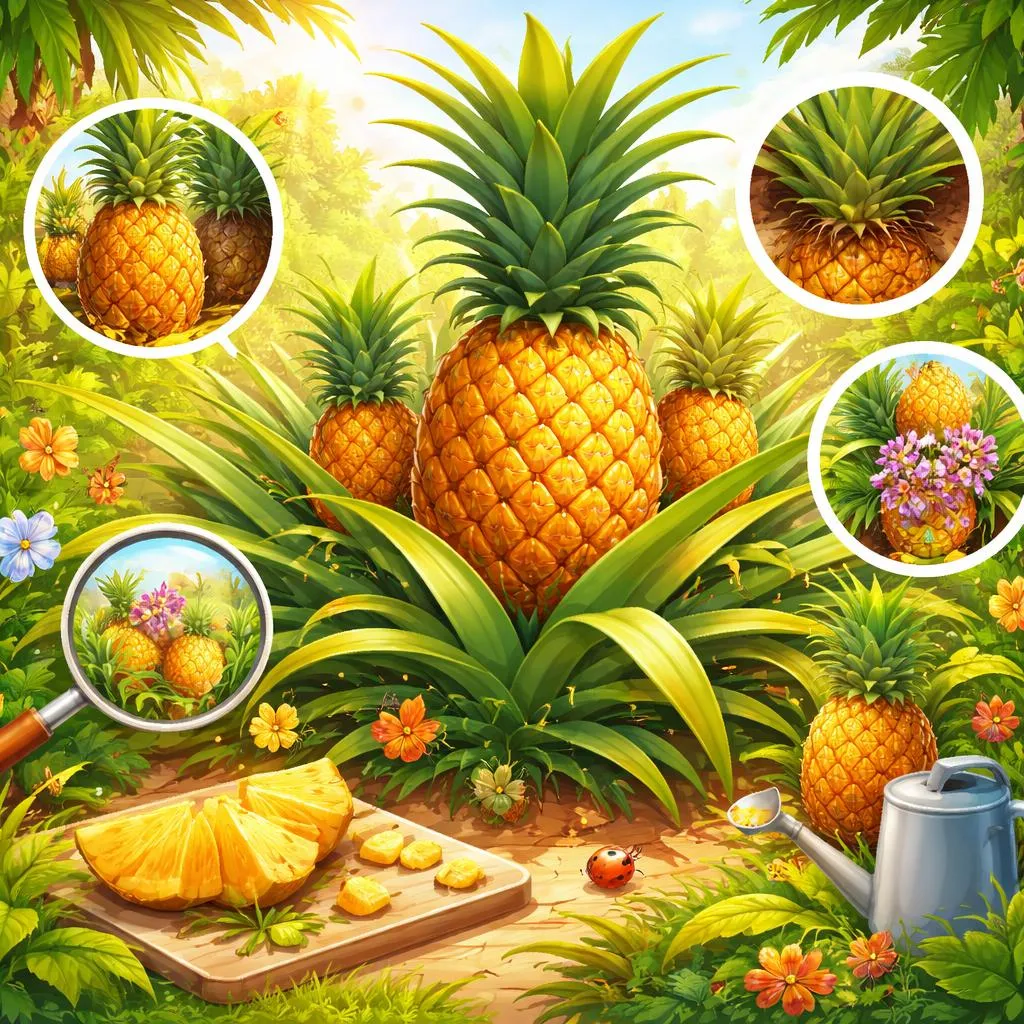

Have you ever touched a plant with sharp, spiky leaves that grow close to the warm ground?
Have you peeled a golden, bumpy fruit and tasted sweet juice that tastes like tropical sunshine?
This amazing plant grows no tall trunk but holds a sweet golden prize, and today we will learn about pineapple plant together.
It stands low to the earth with sword-like leaves that curl around its sweet fruit.
It hides its beauty under sharp spikes and rewards care with the juiciest tropical treat.
Let us step into a fun adventure to explore this unique and wonderful plant.
Let‘s Learn the Word! – Open the Treasure Box of Language
Formal Name and Pronunciation
The full name of this plant is pineapple plant, pronounced /ˈpaɪnæpl plɑːnt/.
Clap twice for pine-apple and once for plant to make a bouncy tropical rhythm.
Puff out your cheeks like a ripe pineapple as you say the word aloud.
Word Origin Story
The word “pineapple” combines “pine” for its spiky pinecone shape and “apple” for its round fruit.
European explorers named it this when they first saw it in South America hundreds of years ago.
Native people called it “anana” which means “excellent fruit” in their local language.
It kept this dual name to describe both its look and its delicious taste.
Nicknames and Other Names
Gardeners call it the spiky tropical herb for its low, non-tree growing habit.
Children love to name it “Golden Crown Plant” for its leafy top and golden fruit.
It is also known as ananas, its international name across many warm countries.
Core Plant Parts Vocabulary
Crown is the spiky leafy top of the fruit that can grow into a new plant.
Leaves are long and sword-shaped with sharp tiny spikes along the edges.
Fruit is the golden composite body made of many tiny flowers joined together.
Eyes are the small bumpy spots covering the outer skin of the pineapple.
Roots spread shallow under soil like thin threads drinking water and food.
Slips are small baby plants that grow from the base of the main pineapple plant.
Inflorescence is the pink flower cluster that grows into the sweet fruit.
Action and State Words
Spike describes the sharp edges that protect the plant from hungry animals.
Bloom means pink flowers open up to form the beginnings of a new fruit.
Ripen shows green fruit turning golden yellow and sweet under tropical sun.
Tropical tells the plant’s love for warm, sunny and humid growing conditions.
Juicy describes the sweet liquid that fills every bite of a ripe pineapple.
Ecosystem Related Vocabulary
Hummingbirds sip nectar from pink blossoms to help the plant make fruit.
Ants crawl along leaves and protect the plant from harmful small insects.
Fruit bats visit flowers at night and carry pollen to other pineapple plants.
Small lizards rest among spiky leaves to hide from bigger predators.
Cultural Imprints in Language
A tropical saying tells that patience grows the sweetest pineapple under the sun.
It teaches children that good things need time and gentle care to grow perfectly.
A simple nursery rhyme sings, “Spiky leaves green, golden fruit seen, tropical sunshine, sweet and clean.”
It paints a lively picture of this unique low-growing tropical plant.
The phrase “top of the pineapple” means the very best part of something wonderful.
Now we hold all the special words to explore deeper, and we can learn about pineapple plant’s hidden natural secrets.
Discover the Plant’s Secrets! – Nature Detective’s Exploration Notes
Plant Passport
The pineapple plant belongs to the Bromeliaceae family, the same as air plants.
Its scientific genus is Ananas, a group of spiky tropical plants from the Americas.
It grows as a herbaceous perennial, never forming a woody tree trunk.
Its long spiky leaves form a rosette shape, curling around a central stem.
Pink tubular flowers bloom in a cluster and fuse together to make one single fruit.
The pineapple plant follows a slow but steady life cycle through the seasons.
New leaves sprout from the center in warm, wet weather to form a rosette.
A pink flower stalk pushes up from the middle after months of healthy growth.
Tiny flowers join together and grow into a green fruit that ripens to gold.
After fruiting, the mother plant grows baby slips and slowly fades away over time.
Survival Wisdom
Pineapple plants store water in their thick leaves to survive long dry spells.
They use a special night-time breathing process to save water in hot climates.
They first grew in the warm rainforests of South America thousands of years ago.
Now they thrive in tropical regions like Hawaii, Thailand, Brazil and the Philippines.
Their sharp spikes keep grazing animals from eating their tender leaves and fruit.
Ecological Niche and Contributions
As a tough tropical producer, the pineapple plant makes food from sunlight and air.
Hummingbirds and bats rely on its flowers for nectar in warm forest areas.
Small creatures find safe shelter among its spiky leaves from predators and heat.
Its shallow roots hold topsoil together and stop erosion during heavy rainstorms.
Leaves absorb harmful gases and release fresh oxygen for all living things to breathe.
Dead leaves break down into rich compost that feeds other small tropical plants.
Human History and Cultural Symbols
In Hawaiian culture, pineapples symbolize welcome, hospitality and friendship.
Native American tribes in South America grew pineapples for food and medicine.
European kings prized pineapples as rare and luxurious fruits long ago.
People eat fresh pineapple, grill it, make juices, jams and sweet tropical desserts.
Its enzymes can tenderize meat and add a special tang to savory dishes.
Fun Wow Facts
A pineapple is not one fruit but hundreds of tiny fruits fused together.
We can grow a new pineapple plant by planting the leafy crown of a ripe fruit.
It takes almost two full years for a pineapple plant to grow one ripe fruit.
We have unlocked all the amazing secrets of this spiky plant, and now we can grow a pineapple plant with our own hands.
Let’s Grow It Together! – Little Guardian’s Action Guide
Suitability for Home Planting
The pineapple plant grows wonderfully in pots on sunny balconies and warm windowsills.
It needs very little space and stays low to the ground, perfect for indoor growing.
It loves bright sunlight and warm temperatures, just like its tropical home.
Even young kids can care for it with simple steps and lots of patience.
Little Gardener’s Tool Kit
A fresh pineapple crown with healthy green leaves from a ripe fruit.
A medium-sized pot with drainage holes at the bottom to stop root rot.
Sandy, well-drained soil mixed with perlite for quick water flow.
A small watering can with a narrow spout and tropical plant fertilizer.
A pair of small gloves to protect hands from sharp leaf spikes.
Step-by-Step Planting and Care
Twist the crown off a ripe pineapple and let its base dry for one week.
Fill the pot with sandy soil, plant the crown and cover the base gently with soil.
Water the soil lightly until it feels moist for the very first planting.
Check the soil every week, water only when it feels completely dry to touch.
Place the pot in full sunlight, as sunshine helps the plant grow strong and green.
Feed it with dilute tropical fertilizer once a month during warm summer months.
Observe the plant every day and draw its changes in a special nature notebook.
Record when new leaves sprout, the rosette forms and a fruit stalk begins to grow.
Problem Diagnosis Room
Yellow leaves mean too much water, stop watering and let the soil dry out fully.
Brown leaf tips show dry air, mist the leaves gently with clean water.
No fruit growth means not enough sunlight, move the pot to a brighter spot.
Soft brown base means root rot, repot the plant in fresh dry sandy soil.
Harvest and Growth Gifts
Wait one to two years, and you will see a tiny pineapple grow from the plant’s center.
Harvesting your home-grown pineapple teaches kids the greatest value of patience.
Caring for the plant builds responsibility and a love for unique tropical plants.
Sharing your home-grown pineapple with family creates warm tropical memories.
Creative Extension Activities
Make a growth diary to draw and write about the plant’s changes every single week.
Create leaf rubbings with paper and crayons to save the shape of spiky pineapple leaves.
Paint a picture of a golden pineapple with green spiky leaves and pink flowers.
Learn the pineapple nursery rhyme and sing it while caring for your plant.
Make a tropical fruit salad with your ripe pineapple and share it with loved ones.
Nurturing a pineapple plant helps us connect with tropical nature and truly learn about pineapple plant each passing day.
Conclusion and Eternal Curiosity
Today we have finished a wonderful journey with the unique pineapple plant.
We learned useful English words, discovered tropical secrets and learned to grow this spiky treasure with care.
This amazing low-growing plant gives us sweet golden fruit, shelters small creatures and thrives in warm sunshine.
It teaches us that patience and gentle care can turn sharp spikes into the sweetest gifts in nature.
Keep your eyes wide open when you visit greenhouses, tropical gardens or sunny patios.
Look closely at spiky low-growing plants, and you will find new magic every single day.
Never stop asking questions about nature, because the world holds endless tropical wonders waiting for you to explore and cherish.