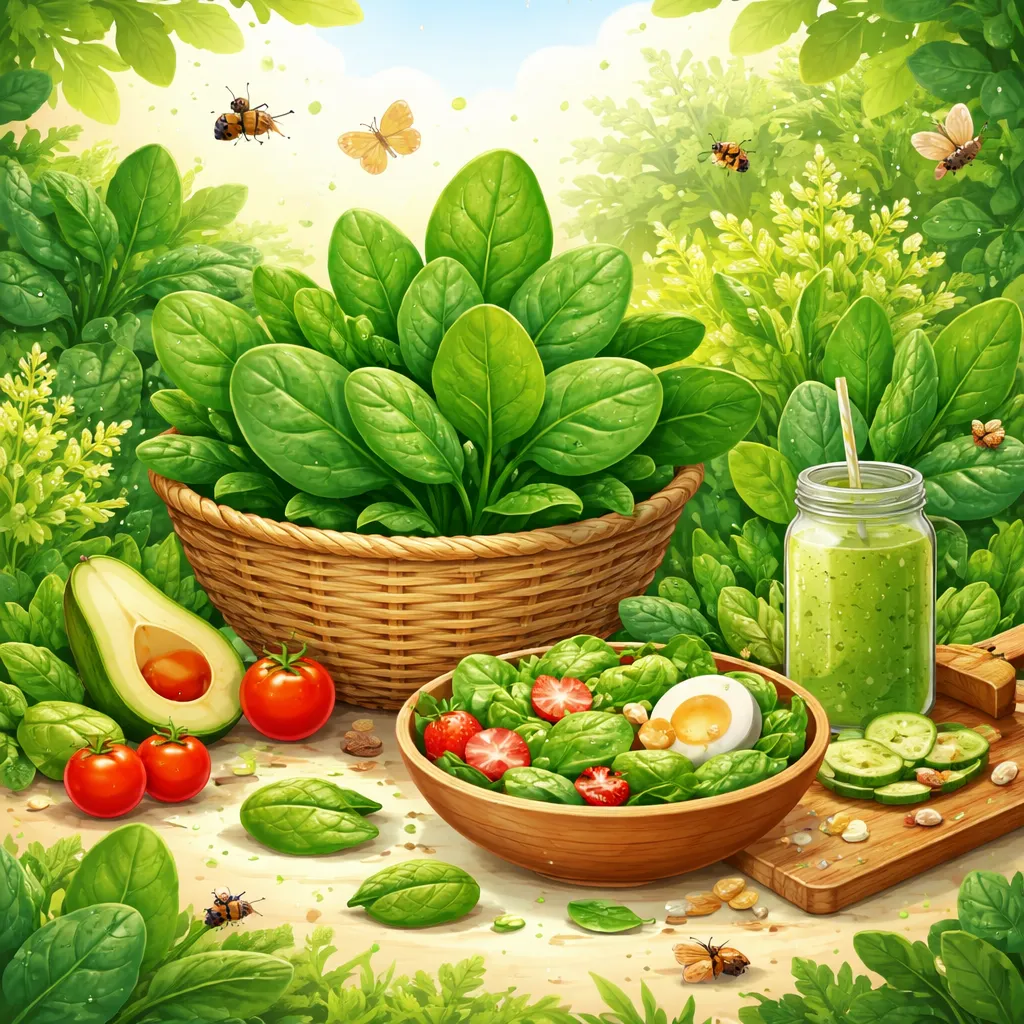

Have you ever seen a cartoon where a sailor eats a can of green stuff and suddenly becomes super strong? That green stuff is based on a real, amazing plant! In the garden, it doesn’t look like much—just a bunch of dark green, tender leaves growing in a low, friendly clump. But hidden inside those leaves is a powerhouse of vitamins and minerals. People have called it a superfood for hundreds of years. Let’s dive into the nutritious world of the Spinach plant.
Let’s Learn the Word! – Open the Treasure Box of Language
Formal Name and Pronunciation
This leafy green hero is called Spinach. Its scientific name is Spinacia oleracea. You can say it like this: /ˈspɪn.ɪtʃ/ (SPIN-itch). The “Spin” is like turning around, and “ach” sounds like “itch.” Spin-ach. Say it: Spinach. It’s a lively, quick word.
The Etymology Tale
The word “Spinach” has a royal journey! It comes from the Persian word “ispanākh,” which means “green hand.” The word traveled through Arabic (“isbanākh”) and Spanish (“espinaca”) before becoming “spinach” in English. Its name tells a story of travel from ancient Persia, across continents, to our plates.
Nicknames and Friendly Aliases
Spinach is known by names that praise its healthiness. It is often called the Supergreen or The Strength Giver. The type with crinkly leaves is Savoy Spinach. The flat-leaf kind is Flat-leaf or Smooth-leaf Spinach. Baby leaves are Baby Spinach. In the garden, it’s simply a Leafy Green.
Building Your Word Web: Core Parts
Let’s learn the words for a Spinach plant’s nutritious body. The Leaf is the main part—dark green, tender, and can be smooth or crinkly. The Stem is short and holds the leaf cluster. The Crown is the center where new leaves grow. The Root is a shallow taproot. The Seed is a small, prickly ball. Bolting is when the plant shoots up a tall flower stalk. A Patch of plants is a spinach patch.
Action and State Words
Spinach plants are quick but cool-loving. You sow the seeds. The leaves grow in a rosette. You can harvest by picking the outer leaves. The plant can bolt in hot weather. The leaves are steamed, sautéed, or eaten raw. A spinach plant is nutritious, tender, cool-season, and annual.
Ecosystem Friends Vocabulary
A spinach patch is a quiet, low-growing part of the garden. The leaves can provide a cool, damp hiding spot for small creatures like beetles and spiders. Sometimes, leaf miners (tiny insect larvae) might make wiggly lines inside the leaves. Birds might visit to eat these insects. It is a simple, productive member of the garden community.
Cultural Imprint in Language
Spinach is a global symbol of health, strength, and vitality. The most famous phrase comes from Popeye the Sailor: “I’m strong to the finish, ’cause I eats my spinach!” This cartoon made spinach famous and encouraged kids to eat their greens. The phrase “like spinach” can mean something that’s good for you, even if it’s not always exciting. It represents the idea that simple, healthy things make you strong.
Ready for Discovery
We know its strong, traveling name. Are you ready to be a nutrition detective and discover the secret power in these green leaves? Let’s explore the life of the Spinach plant.
Discover the Plant’s Secrets! – A Nature Detective’s Notebook
The Plant Passport
Spinach belongs to the Amaranth family, Amaranthaceae. Its genus is Spinacia. It is an annual leafy green vegetable. The plant forms a low rosette of dark green leaves. The leaves can be flat or savoyed (crinkly). It produces a tall flower stalk when the days get long and hot. It is native to central and western Asia and grows best in the cool weather of spring and fall. It does not like heat.
Survival Smarts
Spinach is a plant of the cool seasons. It grows quickly in the mild weather of spring and fall, producing lots of leaves before the heat of summer or the hard frost of winter arrives. Its main survival strategy is speed. The chemical that gives it a slightly earthy, sometimes metallic taste (oxalic acid) might help protect it from some pests. When the weather gets hot, it quickly “bolts” to produce flowers and seeds, ensuring the next generation.
Its Role and Gifts
In the garden, spinach is an efficient producer of leafy greens. Its greatest gift is its nutritional profile. Spinach is loaded with iron, calcium, Vitamins A, C, and K, and folate. The leaves are eaten raw in salads and smoothies or cooked in dishes like quiches, soups, and pastas. It’s a true superfood that has fueled people’s health for centuries.
Human History and Cultural Symbol
Spinach is thought to have originated in ancient Persia (modern-day Iran). It spread to China in the 7th century, where it was called the “Persian vegetable.” It reached Europe in the 12th century. Its reputation for strength grew over time, cemented by 20th-century pop culture. A famous historical “oops” was when scientists in the 1800s misplaced a decimal point, making people think spinach had 10 times more iron than it does! Even with the correction, it’s still very healthy.
Fun “Wow!” Facts
Get ready for a Popeye fact! After the Popeye cartoon started in 1929, spinach consumption in the United States went up by 33%! Kids wanted to be strong like their hero. And here’s a color fact: The dark green color comes from chlorophyll, which helps the plant turn sunlight into food, and from other pigments like lutein, which is great for eye health.
From Cool-Season Seed to Your Salad
The story of the Spinach plant is one of quick, cool growth. Would you like to grow your own patch of superfood? You can grow spinach easily in a pot or garden! Let’s see how.
Let’s Grow It Together! – A Little Guardian’s Action Guide
Good for Home Growing?
Perfect! Spinach is an excellent choice for a child’s garden. It grows quickly, doesn’t need much space, and you can start harvesting leaves in just a few weeks. It grows beautifully in a wide, shallow pot on a balcony, patio, or in a garden bed. Just remember, it loves cool weather.
Little Gardener’s Toolkit
You will need a packet of spinach seeds. Get a wide, shallow pot with good drainage holes. Use rich, moist potting soil. Have a watering can, a sunny spot, and scissors for harvesting ready.
Step-by-Step Growing Guide
Planting Your Green Power
The best times to plant are early spring and early fall. Spinach seeds will not germinate well in hot soil. Scatter the seeds on the soil and cover them with about half an inch of soil. Pat gently and water well. Place the pot in a spot that gets full sun in cool weather, or a bit of afternoon shade if it’s warm.
Care Calendar
Keep the soil consistently moist. Spinach has shallow roots and dries out fast. It likes cool temperatures and plenty of moisture. You can feed it with a little liquid fertilizer once or twice during its growth. The most important thing is to keep it well-watered and to pick leaves regularly.
Watch and Be Friends
Watch for the first two little seed leaves, then the true spinach leaves. The plant will form a nice, green clump. You can start picking the larger, outer leaves when they are about 3-4 inches long. Snip them off with scissors, and new leaves will grow from the center! This is called “cut-and-come-again.” Watch for a thick stem shooting up from the center—that’s bolting, which means the plant is finishing its life.
Problem Diagnosis
If leaves turn yellow, it might need more nitrogen (try a little fertilizer) or more water. If the plant bolts quickly, the weather is too hot; plant it earlier next time. Slugs and snails love spinach; look for slimy trails and holes, and pick them off at night. Leaf miners might make wiggly lines; just pick off and destroy those leaves.
Your Rewards and Gifts
Your gift is a continuous harvest of fresh, healthy greens. You are learning about plant life cycles, nutrition, and garden-to-table eating. Caring for spinach teaches gentle harvesting, daily observation, and the pride of growing something incredibly good for you. You become a grower of your own strength.
Creative Fun
Start a Superfood Gardener’s Journal. Draw your spinach plant. Press a dark green leaf. With an adult, make a simple spinach salad with your harvest or a green smoothie. Create a “Superhero Menu” featuring all the foods that make you strong, with spinach at the top. Research the journey of spinach from Persia on a map. Have a “Popeye Pose” contest after eating your homegrown greens. Write a very short comic strip about a garden spinach plant that gives a bug super strength.
Growing a Pot of Green Power
By planting spinach, you are not just growing a green. You are growing a lesson in nutrition, a connection to cartoon history, and the freshest ingredient for a healthy meal. You are a cultivator of vitality.
Conclusion and Forever Curiosity
What a quick, green, and powerful journey from a tiny seed to a superfood leaf! You started to learn about the Spinach plant, you discovered its secrets as the cool-season, iron-rich hero of the vegetable patch, and you learned how to grow and harvest your own supply of green strength. You now know the Spinach plant is not just Popeye’s food; it is a lesson in seasonal growth, a nutritional powerhouse, a traveler through history, and a living symbol of how simple, natural foods make us strong. Remember, its power is in its quiet, quick growth in the cool weather. Your curiosity is the water and sun that helps your knowledge grow as healthy as a spinach plant. Keep exploring the world of edible plants, tasting the vibrant flavors of the garden, and planting seeds of health and happiness. Your adventure to learn about the Spinach plant shows us that true strength often comes in small, green, leafy packages.