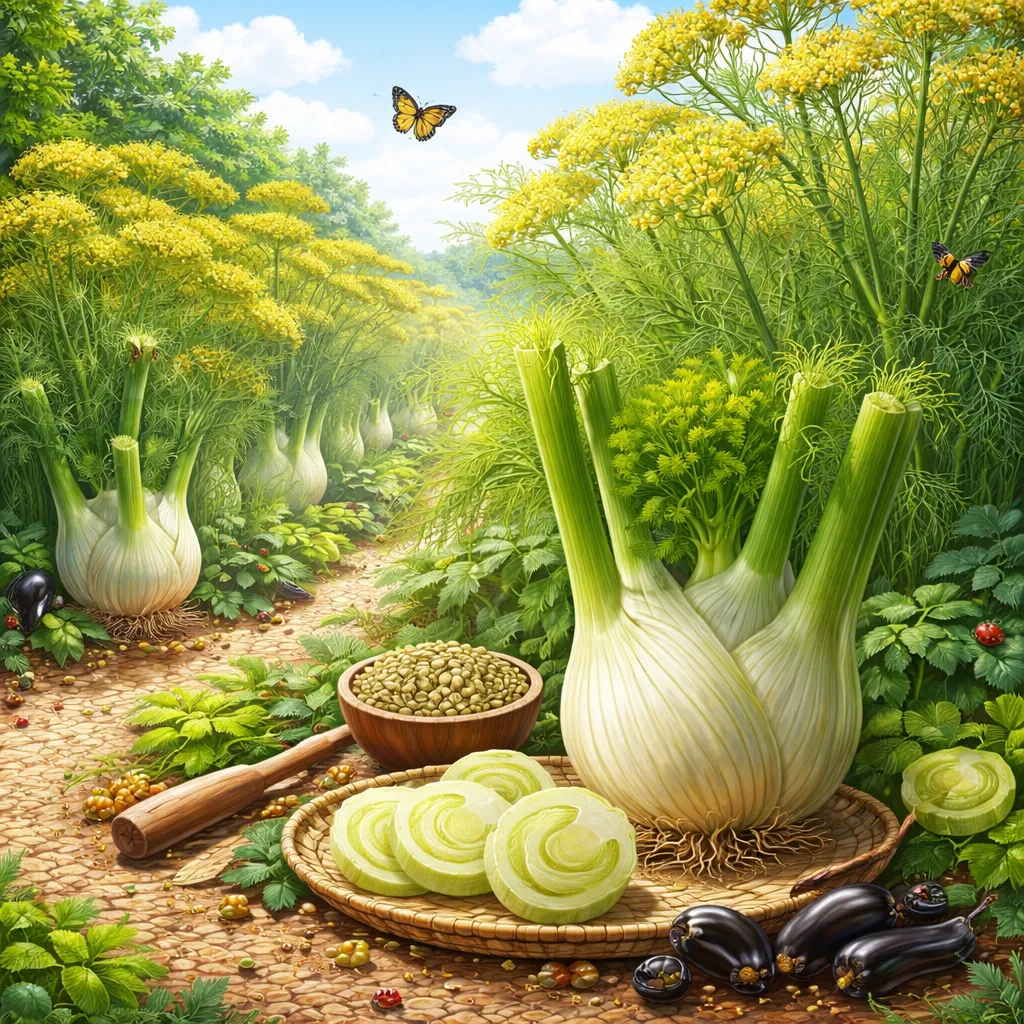

Have you ever seen a very tall, feathery plant in a garden that looks a bit like a giant, green dandelion? Or have you tasted a crunchy, white vegetable that has a surprising, sweet flavor like black licorice or anise? Believe it or not, they are the same plant! This amazing plant is an entire meal in one. You can eat its crunchy bulb, its feathery leaves, its tasty seeds, and even its yellow pollen. It grows straight and tall, and butterflies love it. Let’s discover the tall and tasty world of the Fennel plant.
Let’s Learn the Word! – Open the Treasure Box of Language
Formal Name and Pronunciation This versatile giant is called Fennel. Its scientific name is Foeniculum vulgare. You can say it like this: /ˈfen.əl/ (FEN-ul). It rhymes with “kennel” and “penal.” Fen-nel. Say it: Fennel. It’s a light, airy-sounding word.
The Etymology Tale The word “Fennel” comes from the Latin word “foenum,” which means “hay.” Why? Because the fine, feathery leaves of the fennel plant look a bit like soft, green hay! The scientific name keeps this word: Foeniculum. Its name is a picture of its delicate, leafy fronds.
Nicknames and Friendly Aliases Fennel is known by the part you eat. The type grown for its big, crunchy base is Florence Fennel or Finocchio. The type grown for its leaves and seeds is Herb Fennel or Common Fennel. The leaves are often called Fennel Fronds. The seeds are Fennel Seeds. The pollen is a special spice called Fennel Pollen.
Building Your Word Web: Core Parts Let’s learn the words for a Fennel plant’s tall body. The Bulb is the fat, white, crunchy base that forms at the bottom of the stem (in Florence fennel). The Frond is the delicate, feathery, green leaf. The Stem is tall, thick, and hollow. The Flower is small, yellow, and grows in a flat, umbrella-shaped cluster. The Seed is the small, striped, oval seed. The Pollen is the fine, golden dust from the flowers. A Clump of plants is a fennel patch.
Action and State Words Fennel plants are towering and sweet. They grow very tall. The bulb swells at the base. The plant flowers and makes seeds. The leaves are harvested for flavor. The bulb is harvested and eaten raw or cooked. A fennel plant is tall, aromatic, sweet-tasting, and perennial (often grown as an annual).
Ecosystem Friends Vocabulary A fennel plant is a wildlife restaurant! The flowers are a favorite of hoverflies, ladybugs, and other beneficial insects. Most importantly, it is a host plant for the beautiful Anise Swallowtail and Black Swallowtail butterflies. The caterpillars munch on the leaves. The plant provides food and shelter for many tiny garden helpers.
Cultural Imprint in Language Fennel is a symbol of strength, flattery, and long life. In ancient Greece, it was called “marathon” after which the famous Battle of Marathon was named, as it was fought in a field of fennel. Romans believed it improved eyesight and gave courage. The phrase “to sow fennel” once meant to give flattery. It represents wellness, vitality, and ancient wisdom.
Ready for Discovery We know its sweet, feathery, and historic name. Are you ready to be a garden detective and discover how this one plant can be a vegetable, an herb, and a spice? Let’s explore the secrets of the Fennel plant.
Discover the Plant’s Secrets! – A Nature Detective’s Notebook
The Plant Passport Fennel belongs to the Apiaceae family, the carrot and parsley family. Its scientific name is Foeniculum vulgare. It is a hardy perennial herb that can grow 6 to 8 feet tall! The leaves are finely divided into thread-like segments. The stems are hollow and bluish-green. The flowers are yellow and form large, flat-topped clusters. It grows wild in many temperate regions and loves full sun and well-drained soil.
Survival Smarts Fennel’s superpower is its anethole. This is the special oil that gives it its strong licorice flavor and smell. In nature, this chemical helps protect the plant from pests and diseases. The plant grows a deep taproot to find water. It also produces thousands of seeds, which helps it spread easily. The Florence fennel variety has the added trick of swelling its leaf bases into a sweet, juicy bulb to store water and sugars.
Its Role and Gifts Fennel is a powerhouse in the garden ecosystem, supporting pollinators and butterflies. Its greatest gifts are its many edible parts. The bulb is a crunchy vegetable for salads and roasting. The fronds are a delicate herb for flavoring fish and soups. The seeds are a spice for sausages, curries, and bread. The pollen is a rare, expensive seasoning. Every part is useful.
Human History and Cultural Symbol Fennel has been used for thousands of years. Ancient Egyptians, Greeks, and Romans valued it for food and medicine. Roman warriors ate fennel seeds for strength. In the Middle Ages, people hung it over doors to ward off evil spirits. It was brought to the Americas by Spanish missionaries. It symbolizes protection, medicinal power, and the generous abundance of nature.
Fun “Wow!” Facts Get ready for a caterpillar fact! If you see a green, black, and yellow striped caterpillar on your fennel, don’t remove it! You are hosting a future Swallowtail butterfly. Plant extra fennel to share. And here’s a tasting fact: Fennel seeds are often chewed in some cultures after a meal to freshen breath and help digestion—they’re like a natural breath mint!
From Ancient Field to Your Garden The story of the Fennel plant is one of towering generosity. Would you like to grow your own butterfly nursery and tasty vegetable? You can grow fennel in a sunny garden bed! Let’s see how.
Let’s Grow It Together! – A Little Guardian’s Action Guide
Good for Home Growing? Yes, but it needs space! Fennel grows very tall and has a deep root. The common herb type is perfect for a sunny garden corner. Florence fennel (for the bulb) needs deep, rich soil and consistent water. You can try growing one Florence fennel plant in a very large, deep pot. It’s a wonderful plant for a child who wants to attract butterflies.
Little Gardener’s Toolkit You will need a packet of fennel seeds (choose “herb fennel” for leaves or “Florence fennel” for bulbs). Get a large, deep pot (for one plant) or find a sunny garden spot. Use rich, well-draining potting soil. Have a watering can, some compost, and the sunniest spot in your yard ready.
Step-by-Step Growing Guide
Planting Your Tall Friend Plant seeds in spring after the last frost. Fennel does not like to be moved, so plant seeds directly where you want them to grow. Plant seeds about ¼ inch deep and thin the seedlings later to 12 inches apart. Water the soil well. Place in full, all-day sun. Fennel needs lots of light.
Care Calendar Keep the soil moist, especially for Florence fennel bulbs, which need consistent water to swell sweetly. Herb fennel is more drought-tolerant. They both love full sun. You can feed Florence fennel with a little liquid fertilizer to help the bulb grow. Watch for the tall flower stalks in the second year (or first, if it gets stressed).
Watch and Be Friends Watch for the first feathery leaves. The plant will grow quickly into a tall, airy bush. For Florence fennel, watch the base swell into a fat, white bulb. Check the leaves for beautiful striped caterpillars! Let some flowers bloom to attract tiny beneficial insects. Enjoy the anise scent that fills the air around your plant.
Problem Diagnosis If the Florence fennel bulb doesn’t swell, it might be from inconsistent watering, not enough sun, or the plant “bolting” (going to seed) too early in hot weather. If leaves look eaten, look for swallowtail caterpillars—celebrate and plant more! Aphids might cluster; spray them off with water. Fennel is generally a tough, pest-resistant plant.
Your Rewards and Gifts Your gift is growing a miniature ecosystem. You are learning about plant life cycles, butterfly conservation, and how one plant can be a whole grocery store. Caring for fennel teaches patience, observation, and the wonder of supporting beautiful wildlife right in your garden. You become a grower of life and flavor.
Creative Fun Start a Butterfly Banquet Journal. Draw your tall fennel plant. Taste each part: the raw bulb, a leaf, a seed. Describe the licorice flavor. Press a delicate frond. Research the swallowtail butterfly’s life cycle and draw it. With an adult, make a simple salad with shaved fennel bulb. Make “fennel frond paintbrushes” and paint with them. Write a recipe for “Magical Licorice Tea” using fennel seeds.
Growing a Feast for All Senses By planting fennel, you are not just growing an herb. You are growing a habitat, a history lesson, a tasting adventure, and a living lesson in biodiversity. You are a cultivator of abundance.
Conclusion and Eternal Curiosity What a tall, tasty, and generous journey! You started to learn about the Fennel plant, you discovered its secrets as the licorice-flavored, butterfly-hosting giant of the garden, and you learned how to grow your own patch of this ancient, useful friend. You now know the Fennel plant is not just one food; it is a vegetable, an herb, a spice, a pollinator paradise, and a living link to ancient stories of strength and health. Remember, its unique flavor is its power, and its structure is a gift to the garden’s tiny creatures. Your curiosity helps you see the interconnected feast that a single plant can provide. Keep exploring the many uses of plants, tasting with an open mind, and gardening with an eye for the butterflies and bees. Your adventure to learn about the Fennel plant shows us that the most generous plants stand tall, feed many, and flavor our world in the most surprising ways.