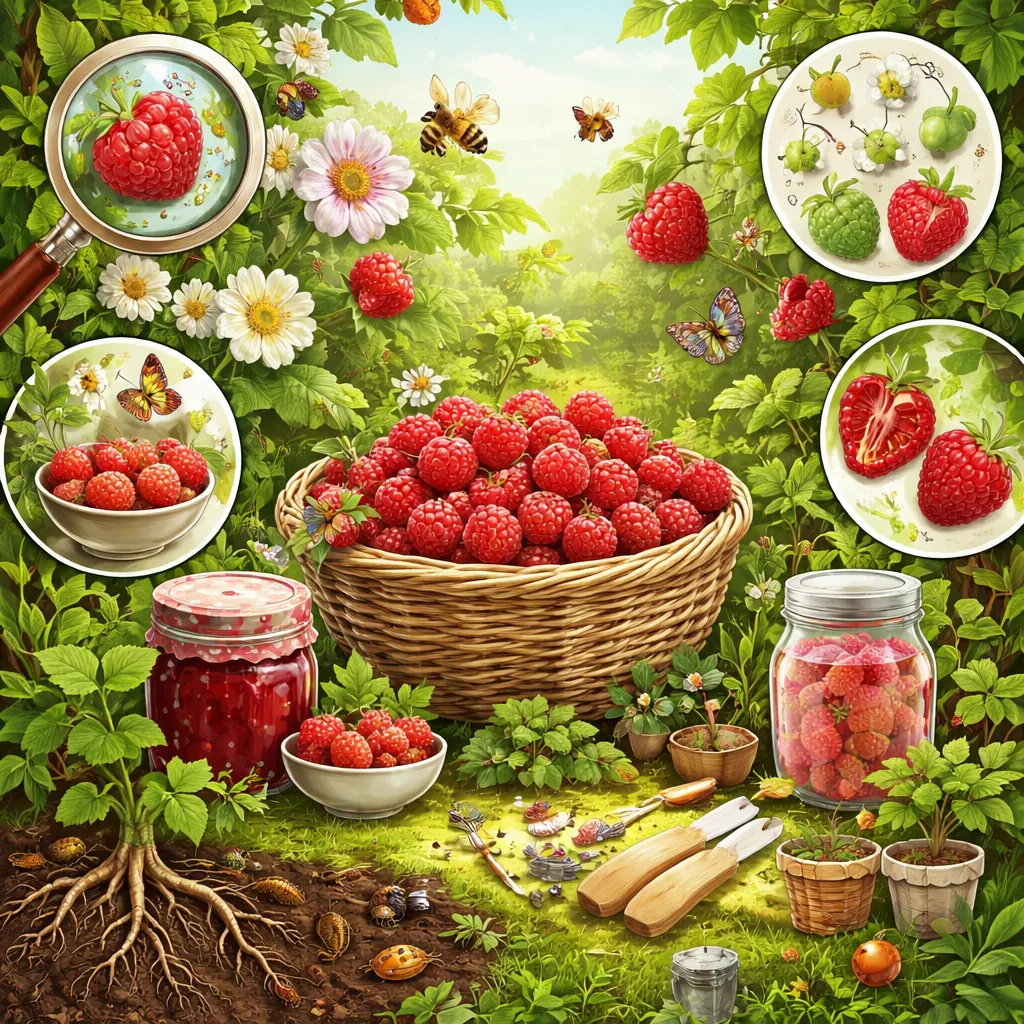

Have you ever brushed past a bushy plant in summer and noticed clusters of red, bumpy fruits hanging like tiny lanterns? Have you taken a bite and felt a sweet-tangy explosion that makes your taste buds dance with joy? This spiky yet sweet plant bears nature’s red jewels, and today we will learn about raspberry plant together.
Unlike tall trees or climbing vines, this plant grows as a compact bush with delicate stems. It wears white flowers in spring and wraps its branches in red fruits when the sun shines bright. Let us begin our exciting journey to uncover the secrets of this delightful berry-bearing plant.
Let‘s Learn the Word! – Open the Treasure Box of Language
Formal Name and Pronunciation The full name of this plant is raspberry plant, pronounced /ˈrɑːzbəri plɑːnt/. Clap three times for rasp-ber-ry and one for plant to make a playful learning beat. Pretend to pick a berry and pop it in your mouth while saying the word to remember it.
Word Origin Story The word “raspberry” comes from Old English words that describe the fruit’s rough, bumpy texture. People named it for the way its tiny fruit clusters “rasp” or tickle your tongue when you eat them. The name has stayed almost the same for hundreds of years, telling us about its unique feel. It joins “berry” to show it’s a small, juicy fruit that grows in sweet clusters.
Nicknames and Other Names Gardeners call it a bramble berry for its prickly stems and tangled growth. Children love to name it “Red Bump Plant” for its unique clustered fruit shape. It is also known as a wild rose berry, since it’s related to roses and shares their family traits.
Core Plant Parts Vocabulary Canes are the woody stems that grow upright, some with tiny prickles for protection. Leaflets grow in groups of three or five, like small green feathers on the canes. Blossoms are small white flowers with five petals, growing in clusters at cane tips. Fruit drupelets are the tiny red bumps that cluster together to make one raspberry. Roots spread underground like thin threads, drinking water for the whole plant. Prickles are small sharp bumps on canes that keep animals from eating the plant. Suckers are small shoots that grow from roots to make new raspberry plants. Seeds are tiny and hard, hidden inside each tiny fruit drupelet.
Action and State Words Cluster describes how small fruits grow together in tight groups on canes. Bloom means white flowers open to welcome bees and butterflies in spring. Ripen shows green fruit clusters turning bright red and sweet-tangy in summer. Tangy tells the zesty, refreshing taste that makes raspberries so unique. Prickle means the tiny sharp bumps that protect the plant from harm.
Ecosystem Related Vocabulary Honeybees buzz from flower to flower, collecting nectar and helping fruits grow. Butterflies rest on green leaflets and sip sweet juice from ripe raspberries. Birds peck at red clusters and carry seeds to grow new plants in other places. Ladybugs crawl along canes and eat tiny bugs that try to hurt the plant.
Cultural Imprints in Language A cheerful saying tells “raspberries grow where sunshine flows, sweet and tangy, nature’s shows”. It teaches children that happy, healthy plants need plenty of warm sunlight to thrive. A simple nursery rhyme sings, “White flowers small, turn to red ball, summer’s here, one and all.” It paints a lively picture of the raspberry plant’s journey from flower to fruit. The phrase “blow a raspberry” means to make a funny buzzing sound with your lips.
Now we have all the special words to explore deeper, and we can learn about raspberry plant’s hidden natural secrets.
Discover the Plant’s Secrets! – Nature Detective’s Exploration Notes
Plant Passport The raspberry plant belongs to the Rosaceae family, the same as roses, strawberries and apples. Its scientific genus is Rubus, which means “red” in Latin, named for its bright fruit color. It grows as a bushy plant with upright canes that can reach waist-high or taller. Its leaves are soft and fuzzy underneath, with jagged edges like tiny saws. Its small white flowers bloom in spring, growing in clusters that turn into red berries.
The raspberry plant follows a busy cycle with every changing season. New green canes and leaves sprout from roots when winter frost melts away. White flowers bloom in late spring, attracting bees and butterflies to visit. Green fruit clusters grow and ripen to bright red in mid-summer, ready to pick. Old canes die back in autumn, while new canes grow for next year’s fruits. Leaves turn yellow and fall, and the plant rests through cold winter months.
Survival Wisdom Raspberry plants grow suckers from their roots, making new plants without seeds. This smart trick helps them spread quickly and form large, healthy patches. They grow best in cool climates with plenty of sunlight and well-drained soil. They first grew in Europe and Asia, and now thrive in gardens all over the world. Their tiny prickles protect soft leaves and fruits from animals that might eat them.
Ecological Niche and Contributions As a hardworking producer, the raspberry plant makes food from sunlight, water and air. Bees and other insects depend on its spring flowers for nectar and pollen. Birds and small animals find shelter in its bushy growth from predators and weather. Its dense roots hold soil together and prevent erosion during heavy rainstorms. Fallen leaves and old canes break down into rich nutrients that feed the soil. Leaves take in harmful carbon dioxide and release fresh oxygen for all living things.
Human History and Cultural Symbols Ancient Greeks and Romans used raspberries for medicine and sweet treats at feasts. In medieval Europe, raspberry leaves were made into tea to soothe upset stomachs. In modern culture, raspberries symbolize joy and lively summer moments with family. People eat fresh raspberries, make jams, bake them in tarts and blend them into smoothies. Frozen raspberries make delicious snacks that taste like summer all year long.
Fun Wow Facts Each raspberry is made of 100 tiny fruit drupelets clustered together as one. Raspberry plants have two types of canes: one grows leaves, the other grows fruits. Wild raspberries can grow in forests and meadows, popping up where sunlight reaches the ground.
We have unlocked all the amazing secrets of this plant, and now we can grow a raspberry plant with our own hands.
Let’s Grow It Together! – Little Guardian’s Action Guide
Suitability for Home Planting Dwarf raspberry plants grow perfectly in large pots on balconies or small gardens. They need enough space for their canes to grow upright, but stay small enough for home use. They require a spot with full sunlight for at least six hours every single day. Even young kids can care for this tough plant with simple steps and gentle attention.
Little Gardener’s Tool Kit A young dwarf raspberry sapling or root sucker works better than seeds for fast growth. A large deep pot with drainage holes to keep roots from getting too wet. Loose, fertile soil mixed with compost to give the plant plenty of nutrients. A small trellis to support canes as they grow tall and heavy with fruit. A watering can with a gentle spout and organic fruit fertilizer for feeding.
Step-by-Step Planting and Care Plant the sapling in early spring when frost is gone and the air turns warm. Fill the pot with soil, place the sapling, cover roots fully and set up the trellis. Water the soil slowly until it is moist all the way through for the first planting.
Check the top soil every day, water only when it feels dry to the touch. Keep the pot in full sunlight, as sunshine makes raspberries sweet and tangy. Feed the plant with organic fertilizer once a month during spring and summer.
Watch the plant daily and draw its changes in a special nature notebook. Record when white flowers bloom, green clusters form and red berries ripen.
Problem Diagnosis Room Yellow leaves mean too much water, stop watering and let the soil dry out fully. Tiny green aphids on leaves can be wiped away with mild soapy water gently. Wilting canes show the plant needs more water, give it a slow deep drink. Few fruits mean not enough sunlight, move the pot to a brighter outdoor spot.
Harvest and Growth Gifts Wait one to two years, and you can pick your own home-grown red raspberries. Harvesting ripe berries teaches kids gentleness and careful observation of plant changes. Caring for the plant builds responsibility and a love for growing your own food. Sharing fresh raspberries with family creates sweet summer memories that last.
Creative Extension Activities Make a growth diary to draw and write about the plant’s changes each week. Create leaf rubbings with paper and crayons to save the shape of raspberry leaflets. Paint a picture of red raspberry clusters with white flowers and green leaves. Learn the raspberry nursery rhyme and sing it while picking ripe berries. Make homemade raspberry jam with your harvest and share it with friends.
Nurturing a raspberry plant helps us connect with nature and truly learn about raspberry plant each passing day.
Conclusion and Eternal Curiosity Today we have finished a wonderful journey with the charming raspberry plant. We learned useful English words, discovered natural secrets and learned to grow this special plant with care. This unique bush gives us sweet-tangy berries, helps small creatures and adds beauty to gardens. It teaches us that even plants with tiny prickles can hold the sweetest treasures inside.
Keep your eyes wide open when you walk through gardens, parks or forest edges. Look closely at bushy plants and clustered fruits, and you will find new magic every single day. Never stop asking questions about nature, because the world holds endless wonders waiting for you to explore and love.