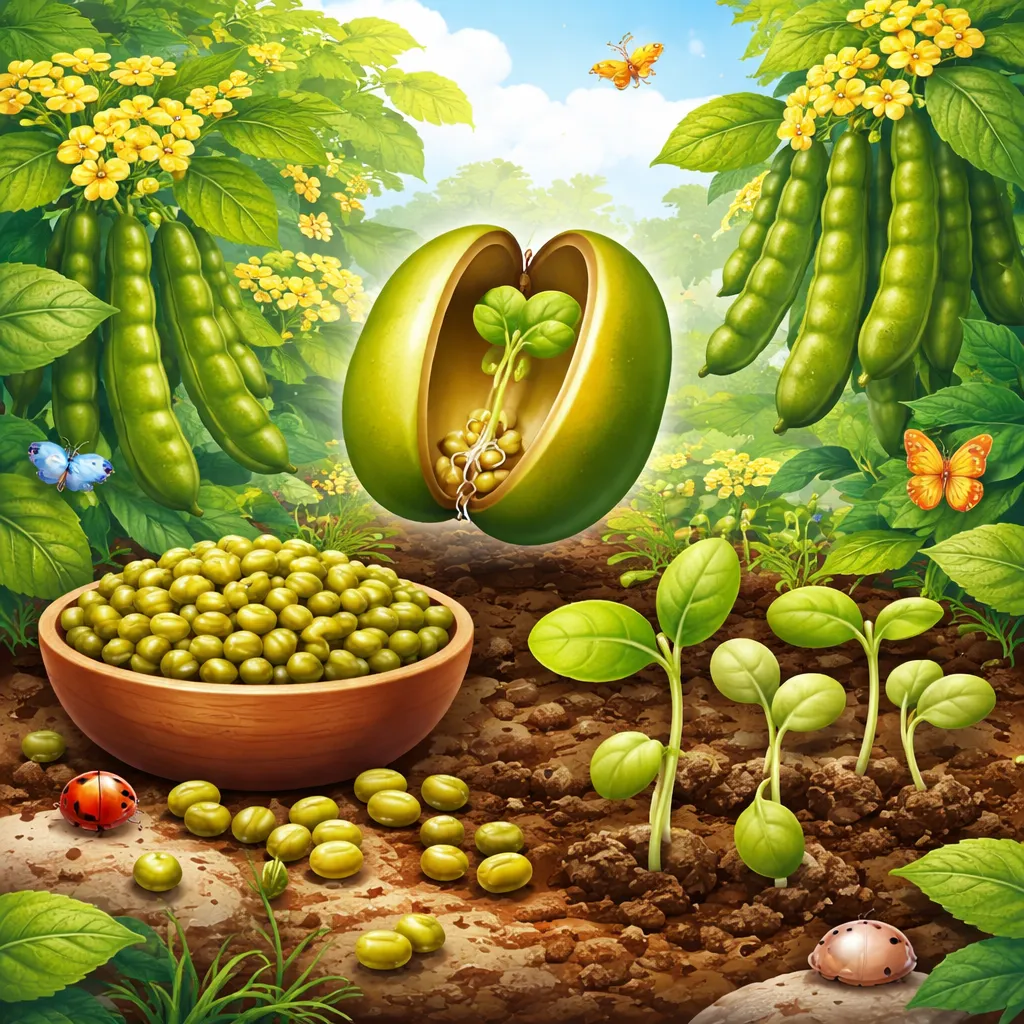

Have you ever had a yummy bowl of soup with tiny green beans in it? Or maybe you’ve seen crunchy, white bean sprouts in a stir-fry or a salad. Believe it or not, they both come from the same amazing little seed! This seed is small, hard, and olive-green. But if you add water, something magical happens. It can grow a delicious sprout in just a few days, or grow into a whole plant that makes more beans. Let’s discover the secret life of the mighty Mung Bean plant.
Let’s Learn the Word! – Open the Treasure Box of Language
Formal Name and Pronunciation This magical little bean is called a Mung Bean. Its scientific name is Vigna radiata. You can say it like this: /ˈmʌŋ ˌbiːn/ (MUHNG bean). The “Mung” part rhymes with “sung” or “tongue.” Mung bean. Say it: Mung. It’s a fun, short word.
The Etymology Tale The name “Mung” comes from the Hindi word “moong,” which came from the Sanskrit word “mudga.” This plant has been grown and eaten in India for thousands of years, and its name traveled the world with the bean. The word “bean” is an old English word for seeds like this. So, its name is a mix of ancient Indian and old English words.
Nicknames and Friendly Aliases Mung beans are known by names that tell of their color and use. Because they are green, they are often called Green Gram or Golden Gram (when split and hulled). The young sprout is famously called the Bean Sprout. In some places, it is simply called the Moong Bean. People also call it the Sprouting Bean or the Wonder Bean.
Building Your Word Web: Core Parts Let’s learn the words for a Mung Bean’s life. The Seed is the hard, dry bean you start with. The Sprout is the young shoot that grows from the seed. The tiny white root is a radicle. The first two leaves that pop open are the seed leaves or cotyledons. The Pod is the long, thin, hairy case that holds the beans on the plant. A single Bean is the seed inside the pod. The Plant itself is a bushy vine with trifoliate leaves (three-part leaves).
Action and State Words Mung beans are champions of change. The dry seed soaks up water and swells. It then sprouts or germinates quickly. The sprout grows longer every day. A full-grown plant flowers and produces long pods. The beans are harvested and dried. A mung bean is nutritious, fast-sprouting, versatile, and annual.
Ecosystem Friends Vocabulary Mung bean plants are friendly to the soil. Like other beans, their roots have nodules that host special bacteria. These invisible friends take nitrogen from the air and fix it in the soil, acting like tiny natural fertilizer factories. This helps the plant and makes the soil better for other plants. In the garden, the plant might feed a few friendly insects.
Cultural Imprint in Language Mung beans are a symbol of life, growth, and simple nourishment in many Asian cultures. There is an old saying, “Even a tiny bean can sprout a great tree,” meaning small beginnings can lead to big things. In many stories, the bean sprout represents quick growth, health, and new life. It is a humble but powerful food.
Ready for Discovery We know its quick-growing, green name. Are you ready to be a kitchen scientist and discover the magic inside this tiny, hard bean? Let’s put on our lab coats and explore the secrets of the Mung Bean plant.
Discover the Plant’s Secrets! – A Nature Detective’s Notebook
The Plant Passport Mung beans belong to the legume family, Fabaceae, the same family as peas and lentils. Their scientific group is Vigna. The plant is a bushy, somewhat trailing annual vine. The leaves are made of three bright green leaflets. The flowers are small and yellow. The fruit is a long, thin, hairy pod that turns black when ripe, filled with 10-15 small, green seeds. It loves warm, tropical, or subtropical weather and grows very quickly.
Survival Smarts The mung bean’s superpower is its seed’s readiness for life. The hard, dry seed is in a deep sleep. It only needs water and warmth to wake up and start growing incredibly fast. This lets it sprout quickly after a rain and get a head start. Like other beans, it also has the nitrogen-fixing root nodules, so it can grow in poorer soil. The plant’s quick life cycle helps it produce seeds before the hot, dry season ends.
Its Role and Gifts Mung beans are nutritional powerhouses. The dry beans are packed with protein, fiber, and vitamins. They are cooked into dals, soups, and desserts. Their most famous gift is the sprout. When the seed germinates, its nutrients become easier to digest, and it grows a crunchy, fresh vegetable in days. Bean sprouts are full of vitamin C. The plant also improves soil health. It is a gift that keeps on giving.
Human History and Cultural Symbol Mung beans were first domesticated in India over 4,500 years ago. They spread throughout Asia, becoming a staple food. In ancient Chinese medicine, mung beans were valued for their cooling properties. Today, they are eaten all over the world. The ability to grow nutritious sprouts indoors, anytime, makes them a symbol of self-sufficiency, health, and fresh food.
Fun “Wow!” Facts Get ready for a speed fact! You can grow mung bean sprouts in your own kitchen in just 3 to 5 days! All you need is the bean, a jar, water, and a dark cupboard. And here’s a cool fact: The thin, green skin of the mung bean is sometimes removed. The inner, yellow split bean is called “moong dal” and is used to make a creamy, delicious porridge or soup.
From Kitchen Jar to Garden Vine The story of the Mung Bean plant is one of quick transformation. Would you like to see this magic happen with your own eyes? You can grow sprouts on your counter or a whole plant in a pot! Let’s see how.
Let’s Grow It Together! – A Little Guardian’s Action Guide
Good for Home Growing? Yes, it’s one of the best plants for beginners! You can do two exciting projects. First, you can grow sprouts indoors anytime, in just a jar. Second, you can plant beans in a pot to grow a whole vine. It’s fast, easy, and you can eat what you grow. Perfect for a young scientist and gardener.
Little Gardener’s Toolkit For Sprouts: You need a handful of dry, whole mung beans from a grocery store, a clean jar, a piece of mesh or cloth, and a rubber band. For a Plant: You need the same beans, a medium-sized pot with drainage, potting soil, a watering can, and a sunny spot.
Step-by-Step Growing Guide
Project 1: Growing Magic Sprouts Put 2 tablespoons of dry mung beans in your jar. Cover them with plenty of water and let them soak overnight. In the morning, drain all the water out through the mesh covering. Rinse the beans with fresh water and drain again. Lay the jar on its side in a dark cupboard. Rinse and drain the beans twice a day. In 3-5 days, you’ll have a jar full of crunchy sprouts!
Project 2: Growing a Bean Plant Fill your pot with soil. Plant a few mung beans about 1 inch deep and 3 inches apart. Water the soil well. Place the pot in a warm, sunny spot. Keep the soil moist. Seeds will sprout in 3-5 days. Watch your plant grow into a vine. You can even give it a small stick to climb.
Care Calendar For Sprouts: Just remember to rinse and drain twice a day! Keep them in the dark for white sprouts, or in light for green ones. For the Plant: Water when the top soil feels dry. It loves sunshine. You don’t need to fertilize much. If it grows long vines, you can gently tie them to a small trellis or stick.
Watch and Be Friends This is the fastest show on Earth! For sprouts, check every day. Watch the tiny white root (radicle) pop out first. Then see the seed split and the sprout grow longer. For the plant, watch the first two seed leaves open, then the true three-part leaves. Look for yellow flowers and later, the thin, hairy pods. Measure growth daily. It’s amazing!
Problem Diagnosis If sprouts smell bad, they might not be draining well. Rinse them more thoroughly. If the plant’s leaves turn yellow, it might need a little more water or sun. The most common “problem” is getting too excited and checking them every hour!
Your Rewards and Gifts Your gift is seeing life happen right before your eyes. You are learning about germination, plant needs, and patience. Growing mung beans teaches responsibility, observation skills, and the incredible satisfaction of growing your own food from a tiny, hard seed. You become a grower of magic.
Creative Fun Start a Sprout Scientist’s Logbook. Draw your beans each day. Take photos to make a flip-book animation of growth. Use your homegrown sprouts in a salad or sandwich. Make a “seed mosaic” art by gluing different dried beans and seeds on paper. Research a simple recipe for mung bean soup (dal) from India or another country. Write a diary entry from the perspective of a bean on its first day of sprouting.
Growing Curiosity in a Jar By planting mung beans, you are not just growing food. You are growing a sense of wonder, a lesson in biology, and a connection to cultures around the world. You are a cultivator of curiosity.
Conclusion and Forever Curiosity What a speedy, magical journey from a pantry bean to a living plant! You started by learning the word “Mung Bean,” you discovered its secrets as the fast-sprouting, protein-packed wonder, and you learned how to grow your own sprouts and vines. You now know the Mung Bean plant is not just a soup ingredient; it is a lesson in transformation, a package of nutrition, a friend to the soil, and a symbol of quick, new life. Remember, its power is locked inside, just waiting for a little water to wake it up. Your curiosity is like that water—it brings knowledge to life. Keep asking “what if?”, keep planting seeds of all kinds, and keep watching for the everyday magic in nature. Your adventure to learn about the Mung Bean plant shows us that the biggest wonders often come in the smallest, greenest packages.