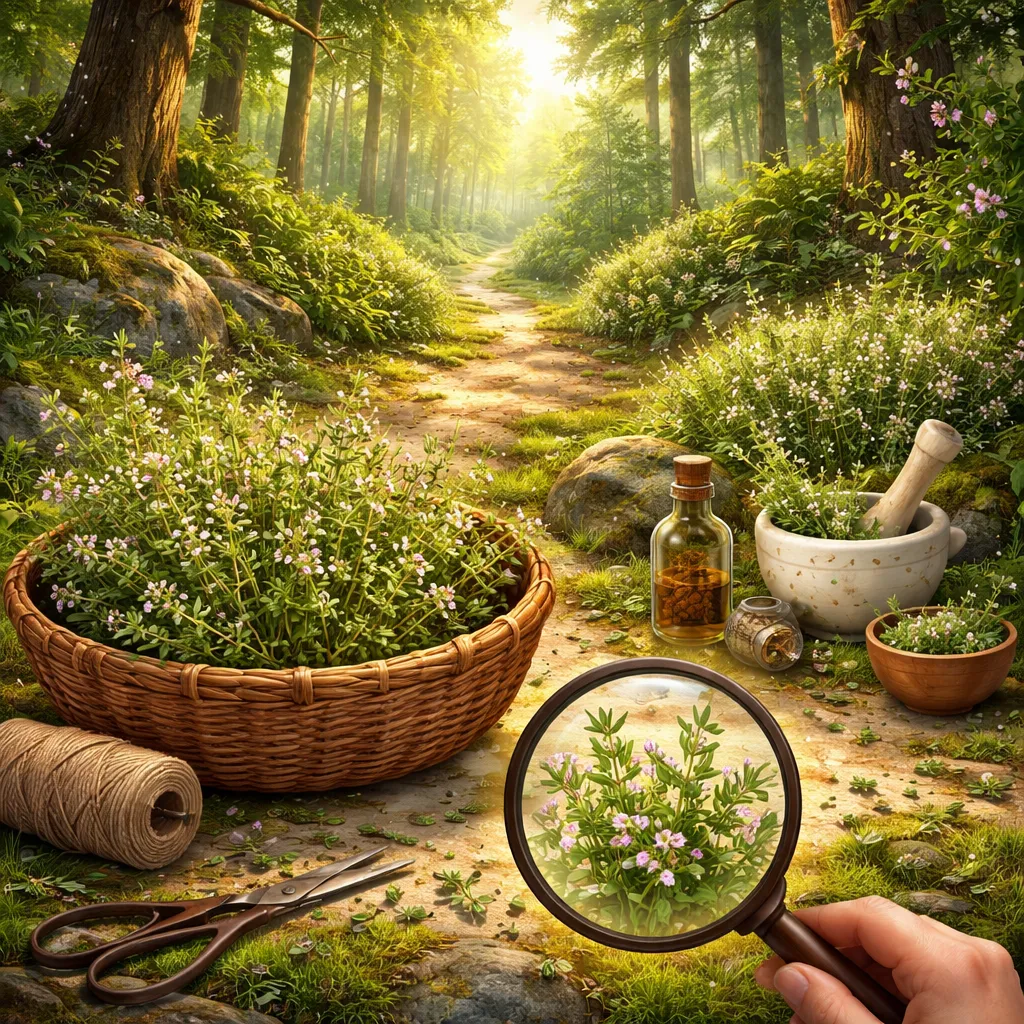

Imagine walking on a warm, sunny hillside. The ground beneath your feet is covered in a soft, green, low-growing mat of tiny plants. As you step, a wonderful smell rises into the air—a little bit spicy, a little bit like lemon, and a lot like the fresh outdoors. This smell comes from a tough little plant that creeps along the ground, covered in hundreds of tiny leaves. People have used it to flavor food and bring good feelings for thousands of years. Let’s kneel down and learn about the wonderful Thyme plant.
Let’s Learn the Word! – Open the Treasure Box of Language
Formal Name and Pronunciation This aromatic creeper is called Thyme. Its scientific name is Thymus vulgaris. You can say it like this: /taɪm/ (time). It sounds exactly like the word “time.” Thyme. Say it: Thyme. It’s a simple, clever-sounding word.
The Etymology Tale The word “Thyme” has a fragrant history! It comes from the Greek word “thymon,” which means “to fumigate” or “to burn as incense.” Long ago, people burned dried thyme plants because the smoke smelled so good and was thought to clean the air. So, its name is all about its wonderful, useful scent.
Nicknames and Friendly Aliases Thyme has many friendly names. The most common type is Garden Thyme or Common Thyme. There is also Lemon Thyme, Creeping Thyme, Woolly Thyme, and Caraway Thyme. Because it spreads, it is often called a Groundcover. In cooking, it is simply a Culinary Herb.
Building Your Word Web: Core Parts Let’s learn the words for a Thyme plant’s tiny body. The Leaf is very, very small, oval, and gray-green. The Stem is thin and can be woody at the base. The Flower is tiny, delicate, and usually pale pink, purple, or white. The Habit is the way it grows—low, spreading, and mat-forming. A Sprig is a small stem with leaves. The Scent is the powerful, lovely smell from the leaves. A Patch of thyme is a thyme lawn.
Action and State Words Thyme plants are tough creepers. They spread slowly to form a mat. They tolerate dry, poor soil. The leaves release their scent when crushed. You can harvest sprigs by snipping them. The plant is pruned after flowering. A thyme plant is aromatic, drought-tolerant, low-growing, and perennial.
Ecosystem Friends Vocabulary A thyme patch is a pollinator’s paradise! Bees absolutely love the tiny flowers and buzz from one to another all day long. Butterflies also visit. The plant provides shelter for tiny ground insects. Its strong smell helps protect it from being eaten by deer and rabbits. It is a super-helpful plant for a wildlife-friendly garden.
Cultural Imprint in Language Thyme is a symbol of courage, strength, and activity. In ancient Greece, thyme was linked to bravery. People said, “To smell of thyme,” meant you were energetic and spirited. In the Middle Ages, ladies would embroider a sprig of thyme on scarves for their knights for good luck. It represents the quiet strength of small, persistent things.
Ready for Discovery We know its fragrant, time-sounding name. Are you ready to be a ground-level detective and discover the mighty power of this tiny plant? Let’s explore the world of the Thyme plant.
Discover the Plant’s Secrets! – A Nature Detective’s Notebook
The Plant Passport Thyme belongs to the mint family, Lamiaceae. Its genus is Thymus. It is a small, woody-based perennial herb. The stems are slender. The leaves are tiny, usually less than a centimeter long, and often hairy underneath. The flowers are two-lipped and grow in small clusters. It is native to the dry, rocky, sunny hills of the Mediterranean region. It loves full sun and well-drained, even poor, soil.
Survival Smarts Thyme is a master of tough love. It thrives in places where other plants struggle—hot, dry, and rocky soil. Its small leaves lose very little water. Its low, mat-forming growth hugs the ground, staying out of the drying wind and shading the soil below to keep it moist. The strong essential oils in its leaves protect it from pests and diseases. It is built to survive and spread slowly but surely.
Its Role and Gifts As a groundcover, thyme protects the soil from erosion. Its flowers are a vital nectar source for bees. Its most famous gift is its flavor. The leaves are a classic herb in French, Italian, and Mediterranean cooking, used in stews, soups, roasted meats, and with vegetables. The essential oil is used in mouthwash, soap, and aromatherapy. It is both a kitchen hero and a garden beauty.
Human History and Cultural Symbol Thyme has been used since ancient Egyptian times for embalming. The Romans used it to purify rooms. During the Black Death in Europe, people carried bouquets of thyme, hoping its strong smell would protect them. It has always been associated with health, purification, and courage. Today, it remains a staple in kitchens and a beloved plant for sunny, difficult garden spots.
Fun “Wow!” Facts Get ready for a bee fact! Thyme honey from bees that visit thyme flowers is famous for its strong, delicious flavor and is considered a special treat! And here’s a word fact: Because “thyme” sounds like “time,” it’s often used in fun garden signs with sayings like, “Time is precious. Plant thyme.”
From Sunny Rock Garden to Your Pot The story of the Thyme plant is one of fragrant resilience. Would you like to grow your own scented carpet? You can grow thyme easily in a pot, a rock garden, or between stepping stones! Let’s see how.
Let’s Grow It Together! – A Little Guardian’s Action Guide
Good for Home Growing? Perfectly! Thyme is one of the easiest and most rewarding herbs to grow. It’s perfect for a pot on a sunny windowsill, in a container garden, or as a pretty, fragrant edging in a garden bed. It needs very little care, doesn’t get tall, and you can harvest from it all season. It’s a fantastic plant for a young gardener.
Little Gardener’s Toolkit You will need a small thyme plant from a garden center (or seeds, but plants are faster). Get a shallow, wide pot with good drainage or find a sunny, well-drained spot. Use gritty, well-draining potting soil (cactus mix is great). Have a watering can, scissors, and a sunny spot ready.
Step-by-Step Growing Guide
Planting Your Fragrant Carpet Plant in spring after the last frost. Place your little plant in the soil. If planting in a pot, you can put a few small plants together to make a nice clump. Water it well to settle the roots. Place it in the sunniest spot you have—it loves to bask in at least 6 hours of direct sun.
Care Calendar The most important rule: do not overwater! Let the soil dry out almost completely between waterings. Thyme loves to be on the dry side. It needs full sun. You hardly ever need to fertilize it. After it flowers, you can give it a light trim all over to keep it neat and bushy.
Watch and Be Friends Watch your tiny plant spread slowly. Notice the incredibly small leaves. Gently rub them and smell your fingers. Watch for the tiny flower buds and then the beautiful little blossoms. See how many bees come to visit! You can snip a sprig anytime you cook. Your plant will be a low, fragrant, buzzing friend for years.
Problem Diagnosis If the stems get long and leggy with few leaves, it needs more sun. If the center of the plant turns brown and dies, it is probably from too much water or poor drainage. Let it dry out and make sure the soil drains quickly. It has very few pests because of its strong smell.
Your Rewards and Gifts Your gift is a plant that teaches toughness and gives endless flavor. You are learning about Mediterranean plants, pollinator support, and simple care. Nurturing thyme teaches patience, gentle observation, and the joy of growing something useful and beautiful that needs very little from you. You become a grower of resilience.
Creative Fun Start a Fragrant Ground Journal. Draw your thyme plant. Make a leaf rubbing on paper. Create a “smell map” of your garden with thyme on it. With an adult, add a sprig to a simple soup or roasted potatoes. Press a few tiny flowers. Build a miniature “rock garden” in a shallow dish with pebbles and a tiny thyme plant. Write a haiku poem about a bee visiting a thyme flower.
Growing a Carpet of Scent By planting thyme, you are not just growing an herb. You are growing a habitat for bees, a living carpet for your garden, and a connection to ancient kitchens and apothecaries. You are a cultivator of simple, steadfast beauty.
Conclusion and Forever Curiosity What a tiny, tough, and wonderfully fragrant journey! You started to learn about the Thyme plant, you discovered its secrets as the drought-defying, bee-loving creeper of the sunny hills, and you learned how to be the perfect guardian for this undemanding friend. You now know the Thyme plant is not just a seasoning; it is a lesson in thriving with less, a banquet for pollinators, a whisper of ancient courage, and a symbol of quiet, spreading strength. Remember, its power is packed into the tiniest of leaves. Your curiosity helps you appreciate the small, mighty wonders underfoot. Keep exploring the scents and stories of the plant world, growing your own patches of joy, and savoring the simple, strong flavors of nature. Your adventure to learn about the Thyme plant shows us that the greatest strengths and sweetest smells often come in the smallest, most persistent packages.