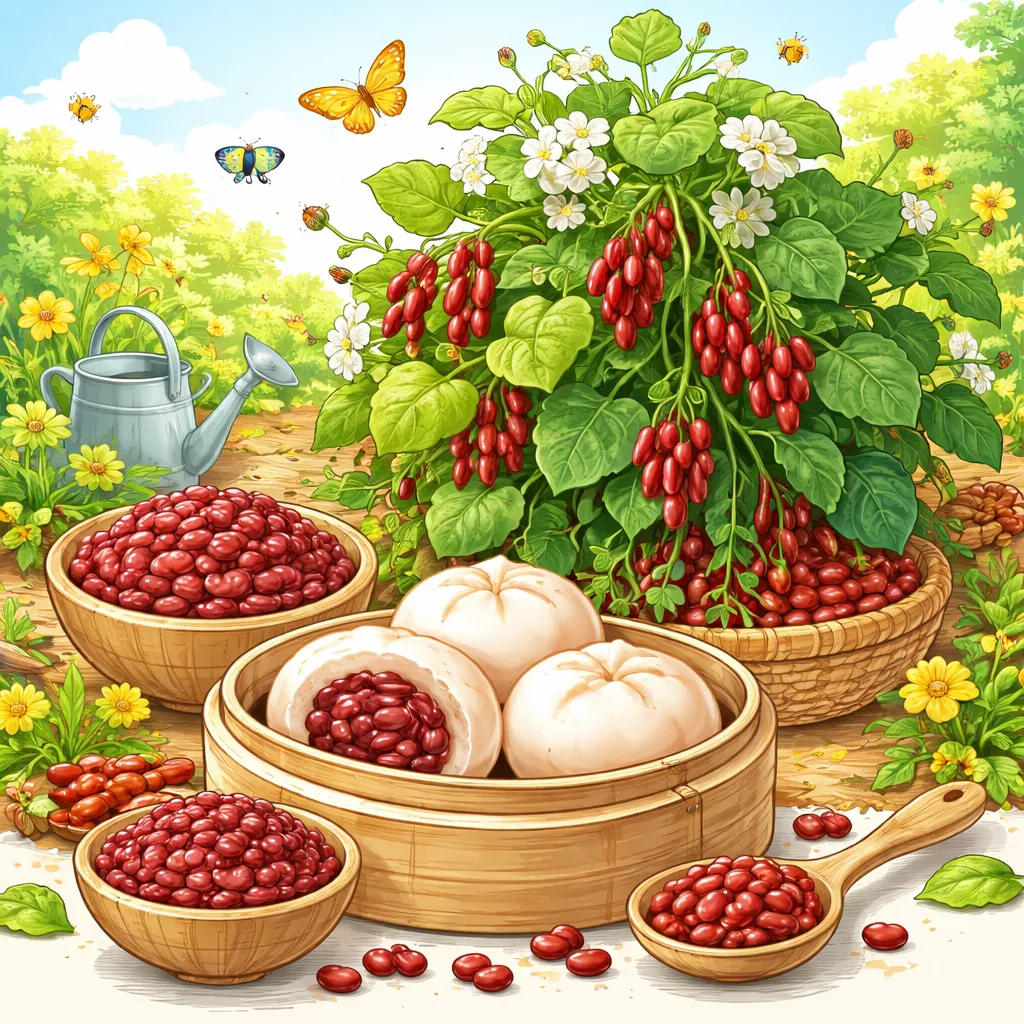

Have you ever eaten a sweet, red bean paste inside a bun or a pancake? That delicious, smooth, and slightly sweet filling comes from a very special little bean. It is small, round, and has a beautiful deep red color. In many parts of Asia, this bean is a star of desserts, but it’s also a super healthy and nutritious food. It grows on a friendly, bushy plant that is easy to grow. Let’s dig into the sweet and wholesome world of the Adzuki Bean plant.
Let’s Learn the Word! – Open the Treasure Box of Language
Formal Name and Pronunciation
This sweet little bean is called the Adzuki bean. Its scientific name is Vigna angularis. You can say it like this: /ædˈzuː.ki ˌbiːn/ (ad-ZOO-kee bean). The “Ad” sounds like “add,” “zu” sounds like “zoo,” and “ki” sounds like “key.” Ad-zu-ki. Say it: Adzuki. It’s a fun, bouncy word to say.
The Etymology Tale
The name “Adzuki” comes from Japan! In old Japanese, it was called “azuki,” which might have meant “small bean” or “little bean.” The word traveled to English, and we sometimes spell it with a ‘d’ as “adzuki.” Its name is a direct gift from Japanese language and culture, telling us that this is the cherished “little bean.”
Nicknames and Friendly Aliases
This bean is known by names that describe its color and home. It is most famously called the Red Bean or Red Mung Bean. In China, it is Hong Dou (red bean). Because it’s used in sweets, it’s called the Sweet Red Bean. Its scientific name calls it the Angular Bean. Sometimes it’s just called the Azuki Bean.
Building Your Word Web: Core Parts
Let’s learn the words for an Adzuki Bean’s life. The Seed is the hard, dry, burgundy-red bean. The Plant is a bushy annual vine. The Leaf is made of three green leaflets (trifoliate). The Flower is small and yellow. The Pod is long, thin, and cylindrical, holding the beans. A single Bean is the seed inside the pod. The Sprout is the young shoot that can grow from the bean. The Root has nodules that host helpful bacteria.
Action and State Words
Adzuki beans are busy helpers. The dry bean soaks up water. It can sprout to grow a new plant. The plant grows quickly in warm weather. It flowers and produces long pods. The beans are harvested, dried, and often boiled with sugar to make sweet paste. An adzuki bean plant is nutritious, fast-growing, soil-enriching, and versatile.
Ecosystem Friends Vocabulary
The adzuki bean plant is a friend to the garden soil. Its roots have nodules filled with Rhizobia bacteria. These invisible helpers take nitrogen from the air and fix it into the soil, like tiny natural fertilizer factories. This feeds the plant and makes the soil richer for other plants. In the field, bees might visit the flowers, and the plant provides shelter for small creatures.
Cultural Imprint in Language
In East Asia, the adzuki bean is a symbol of good luck, health, and happiness. In Japan, sweet red bean soup (oshiruko) is eaten in winter for warmth and good fortune. There is a saying that sharing red bean paste brings sweetness to relationships. The bean’s bright red color is also associated with celebration and warding off bad spirits in some traditions. It is a bean of joy.
Ready for Discovery
We know its sweet, lucky, and red name. Are you ready to be a garden detective and discover the secrets of this festive little bean? Let’s explore the life of the Adzuki Bean plant.
Discover the Plant’s Secrets! – A Nature Detective’s Notebook
The Plant Passport
Adzuki beans belong to the legume family, Fabaceae. Their scientific group is Vigna, making them cousins to mung beans and black-eyed peas. The plant is an annual, bushy vine, usually 1 to 2 feet tall but can trail longer. The leaves are trifoliate (three leaflets). The flowers are small, pale yellow, and grow in clusters. The pods are slim, cylindrical, and turn brown or black when dry, containing 5-12 small, red beans. It thrives in warm, temperate climates and grows well in summer.
Survival Smarts
Like other beans, the adzuki’s superpower is in its roots. The root nodules host bacteria that grab nitrogen from the air. This natural fertilizer lets the plant grow well even in soil that isn’t very rich. Another trick is the bean’s hard seed coat. It protects the seed for a long time, allowing it to survive until conditions are just right with enough warmth and water to germinate. The plant grows quickly, producing its crop in a short season.
Its Role and Gifts
The adzuki bean plant improves soil health by adding nitrogen. Its greatest gift is the bean itself. Adzuki beans are packed with protein, fiber, and minerals. They are easier to digest than many other beans. They are famous for being boiled and sweetened into red bean paste (anko) for desserts like buns, cakes, and ice cream. They are also used in savory dishes, soups, and even ground into flour. The young pods and sprouts are also edible.
Human History and Cultural Symbol
Adzuki beans were first domesticated in East Asia over 3,000 years ago, likely in China or the Himalayas. They have been a staple in Japanese, Korean, and Chinese cuisines for centuries. In ancient China, they were valued for medicinal properties. Today, they are enjoyed worldwide. Their use in celebratory foods makes them a symbol of sweetness, prosperity, and traditional culinary arts.
Fun “Wow!” Facts
Get ready for a color fact! The beautiful red color of the adzuki bean’s skin comes from natural plant pigments called anthocyanins, the same ones that make blueberries blue! And here’s a dessert fact: It takes about 2 cups of dried adzuki beans and a lot of stirring to make one batch of smooth, sweet red bean paste for filling buns.
From Festive Dessert to Your Garden
The story of the Adzuki Bean plant is one of sweetness and soil health. Would you like to grow your own patch of lucky red beans? You can grow adzuki beans easily in a pot or garden! Let’s see how.
Let’s Grow It Together! – A Little Guardian’s Action Guide
Good for Home Growing?
Yes, absolutely! Adzuki beans are easy and satisfying to grow. They need a warm, sunny spot and a summer to mature. You can grow a productive little patch in a large, deep pot or a sunny garden bed. They don’t take up too much space if you choose a bush variety. It’s a fun way to grow your own dessert ingredient!
Little Gardener’s Toolkit
You will need a packet of adzuki bean seeds (from a garden store or an online seed seller). Get a large, deep pot with drainage holes or find a sunny garden spot. Use rich, well-draining potting soil. Have a watering can, a small stick or trellis for support, and a sunny spot ready.
Step-by-Step Growing Guide
Planting Your Lucky Red Beans
Plant your beans in late spring or early summer, after the last frost and when the soil is warm. Plant the seeds about 1 inch deep and 4-6 inches apart. If in a pot, plant 4-5 seeds. Water the soil well. Place the pot in the sunniest spot you have. They love heat!
Care Calendar
Keep the soil moist until the seedlings sprout, which takes 5-10 days. Once growing, water regularly, especially when the plant flowers and forms pods. They love full sun. You don’t need much fertilizer because they make their own nitrogen! If the plant gets viney, gently tie it to a small stick for support.
Watch and Be Friends
Watch for the first two seed leaves, then the three-part true leaves. The plant will get bushy. Look for the small, pretty yellow flowers. After the flowers, tiny green pods will form. Watch the pods grow longer and eventually dry out and turn brown or black. You can even pop open a dry pod to see the shiny red beans inside! Measure your plant’s growth and count the pods.
Problem Diagnosis
If leaves turn pale yellow, it might need a little more water. Adzuki beans have few pests. If you see aphids, spray them off with water. The most common issue is planting too early in cold, wet soil, which can make the seeds rot. Wait for warm weather.
Your Rewards and Gifts
Your gift is growing a culturally important and delicious food. You are learning about plant life cycles, soil science, and patience. Caring for adzuki beans teaches responsibility, observation, and the sweet satisfaction of harvesting your own crop. You become a grower of tradition and taste.
Creative Fun
Start a Sweet Bean Journal. Draw your plant’s journey from seed to pod. Create art with the beautiful red beans by gluing them in patterns on paper. With an adult, try making a very simple sweet red bean paste or add cooked beans to a salad. Research a festival or holiday in Asia that uses red beans and make a poster about it. Write a recipe for your own “Lucky Red Bean Dessert.” Make a small model of a bean plant from pipe cleaners and red beads.
Growing Sweetness and Luck
By planting adzuki beans, you are not just growing a legume. You are growing a connection to world cultures, a lesson in sustainable gardening, and an appreciation for the plants that bring both nutrition and joy. You are a cultivator of sweetness.
Conclusion and Forever Curiosity
What a sweet, colorful, and lucky journey! You started by learning the word “Adzuki,” you discovered its secrets as the nitrogen-fixing, dessert-loving red bean, and you learned how to grow your own patch of this festive plant. You now know the Adzuki Bean plant is not just for paste; it is a soil enricher, a package of nutrition, a symbol of good fortune, and a bridge to delicious traditions. Remember, its power is in its vibrant color, its sweet gift, and its quiet work improving the earth. Your curiosity helps you taste the world and understand how food connects us all. Keep exploring different foods, asking about their stories, and planting seeds of knowledge and kindness. Your adventure to learn about the Adzuki Bean plant shows us that the smallest beans can hold the sweetest stories and the most vibrant celebrations.