
What Is This Plant?
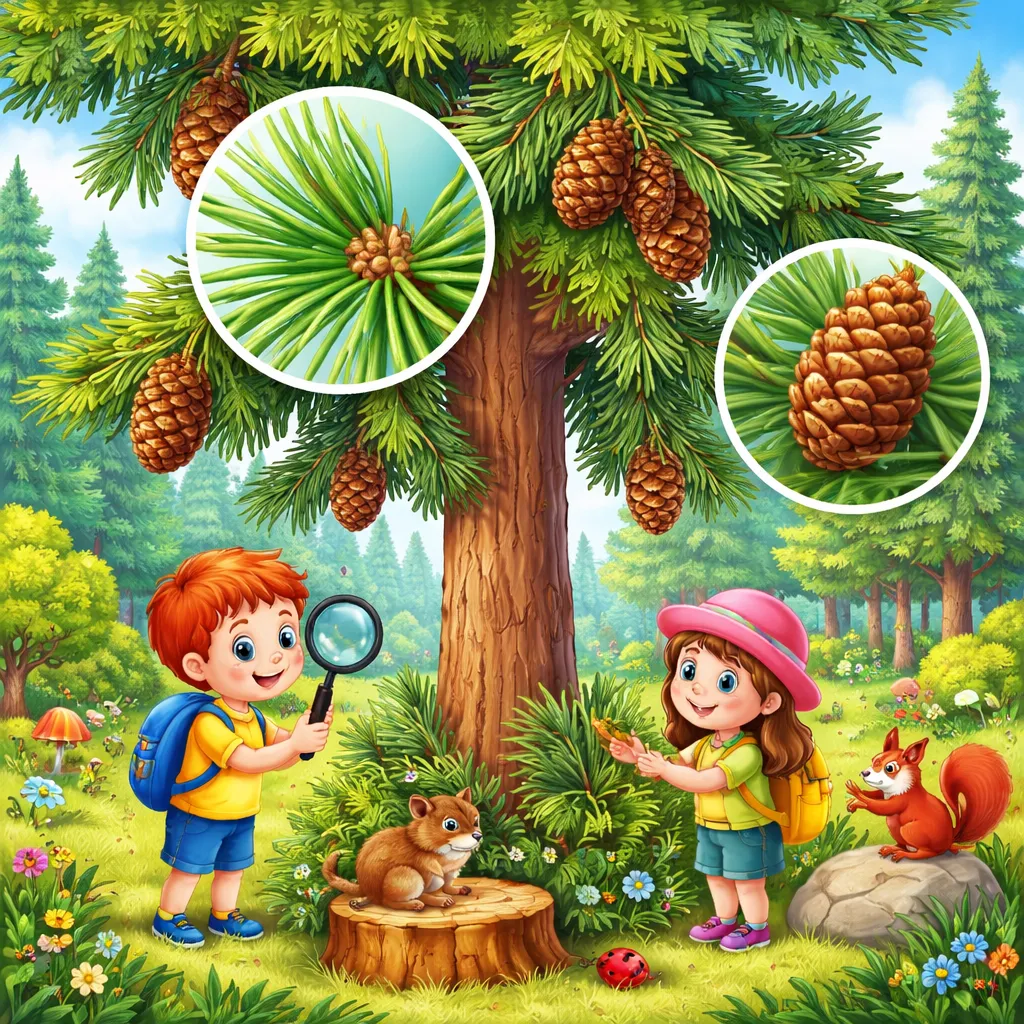
The pine plant is a tall, evergreen tree with needle-like leaves and woody cones. It grows in forests around the world. It has a straight trunk and branches that grow in whorls. The leaves are called needles. They are long and thin. They grow in bundles. The needles stay green all year. The tree produces cones. Male cones are small and release pollen. Female cones are larger and woody. They hold the seeds. Pine trees can live for hundreds of years. They grow very tall. For children, pine trees are like giants of the forest. The needles are fun to touch. The cones are fun to collect. Parents can take children to a pine forest or plant a pine tree in the yard. Children love the evergreen color and the pinecones. This plant teaches children about evergreen trees, forest ecosystems, and the beauty of trees that stay green all year.
English Learning About This Plant
The English name “pine” comes from the Latin word “pinus.” The pronunciation is “pine.” The International Phonetic Alphabet (IPA) is /paɪn/. The word has one syllable. Children can say it: pine. When we learn about pine plant, we learn words for its parts. The needle is the long, thin leaf. The bundle is the group of needles growing together. The cone is the woody structure that holds the seeds. The scale is the part of the cone that protects the seed. The resin is the sticky sap that comes from the trunk. These words help children describe this evergreen tree.
There is a famous saying about pines. They are symbols of strength and longevity. Another saying goes, “The pine tree stands tall through every season.” Parents can share these words with their child. They become gentle lessons about endurance and staying strong through all seasons. Pines are found throughout the Northern Hemisphere.
Plant Facts and Scientific Knowledge
The pine plant belongs to the genus Pinus. There are about 120 species. Pines are members of the pine family, Pinaceae. They are conifers. They are evergreen. They keep their needles all year. They are native to the Northern Hemisphere. They grow in forests, mountains, and sandy areas.
Pine needles are long and thin. They grow in bundles called fascicles. The number of needles in a bundle varies by species. Some pines have two needles per bundle. Others have three or five. The needles have a waxy coating to prevent water loss. They can stay on the tree for two to five years.
Pines produce two types of cones. Male cones are small and soft. They release pollen in spring. Female cones are larger and woody. They take two years to mature. The scales of the cone open to release seeds. The seeds are often eaten by birds and squirrels.
Pine trees are very important. They provide wood for building. They produce resin for turpentine. They are a habitat for wildlife. They also help clean the air.
Pines have symbolic meaning. They represent strength, resilience, and longevity. They are often planted as symbols of endurance. They are also used as Christmas trees in many cultures.
How to Grow and Care for This Plant
Growing a pine plant is a long-term family project. Plant a young pine tree in spring or fall. Choose a sunny spot. Pines need full sun. They need well-drained soil. They are drought-tolerant once established.
Dig a hole twice as wide as the root ball. Place the tree in the hole. Fill with soil. Water well. Children can help by holding the tree straight while you fill the hole.
Water young pines regularly during the first year. Once established, they need little water. They are drought-tolerant. Mulch around the base keeps the soil moist.
Pines need little fertilizer. A light feeding in spring is enough. Do not overfeed. Prune only to remove dead branches. Pines do not need much pruning.
Pines grow slowly. They can take many years to become large. Be patient. They will reward you with a beautiful, evergreen tree.
Benefits of Growing This Plant
Growing a pine plant brings many gifts to a family. First, pines are beautiful. They stay green all year. They provide shade and shelter. Second, pines provide pinecones. Children love to collect them.
Pines clean the air. They absorb carbon dioxide and release oxygen. Children learn that trees help us breathe.
Pines provide habitat for wildlife. Birds and squirrels live in them. Children can watch the animals.
Pines also teach about longevity. They can live for hundreds of years. Children learn that some things last a very long time.
What Can We Learn From This Plant
A pine plant teaches children about endurance. The tree stays green all year. It survives winter. Children learn that they can endure. They can stay strong through hard times.
Pines also teach about patience. They grow slowly. They take years to become large. Children learn that growth takes time. They can be patient.
Another lesson is about providing shelter. Pines provide homes for animals. Children learn that they can provide shelter for others. They can be a safe place.
Pines also teach about the seasons. The tree looks the same in all seasons. Children learn that some things are constant. They can find stability.
Fun Learning Activities
There are many simple activities to help children learn about pine plant. One activity is a needle study. Look at pine needles. They grow in bundles. Count how many needles are in one bundle. This builds observation.
Another activity is a cone study. Collect pinecones. Look at the scales. They open and close with moisture. Put a cone in water. Watch it close. Let it dry. Watch it open. This teaches about adaptation.
A nature journal works well for pines. Draw the tall tree with needle-like leaves. Draw the bundles of needles. Draw the cones. Label the parts: needle, bundle, cone, scale. Write the date when you collected the cones.
For art, try painting pines. Use dark green paint for the needles. Use brown for the trunk and cones. Paint the tall, straight tree. This creates a forest picture.
Vocabulary games are fun too. Write the words pine, needle, bundle, cone, scale, and resin on cards. Say each word. Ask your child to point to the part on the tree. Practice saying pine together.
Finally, try a pinecone activity. Collect pinecones. Use them for crafts. Make bird feeders by covering pinecones with peanut butter and birdseed. Hang them for the birds. This connects the tree to wildlife.
Through these activities, children build a deep connection with a tree that stands tall through all seasons. They learn new words, study cones, and discover the joy of endurance. The pine plant becomes a symbol of strength and patience. Each time they see a pine tree, children remember that they can endure. They remember that growth takes time. This evergreen tree opens a world of forest wonder, cone science, and the lasting lesson that the trees that stay green all year teach us to stay strong through every season.