
What Is This Plant?
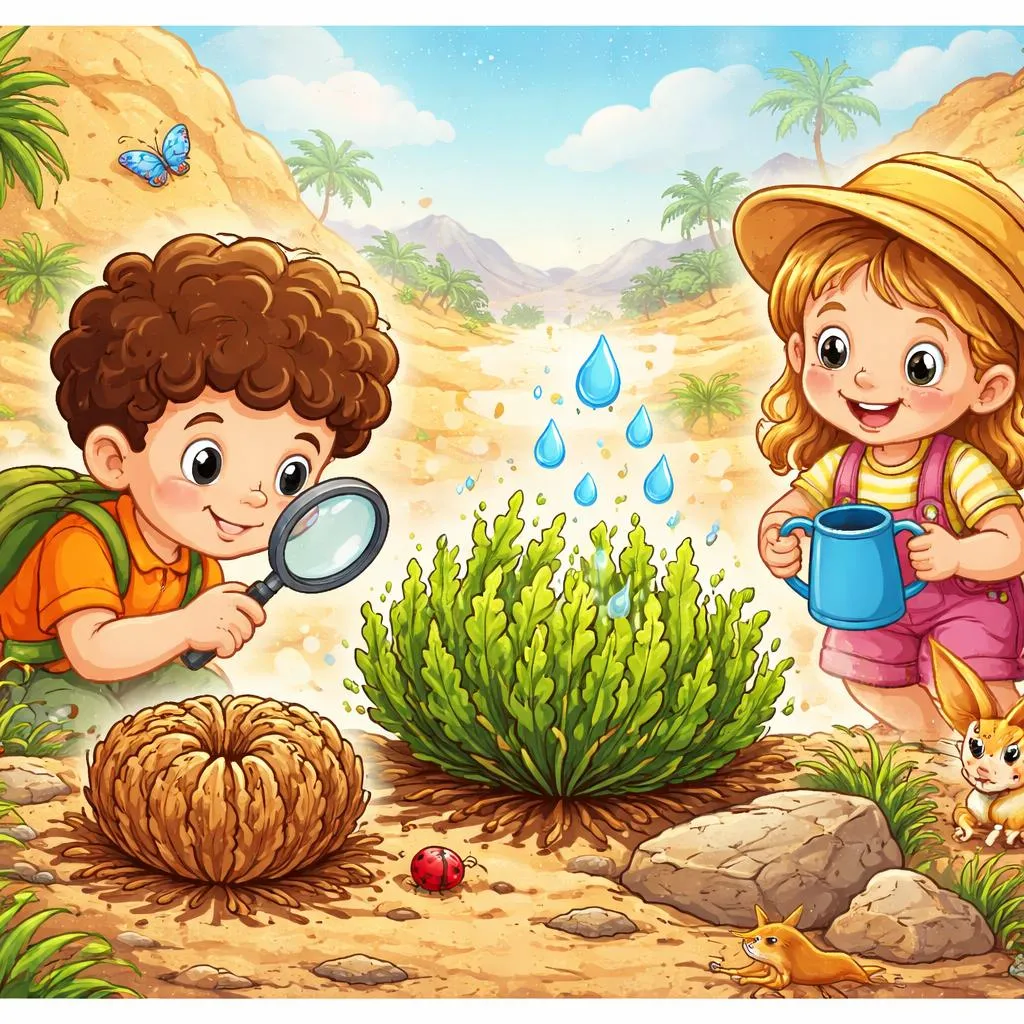
The resurrection plant is a remarkable desert plant that can dry up completely and then come back to life with water. It is not a true plant with roots. It is a type of spikemoss. It grows as a small, round clump. When dry, it curls into a tight brown ball. It looks dead. It can stay like this for years. When placed in water, it slowly unfurls. The brown ball turns green. The leaves spread open. It looks like it is coming back from the dead. That is how it got its name. It does not need soil. It grows on rocks and in deserts. For children, the resurrection plant is like a magic trick. One day it is a dry ball. The next day it is green and open. Parents can buy dried resurrection plants. Children can put them in water and watch them come alive. This plant teaches children about survival, patience, and the miracle of life.
English Learning About This Plant
The English name “resurrection plant” comes from its ability to come back to life after drying. The pronunciation is “rez-er-ek-shun plant.” The International Phonetic Alphabet (IPA) is /ˌrezəˈrekʃən plænt/. Children can say it: rez-er-ek-shun plant. When we learn about resurrection plant plant, we learn words for its parts. The frond is the green, fern-like part that opens when watered. The spore is the tiny, dust-like part that the plant uses to reproduce. The desiccation is the process of drying out completely. The revival is the process of coming back to life. The root is the part that anchors the plant, though this plant has very few roots. These words help children describe this miraculous plant.
There is a famous saying about resurrection plants. They are also called “rose of Jericho.” Another saying goes, “The resurrection plant teaches us that life can return after the driest times.” Parents can share these words with their child. They become gentle lessons about hope and resilience. Resurrection plants are native to desert regions of the Middle East and the Americas.
Plant Facts and Scientific Knowledge
The resurrection plant commonly sold is Selaginella lepidophylla. It is a member of the spikemoss family, Selaginellaceae. It is native to the Chihuahuan Desert in Mexico and the southwestern United States. It is also called the rose of Jericho or false rose of Jericho.
Resurrection plants are not true mosses. They are spikemosses. They have been on Earth for millions of years. They are related to ferns. They reproduce by spores, not seeds.
When the plant dries out, it curls into a tight ball. The stems and leaves fold inward. This protects the plant from sun and wind. The plant can stay in this dried state for years. It loses almost all its water. It appears dead.
When placed in water, the plant absorbs moisture. The stems and leaves unfurl. The plant turns green again. It can take a few hours to a few days. This process is called desiccation tolerance. Very few plants can do this.
The plant does not need soil. It grows on rocks and in deserts. It has very few roots. It absorbs water through its fronds.
Resurrection plants have symbolic meaning. They represent hope, renewal, and the triumph of life over death. They are used in religious ceremonies in some cultures.
How to Grow and Care for This Plant
Growing a resurrection plant is easy and fascinating for families. Buy a dried resurrection plant. It looks like a brown, dry ball. Place it in a shallow dish. Add water. The water should cover the base. Do not submerge the whole plant.
Watch the plant over the next few hours. It will slowly unfurl. It will turn green. Children can watch this process. Change the water every few days. Keep the base in water. The plant will stay green for several weeks.
After a few weeks, the plant may start to dry. Let it dry completely. It will curl back into a ball. It can be stored for years. When you want to see it come alive again, add water.
The plant needs bright, indirect light. It does not need soil. It does not need fertilizer. It is very easy to care for.
Benefits of Growing This Plant
Growing a resurrection plant brings many gifts to a family. First, the transformation is amazing. Children can watch a dead-looking ball turn green and open. Second, the plant teaches about survival. It can live without water for years.
Resurrection plants are very easy to care for. They need almost nothing. This builds confidence in young gardeners.
The plant teaches about adaptation. Children learn how desert plants survive. They learn about desiccation tolerance.
Resurrection plants also teach about hope. The plant comes back to life. Children learn that hope is important. Even in dry times, life can return.
What Can We Learn From This Plant
A resurrection plant teaches children about resilience. The plant survives without water for years. When water comes, it comes back to life. Children learn that they can be resilient. They can survive hard times.
Resurrection plants also teach about hope. The plant looks dead but is alive. Children learn that hope is powerful. They can hope for better times.
Another lesson is about patience. The plant takes time to unfurl. Children learn that patience is important. They can wait for good things.
Resurrection plants also teach about transformation. The plant changes from brown to green. Children learn that change can be beautiful. They can embrace transformation.
Fun Learning Activities
There are many simple activities to help children learn about resurrection plant plant. One activity is a time-lapse observation. Place a dried resurrection plant in water. Take photos every hour. Watch it unfurl. Make a flip book. This builds observation and patience.
Another activity is a cycle activity. Let the plant dry out completely. It will curl into a ball. Then add water again. Watch it come back to life. Do this multiple times. This teaches about the cycle of life.
A nature journal works well for resurrection plants. Draw the dried, brown ball. Draw the plant as it unfurls. Draw the fully open, green plant. Label the parts: frond, spore. Write the date when you started the experiment.
For art, try painting resurrection plants. Use brown for the dried ball. Use green for the open plant. Paint the transformation. This creates a story of renewal.
Vocabulary games are fun too. Write the words resurrection plant, frond, desiccation, revival, hope, and patience on cards. Say each word. Ask your child to point to the part on the plant. Practice saying resurrection plant together. Clap the syllables: rez-er-ek-shun plant.
Finally, try a hope activity. Talk about how the resurrection plant comes back to life. Ask your child about a time they had hope. Draw a picture of hope. This connects the plant to emotions and resilience.
Through these activities, children build a deep connection with a plant that teaches resilience and hope. They learn new words, watch time-lapse magic, and discover the joy of renewal. The resurrection plant becomes a symbol of hope and transformation. Each time they see it unfurl, children remember that life can return after dry times. They remember that patience brings renewal. This miraculous plant opens a world of desert wonder, time-lapse magic, and the lasting lesson that even when things seem dead, life is waiting to come back.