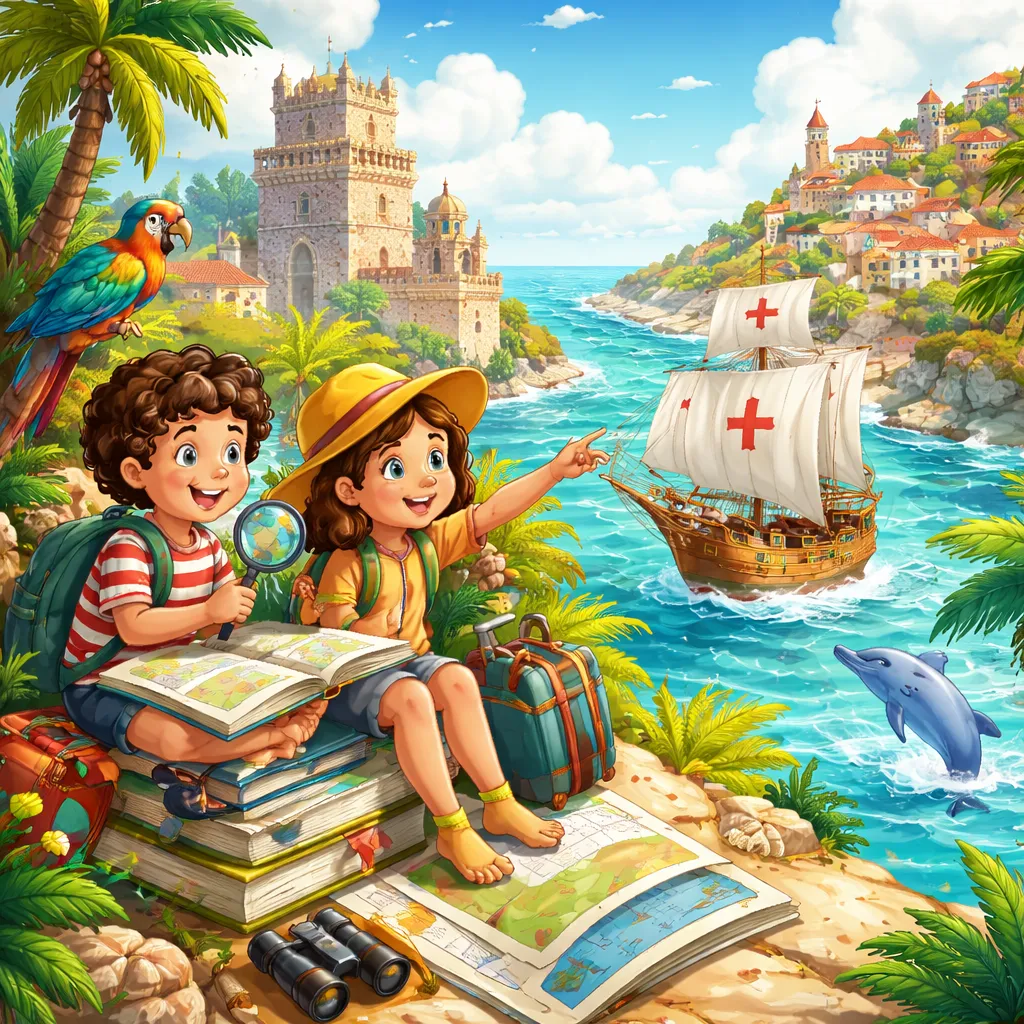

Introduction to Portugal
Language learning transports us to the western edge of Europe, where land meets the vast Atlantic Ocean. Today we explore a country with a rich maritime history. This nation launched explorers who changed the world. Children will discover colorful tiles that decorate buildings across the country. They will learn about a soulful music called fado that tells stories of longing and the sea. Exploring Portugal builds reading skills while revealing a land of discovery, art, and tradition. Every fact uncovers a new adventure. Every word invites young readers to imagine this coastal nation.
Where Is Portugal?
Portugal lies in southwestern Europe on the Iberian Peninsula. It shares the peninsula with Spain to the east and north. The Atlantic Ocean forms its western and southern borders. The capital city is Lisbon. Lisbon sits on the Tagus River where it meets the Atlantic. The country covers about thirty-five thousand square miles. It ranks as one of the older nations in Europe with borders that have remained largely unchanged for centuries. The landscape includes coastal plains, rolling hills, and mountains in the north. The Azores and Madeira islands in the Atlantic belong to Portugal. Finding Portugal on a map shows a country at the western edge of Europe, facing the open ocean.
Interesting Facts About Portugal
Portugal offers countless remarkable facts for young learners. It was the starting point of the Age of Exploration. Portuguese explorers like Vasco da Gama sailed to India. Ferdinand Magellan led the first expedition to circumnavigate the globe. Another interesting fact involves the Portuguese language. It is spoken by over two hundred fifty million people across four continents. Brazil, Africa, and Asia all have Portuguese speakers.
Portugal also has a unique art form. Azulejos are glazed ceramic tiles that cover buildings inside and out. Some tiles tell historical stories. Others form intricate geometric patterns. Another fun fact involves fado music. Fado, meaning "fate," features melancholic melodies and lyrics about the sea, love, and longing. UNESCO recognizes fado as an Intangible Cultural Heritage.
The country also has a unique culinary tradition. Pastéis de nata are custard tarts with crispy, flaky crusts. The original recipe comes from the Jerónimos Monastery in Lisbon. Another interesting fact involves cork. Portugal produces about half of the world's cork. Cork trees grow across the country. Harvesters strip the bark every nine years without harming the trees. Portugal also has the longest bridge in Europe. The Vasco da Gama Bridge spans over ten miles across the Tagus River. These facts show children a country of exploration, art, and natural products.
Key Vocabulary About Portugal
Let us build vocabulary for this Atlantic nation. These words help children describe what they learn.
Azulejo: a glazed ceramic tile used in Portuguese architecture.
Fado: a traditional Portuguese music genre.
Explorer: a person who travels to discover new places.
Cork: the bark of the cork oak tree, used for bottle stoppers.
Tagus: the river that flows through Lisbon.
Pastéis de Nata: Portuguese custard tarts.
Iberian: relating to the peninsula shared by Portugal and Spain. Introduce these words with pictures and stories. Show blue and white azulejos forming patterns. Show a fado singer with a Portuguese guitar. Let children say each word aloud. These vocabulary words give children the language to explore Portugal's culture and history.
Simple Sentences for Reading Practice
Short sentences help new readers build confidence. Use these sentences about Portugal for practice.
Portugal is a country in southwestern Europe.
The capital city is Lisbon.
The Atlantic Ocean borders Portugal to the west.
Portuguese explorers sailed across the world.
Azulejos are colorful ceramic tiles.
Fado music tells stories of the sea.
Pastéis de nata are famous custard tarts. Read each sentence together. Let children point to the words. Encourage them to repeat after you. Use pictures to show each fact. These simple sentences prepare young readers for longer passages.
Short Reading Passage About Portugal
Here is a short passage for children to read together.
“Portugal sits on the western edge of Europe. The Atlantic Ocean crashes against its shores. The capital, Lisbon, rises on hills above the Tagus River. Yellow trams climb steep streets. Buildings wear azulejos, blue and white tiles that tell stories of saints and kings. Portuguese sailors once set sail from this coast. They pushed into unknown waters. They reached Africa, India, and Brazil. Their journeys changed the world. In Lisbon's narrow streets, fado music drifts from taverns. A singer's voice rises. A Portuguese guitar weeps with longing. The songs speak of the sea and those who never returned. In the Belém district, the scent of custard tarts fills the air. Pastéis de nata bake in a shop that has used the same recipe for nearly two hundred years. Across the countryside, cork trees stretch their branches. Workers strip the bark every nine years. Portugal gave the world explorers, tiles, and tarts.”
Read this passage slowly together. Pause to talk about each idea. Ask children to find vocabulary words in the text. This activity builds reading fluency and deepens understanding.
Fun Questions About Portugal
Questions make reading interactive and engaging. Use these to start conversations with young learners.
What is the capital city of Portugal?
What ocean borders Portugal to the west?
What are the colorful ceramic tiles called?
What music tells stories of longing and the sea?
What famous explorers came from Portugal?
What sweet treat comes from Lisbon? Let children answer in complete sentences. Encourage them to use new vocabulary. Ask them to imagine walking through Lisbon streets. What colors and sounds would they experience? Creative questions make the topic personal and exciting.
Tips for Learning English with This Topic
Use Portugal to create rich English learning experiences. Start with a map activity. Let children find Portugal on the Iberian Peninsula. Point out its Atlantic coast and how it faces the open ocean. Discuss how this location inspired exploration.
Next, introduce the vocabulary through a hands-on activity. Create simple azulejos using white paper and blue markers. Let children draw patterns or scenes. For pastéis de nata, bake or taste custard tarts together. Talk about the famous recipe. Use the words "azulejo," "fado," and "explorer" during the activity.
Read the passage aloud with a sense of longing and adventure. Let your voice reflect the melancholy of fado and the excitement of exploration. After reading, let children draw a scene from Portugal. One child might draw a building covered in blue and white azulejos. Another might draw a caravel ship sailing into the ocean. Let them label their drawings with vocabulary words. Add blue for the Atlantic and white for the tiles.
Incorporate a history and geography connection. Talk about why Portugal became a center of exploration. Discuss how explorers used new ship designs to sail further than ever before. This shows children that language learning reading connects to understanding world history.
Use music and movement to enhance the experience. Listen to fado music with its guitar and voice. Let children move like waves on the Atlantic. Pretend to sail a caravel across the ocean. Physical activity reinforces learning in joyful ways.
Encourage children to share their knowledge. Let them tell a family member about the Portuguese explorers. They can explain what azulejos are and where to find them. Teaching others builds confidence and deepens understanding.
Connect Portugal to your child's world. Ask, “What explorers do we learn about?” Compare them to Portuguese explorers. Ask about tiles or decorations in your home. Compare them to azulejos. These connections help children see that language learning reading is about understanding different cultures and their contributions. By exploring Portugal together, you give children a rich experience. They learn new words, discover a land of explorers and tiles, and grow their love for reading. This Atlantic nation becomes a meaningful part of their learning journey.