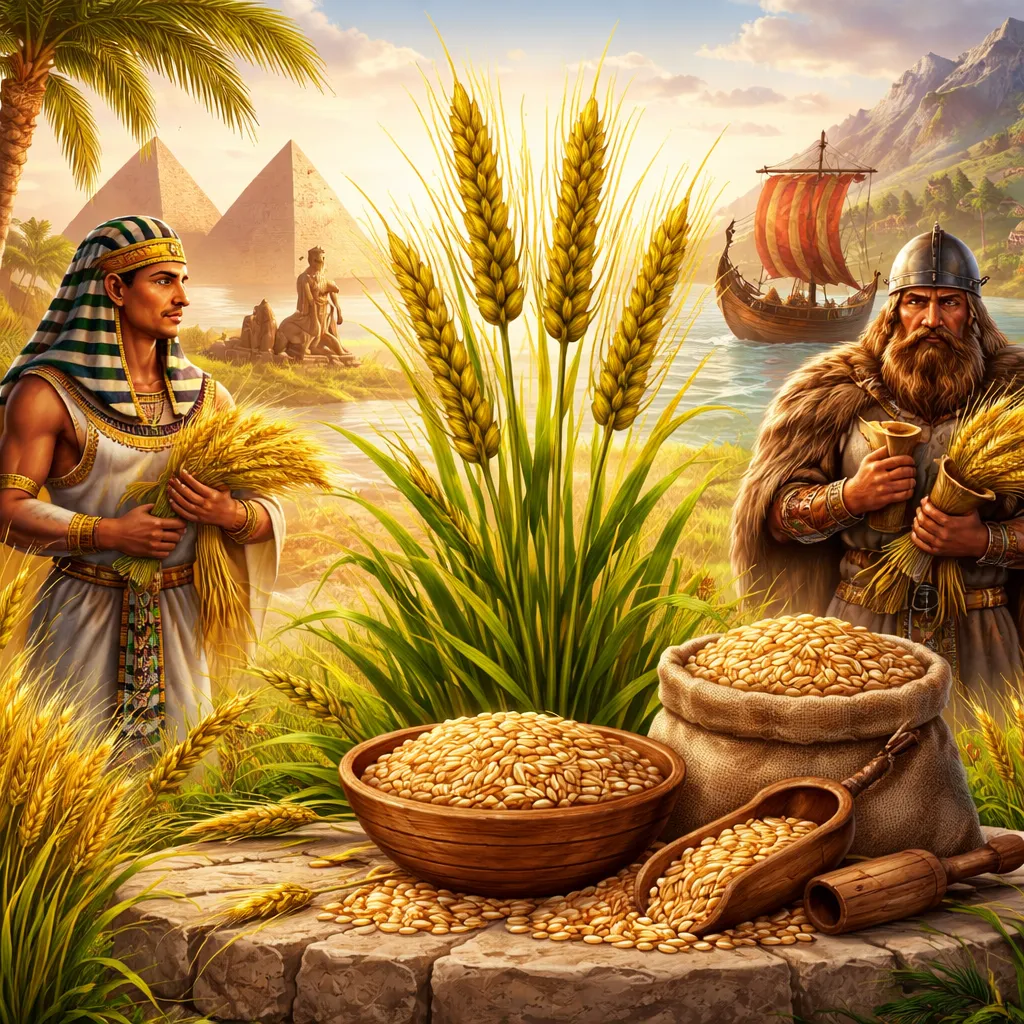

Have you ever eaten a warm, hearty bowl of soup with little chewy grains in it? Or maybe you’ve seen golden fields of grass that look like they’re waving with long, whiskery tops. This plant is one of the oldest friends of farmers. Ancient Egyptians used it to make bread, and Vikings carried it on their long ships. It’s a tough grain that can grow in cool, short summers, and it’s used to feed animals, make bread, and even brew a special drink. Let’s step back in time to learn about the hardy and historic Barley plant.
Let’s Learn the Word! – Open the Treasure Box of Language
Formal Name and Pronunciation
This ancient grain is called Barley. Its scientific name is Hordeum vulgare. You can say it like this: /ˈbɑːr.li/ (BAR-lee). The “Bar” rhymes with “car,” and “ley” sounds like “lee.” Bar-ley. Say it: Barley. It’s a strong, earthy-sounding word.
The Etymology Tale
The word “Barley” is very old. It comes from the Old English word “bære” or “bere.” This word is related to the Latin word “farina” meaning flour, and even to an ancient word that meant “the bearded one,” because of the long, whisker-like awns on the grain head. Its name has always been connected to its hairy, bearded look.
Nicknames and Friendly Aliases
Barley has names that describe its type and use. The main kind is Common Barley. Based on how the seeds arrange, we have Two-row Barley and Six-row Barley. When the husk is polished off, it’s called Pearl Barley. Barley grown for animal food is Feed Barley. For making beer and whiskey, it’s called Malting Barley. Sometimes it’s simply called the Pioneer Grain.
Building Your Word Web: Core Parts
Let’s learn the words for Barley’s hardy body. The Culm is the sturdy, hollow stem. The Spike is the dense seed head at the top; it’s also called an ear. The Awn is the long, stiff, whisker-like bristle that sticks out from each seed, making the head look bearded. A single Grain is the barley seed. The Rachis is the central stem of the spike that the grains are attached to. The Leaf is long, narrow, and wraps around the stem at the base. A Field of barley is a barley field.
Action and State Words
Barley plants are tough and quick. They grow fast in cool weather. The awns sway and catch the wind. Farmers harvest the golden spikes. The grains are malted for brewing by soaking and drying. Barley tolerates poor soil and a little salt. A barley plant is hardy, fast-maturing, nutritious, and versatile.
Ecosystem Friends Vocabulary
A barley field is a seasonal cafe for wildlife. Small birds like sparrows feast on the grains. Mice and other rodents find shelter and food. Bees and other insects visit the flowers. The plant provides quick ground cover, protecting the soil. After harvest, the stubble (leftover stems) gives shelter to small creatures and food for the soil.
Cultural Imprint in Language
Barley is a symbol of ancient sustenance, work, and celebration. An old English unit of measurement was the barleycorn, the length of a single grain of barley! This shows how important it was. In the Bible, barley bread is a symbol of humble nourishment. In many cultures, barley represents a successful harvest and the foundation of a community. It is the grain of both daily bread and festive drink.
Ready for Discovery
We know its ancient, bearded name. Are you ready to be a history detective and uncover how this grain built empires and filled bellies for thousands of years? Let’s explore the world of the Barley plant.
Discover the Plant’s Secrets! – A Nature Detective’s Notebook
The Plant Passport
Barley belongs to the grass family, Poaceae. Its genus is Hordeum. It is an annual grass, usually growing 2 to 3 feet tall. The stem is smooth and hollow. The leaves are long and slender. The flower is a dense spike, where the grains grow in rows (two or six). Each grain is covered by a husk and has a long, stiff awn. It grows best in cool, temperate climates and has one of the shortest growing seasons of all cereal grains. It is planted in early spring or fall.
Survival Smarts
Barley’s superpower is speed and toughness. It matures very quickly, often in about 90 days. This lets it grow in places with short, cool summers, like in the far north or high in the mountains. Its long awns are a clever trick. They help the seed head catch the wind for better pollination, and they may also discourage birds and animals from eating the seeds. Barley can also grow in soil that is a bit salty or not very fertile, where other grains might struggle.
Its Role and Gifts
Barley is a workhorse of the grain world. The grain is a major source of animal feed, especially for pigs, cattle, and poultry. For people, it is used in soups, stews, bread, and as a nutritious rice alternative (like pearl barley). Its most famous gift to industry is malting. The grains are soaked and allowed to sprout, which creates enzymes that turn starch into sugar. This sugary malt is the key ingredient for brewing beer and making whiskey. The straw is used for animal bedding and mulch.
Human History and Cultural Symbol
Barley was one of the first grains ever domesticated, over 10,000 years ago in the Fertile Crescent. It was a staple food of ancient Egyptians, Greeks, and Romans. The Sumerians and Babylonians brewed beer from it. It was so valuable that it was used as money. Barley spread with civilizations across Europe and Asia, allowing people to settle in cooler climates. It represents the dawn of agriculture, resilience, and the deep connection between farming and culture.
Fun “Wow!” Facts
Get ready for a measurement fact! The old English inch was officially defined as “three grains of barley, dry and round, placed end to end.” And here’s a space fact: Barley is one of the crops being studied for growth in space and on Mars because it’s so tough and fast-growing! It’s a potential pioneer grain for other planets.
From Ancient Field to Your Garden
The story of the Barley plant is one of endurance and utility. Would you like to grow a patch of this historic grain? You can grow barley in a container or garden bed easily! Let’s see how.
Let’s Grow It Together! – A Little Guardian’s Action Guide
Good for Home Growing?
Yes, it’s perfect for a first-time grain grower! Barley is easy, fast, and doesn’t need much space. You can grow a satisfying patch in a large, wide pot or a small garden bed. You’ll get to see the whole life cycle quickly, from seed to bearded head. It’s a fantastic way to connect with agricultural history.
Little Gardener’s Toolkit
You will need a packet of barley seeds (from a garden store or online; look for hulled or hull-less barley meant for planting). Get a wide, shallow pot or a sunny garden spot. Use regular potting soil or garden soil. Have a watering can and a sunny spot ready.
Step-by-Step Growing Guide
Planting Your Historic Grain
Barley loves cool weather. For a spring crop, plant as soon as the soil can be worked in early spring. For a fall crop, plant in late summer. Scatter the seeds evenly over the soil. Cover them with about half an inch to an inch of soil. Pat the soil down gently. Water the area well so the soil is moist.
Care Calendar
Keep the soil moist until the seeds sprout, which takes about a week. Once growing, barley doesn’t need much water unless it’s very dry. It loves full sun. You don’t need to fertilize it much; it’s not a picky eater. Just watch it grow quickly into a green carpet, then shoot up tall.
Watch and Be Friends
Watch for the grass-like green shoots. They will grow into a dense clump. The exciting part is when the stem elongates and the ear starts to form inside a sheath. Then, it will emerge, and you’ll see the awns! Watch the head go from green to a golden-tan color. Gently feel the prickly awns. Listen to the rustling sound. You are growing a piece of ancient history.
Problem Diagnosis
If the plants look stunted and pale, the soil might be too poor; a little compost can help. Birds might be attracted to the grains as they ripen; you can cover the heads with a lightweight mesh bag or net. The most common issue is overwatering, which can cause root rot. Let the soil dry a bit between waterings.
Your Rewards and Gifts
Your gift is growing a grain that changed the world. You are learning about the fast life cycle of a cereal crop, patience, and the satisfaction of growing your own food, even just a little. Caring for barley teaches you about the foundations of agriculture and the simple wonder of a seed becoming a harvest. You become a grower of history.
Creative Fun
Start an Ancient Grains Journal. Draw your barley plant through its stages. When the heads are golden, cut a few and use them in a dried autumn arrangement. Try “threshing” your tiny harvest by rubbing the dry heads between your hands over a bowl to release the grains. Research an ancient recipe that uses barley (like a simple soup) and try it with an adult. Create a timeline showing the history of barley cultivation. Write a short story about a Viking sailor carrying barley cakes on a long journey.
Growing a Living Legacy
By planting barley, you are not just growing grass. You are growing a living link to our ancestors, a lesson in self-sufficiency, and an appreciation for the humble grains that built civilizations. You are a cultivator of heritage.
Conclusion and Forever Curiosity
What a remarkable journey through time! You started by learning the word “Barley,” you discovered its secrets as the fast, hardy, and bearded grain of the ancients, and you learned how to grow your own stand of this historic crop. You now know the Barley plant is not just animal feed; it is a cornerstone of civilization, a master of adaptation, the soul of beer and bread, and a symbol of resilient abundance. Remember, its power is in its speed, toughness, and countless uses. Your curiosity helps you see the profound stories in everyday plants. Keep exploring the history of your food, planting seeds of knowledge, and tasting the legacy of the grains that feed the world. Your adventure to learn about the Barley plant shows us that the greatest journeys often begin with a single, hardy seed.