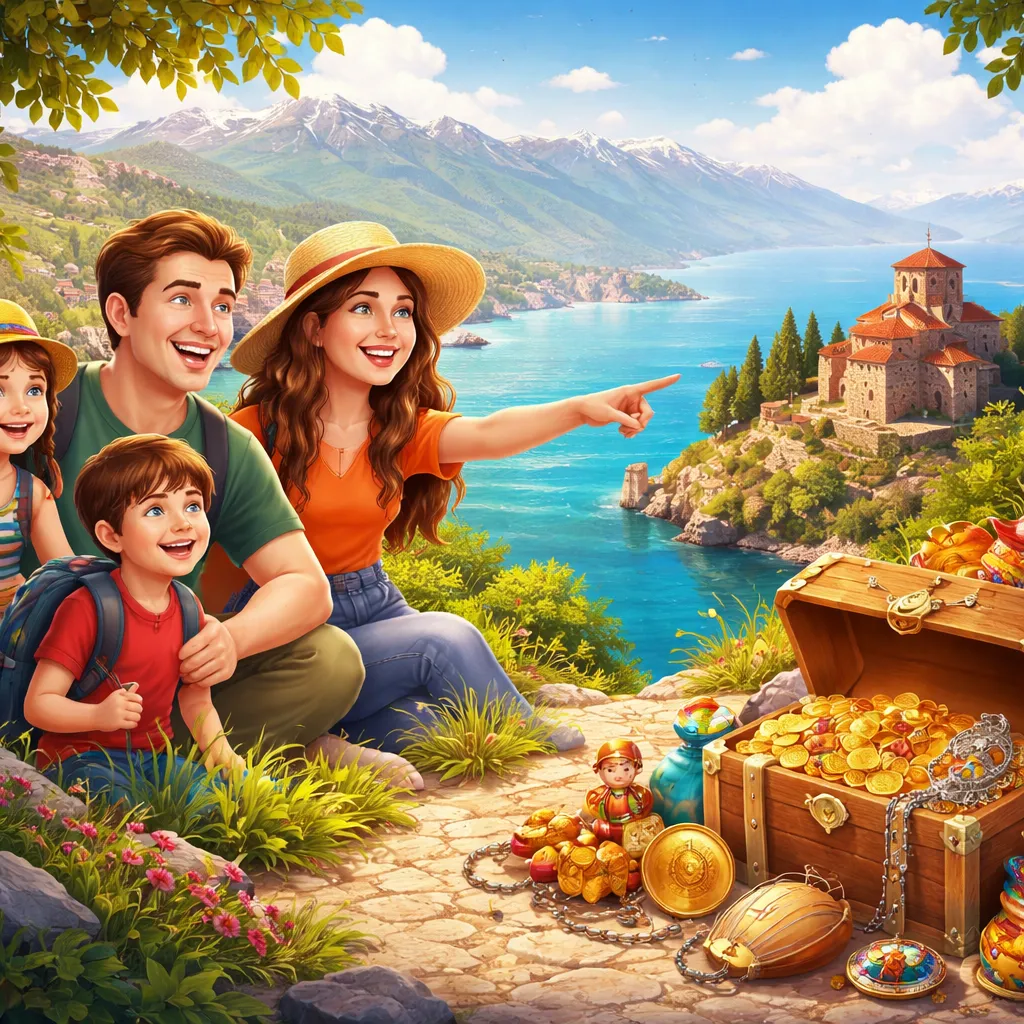

Introduction to North Macedonia
Language learning transports us to a land of ancient lakes and mountain valleys. Today we explore a Balkan country with roots stretching back thousands of years. This nation takes its name from a great kingdom of the ancient world. Children will discover a lake that ranks among the oldest in the world. They will learn about churches filled with centuries-old frescoes. Exploring North Macedonia builds reading skills while revealing a country where history lives in stone and water. Every fact uncovers a layer of the past. Every word invites young readers to imagine this hidden European gem.
Where Is North Macedonia?
North Macedonia lies in the Balkan Peninsula of southeastern Europe. It sits landlocked in the heart of the Balkans. The country shares borders with Kosovo to the northwest, Serbia to the north, Bulgaria to the east, Greece to the south, and Albania to the west. The capital city is Skopje. Skopje sits on the Vardar River in the north. The country covers about ten thousand square miles. Mountains cover much of the land. Deep valleys and lakes fill the spaces between peaks. Finding North Macedonia on a map shows a small country at the crossroads of the Balkans. Its location made it a meeting point for empires and cultures.
Interesting Facts About North Macedonia
North Macedonia offers many fascinating facts for young learners. It holds Lake Ohrid, one of the oldest and deepest lakes in the world. The lake has existed for over one million years. It shelters more than two hundred species found nowhere else. Another interesting fact involves the name. The country was formerly called Macedonia. It changed its name to North Macedonia in 2019 to resolve a dispute with Greece.
North Macedonia also has a rich religious heritage. The Church of St. John at Kaneo sits on a cliff overlooking Lake Ohrid. Built in the 1200s, it ranks as one of the most photographed churches in the Balkans. Another fun fact involves the city of Ohrid. This city once had three hundred sixty-five churches, one for each day of the year. About forty remain today.
The country also holds ancient ruins. The city of Heraclea Lyncestis dates back to the 4th century BCE. Alexander the Great's father founded it. Mosaics from Roman times still decorate the floors. Another interesting fact involves the Mother Teresa. The famous nun was born in Skopje in 1910. Her memorial house now stands in the city. North Macedonia also produces a unique wine region. The Tikveš wine region ranks among the oldest in Europe. These facts show children a country of ancient lakes, Byzantine churches, and deep history.
Key Vocabulary About North Macedonia
Let us build vocabulary for this Balkan nation. These words help children describe what they learn.
Fresco: a painting made on wet plaster on walls or ceilings.
Byzantine: relating to the Eastern Roman Empire.
Mosaic: a picture made from small pieces of colored stone or glass.
Landlocked: surrounded by land with no coastline.
Peninsula: a piece of land surrounded by water on three sides.
Monastery: a building where monks or nuns live.
Endemic: native to a particular place and found nowhere else. Introduce these words with pictures and stories. Show the Church of St. John at Kaneo with its cliffside location. Show Roman mosaics with their tiny pieces. Let children say each word aloud. These vocabulary words give children the language to explore North Macedonia's cultural and natural treasures.
Simple Sentences for Reading Practice
Short sentences help new readers build confidence. Use these sentences about North Macedonia for practice.
North Macedonia is a country in southeastern Europe.
The capital city is Skopje.
Lake Ohrid is one of the oldest lakes in the world.
The Church of St. John sits on a cliff above the lake.
Ancient ruins show Roman mosaics.
Mother Teresa was born in Skopje.
The country changed its name in 2019. Read each sentence together. Let children point to the words. Encourage them to repeat after you. Use pictures to show each fact. These simple sentences prepare young readers for longer passages.
Short Reading Passage About North Macedonia
Here is a short passage for children to read together.
“North Macedonia sits in the heart of the Balkan Peninsula. Mountains rise around deep valleys. Lake Ohrid shimmers in the southwest. This lake ranks among the oldest in the world. It holds fish and plants found nowhere else. The town of Ohrid hugs the lake shore. The Church of St. John at Kaneo perches on a cliff above the water. Its stone walls and red roof frame the lake behind. Inside, ancient frescoes cover the walls. Long ago, three hundred sixty-five churches filled this city. The capital, Skopje, lies to the north. The Vardar River flows through its center. A stone bridge from Ottoman times connects the old and new parts of the city. Near the river, a memorial honors Mother Teresa, who was born here. In the south, the ruins of Heraclea Lyncestis spread across a hillside. Roman mosaics decorate the floors with geometric patterns and animals. North Macedonia holds history in its stones and waters.”
Read this passage slowly together. Pause to talk about each idea. Ask children to find vocabulary words in the text. This activity builds reading fluency and deepens understanding.
Fun Questions About North Macedonia
Questions make reading interactive and engaging. Use these to start conversations with young learners.
What is the capital city of North Macedonia?
What lake ranks among the oldest in the world?
What church sits on a cliff above Lake Ohrid?
Who was born in Skopje?
What do Roman mosaics show?
What did North Macedonia change in 2019? Let children answer in complete sentences. Encourage them to use new vocabulary. Ask them to imagine standing at the Church of St. John. What would they see from the cliff? Creative questions make the topic personal and exciting.
Tips for Learning English with This Topic
Use North Macedonia to create rich English learning experiences. Start with a map activity. Let children find North Macedonia in the Balkans. Point out its landlocked location and neighboring countries. Discuss how its position made it a crossroads for empires.
Next, introduce the vocabulary through a hands-on activity. Create a simple mosaic using colored paper squares or beans. Let children arrange them into patterns. Talk about the Roman mosaics found at Heraclea. For the church, build a simple model of a church on a cliff using blocks or clay. Use the words "fresco," "mosaic," and "Byzantine" during the activity.
Read the passage aloud with reverence and wonder. Let your voice reflect the ancient beauty of Lake Ohrid and its churches. After reading, let children draw a scene from North Macedonia. One child might draw the Church of St. John with the lake below. Another might draw a Roman mosaic with colorful patterns. Let them label their drawings with vocabulary words. Add blue for the lake and gold for the frescoes.
Incorporate a history connection. Talk about the Byzantine Empire and its influence on the region. Discuss why Lake Ohrid is so old and unique. This shows children that language learning reading connects to ancient history and natural science.
Use music and movement to enhance the experience. Listen to traditional Balkan music with accordions and strings. Let children move like boats on Lake Ohrid. Pretend to walk through the ruins of an ancient city. Physical activity reinforces learning in joyful ways.
Encourage children to share their knowledge. Let them tell a family member about Lake Ohrid and its age. They can explain what frescoes are and where to find them. Teaching others builds confidence and deepens understanding.
Connect North Macedonia to your child's world. Ask, “What lakes have we visited?” Compare them to Lake Ohrid. Ask about old churches or buildings near you. Compare them to the Byzantine churches. These connections help children see that language learning reading is about understanding places of deep history. By exploring North Macedonia together, you give children a rich experience. They learn new words, discover a land of ancient lakes and churches, and grow their love for reading. This Balkan nation becomes a meaningful part of their learning journey.