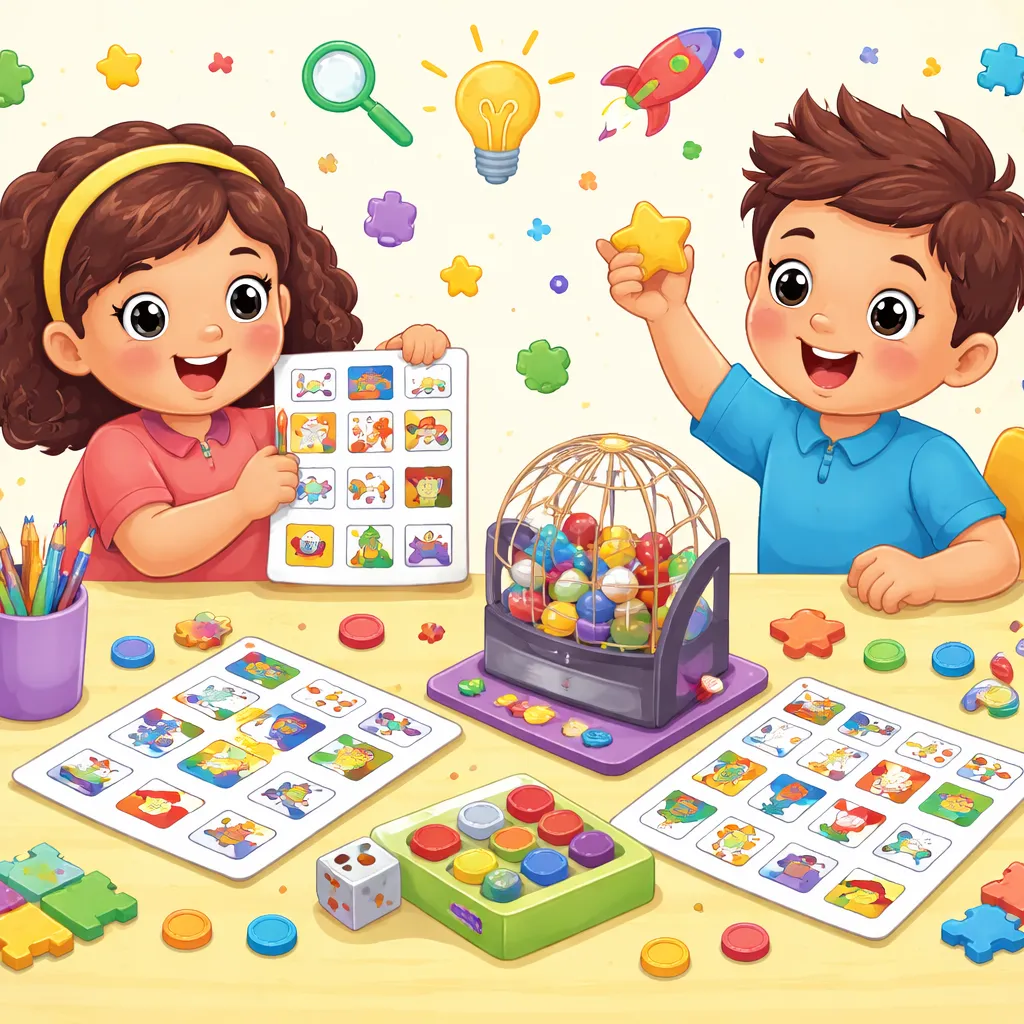

What Is This Situation? Bingo is a game everyone loves. You have a card with words. Someone calls out a word. You cover it. First to cover a row wins. It is simple. It is fun. And it is a powerful way to learn vocabulary.
DIY English bingo cards for vocabulary let you create your own games. You choose the words. You design the cards. You play with your child. The words you are learning become the game. Learning feels like play.
This situation happens during game time, during family time, during practice sessions. Bingo is flexible. You can play with two people or ten. You can play for five minutes or an hour.
These cards are best used playfully. Call out words. Celebrate wins. Play again. With DIY bingo, your child learns vocabulary while having fun.
Key English Phrases for This Situation Use phrases for making cards. "Let us make our own bingo cards. What words do you want to practice?" "We need a grid. Let us put words in each square."
Use phrases for playing. "Let us play bingo. I will call out a word. You cover it if you have it." "First to cover a row wins."
Use phrases for calling words. "The first word is cat. Do you have cat?" "Cover cat if you have it."
Use phrases for winning. "You have a row. Bingo! You win." "Good job. Let us play again."
Use phrases for practicing. "Let us read the words on your card before we start. Cat, dog, sun." "You know all the words."
Simple Conversations for Kids Dialogue 1: Making the Cards Parent: "Let us make our own bingo cards. What words do you want to practice?" Child: "Cat, dog, sun, moon." Parent: "Good. Let us put them on the card. We need four more words. What else?" Child: "Bird, fish, car, ball." Parent: "Perfect. Now we have eight words."
This conversation creates the bingo cards. The child chooses words. The parent guides. The learning begins.
Dialogue 2: Playing Bingo Parent: "Let us play bingo. I will call a word. Cover it if you have it. First word: cat." Child covers cat. Parent: "Good. Next: dog." Child covers dog. Parent: "Next: sun. Next: bird." Child covers sun and bird. Child: "I have a row. Bingo!" Parent: "You win. Good job."
This conversation plays bingo. The parent calls words. The child covers them. The child wins. The game is fun.
Dialogue 3: Playing Again Parent: "Let us play again. We can use the same cards or make new ones." Child: "Same cards." Parent: "Okay. First word: fish." Child covers fish. Parent: "Next: car. Next: ball. Next: moon." Child covers car, ball, moon. Child: "Bingo again!" Parent: "You are a bingo champion."
This conversation plays another round. The child wins again. The parent celebrates. The game continues.
Vocabulary You Should Know Bingo is a game with cards and called words. You can say "Let us play bingo." This is the activity.
Card is the paper with words on it. You can say "Make your bingo card." This is the tool.
Grid is the squares on the card. You can say "Draw a grid with four squares." This is the layout.
Word is what you put in the squares. You can say "Write a word in each square." This is the vocabulary.
Call means to say a word out loud. You can say "I will call the words." This is the action.
Row is a line of squares across or down. You can say "Cover a whole row to win." This is the goal.
How to Use These Phrases Naturally Use an excited and playful tone. Bingo is a game. Your voice should show it. "Bingo! You win."
Say the phrases as you play. Call the words clearly. "Cat." Let your child find it. The game builds listening.
Let your child be the caller. They call words. You cover. They practice saying the words.
Celebrate wins. "You got a row. Bingo!" Celebration makes the game fun.
Play again. The more you play, the more the words stick.
Common Mistakes to Avoid One mistake is making the grid too big. Start with 4 or 6 words. Young children can handle that. Add more as they learn.
Another mistake is calling words too fast. Give your child time to find the word. Slow down.
Some children want to play the same game again and again. That is good. Repetition builds mastery.
Avoid making it a test. Bingo is a game. If your child makes a mistake, gently correct. "That is cat. Cat starts with C."
Tips for Parents and Practice Ideas Use paper and markers. Let your child help make the cards. Writing the words is practice.
Use stickers as markers. Covering with stickers is fun. Stickers make the game special.
Laminate the cards. They last longer. You can use dry-erase markers.
Play with family. More players make it more exciting. Grandparents can join.
Keep the cards. Play the same set many times. Then make new cards with new words.
Fun Practice Activities Play picture bingo. Use pictures instead of words. Your child matches the called word to the picture.
Play sound bingo. Make animal sounds. Your child covers the animal. "Moo. Cow." The game builds listening.
Play outdoor bingo. Take the cards outside. Find things that match the words. "Find a tree. Cover tree." The game makes learning active.
Create bingo with stickers. Put stickers on the card. Call the words. Your child covers with a marker.
Sing the bingo song. "B-I-N-G-O, B-I-N-G-O, B-I-N-G-O, and bingo was his name-o." Music makes learning fun.
DIY English bingo cards for vocabulary turn learning into a game. You make the cards. You choose the words. You play together. With playful practice and patient guidance, your child will learn new words. They will listen. They will read. They will shout "Bingo!" with joy. That is the power of games. One word at a time, your child will learn. And you will be there to call the words and celebrate the wins.