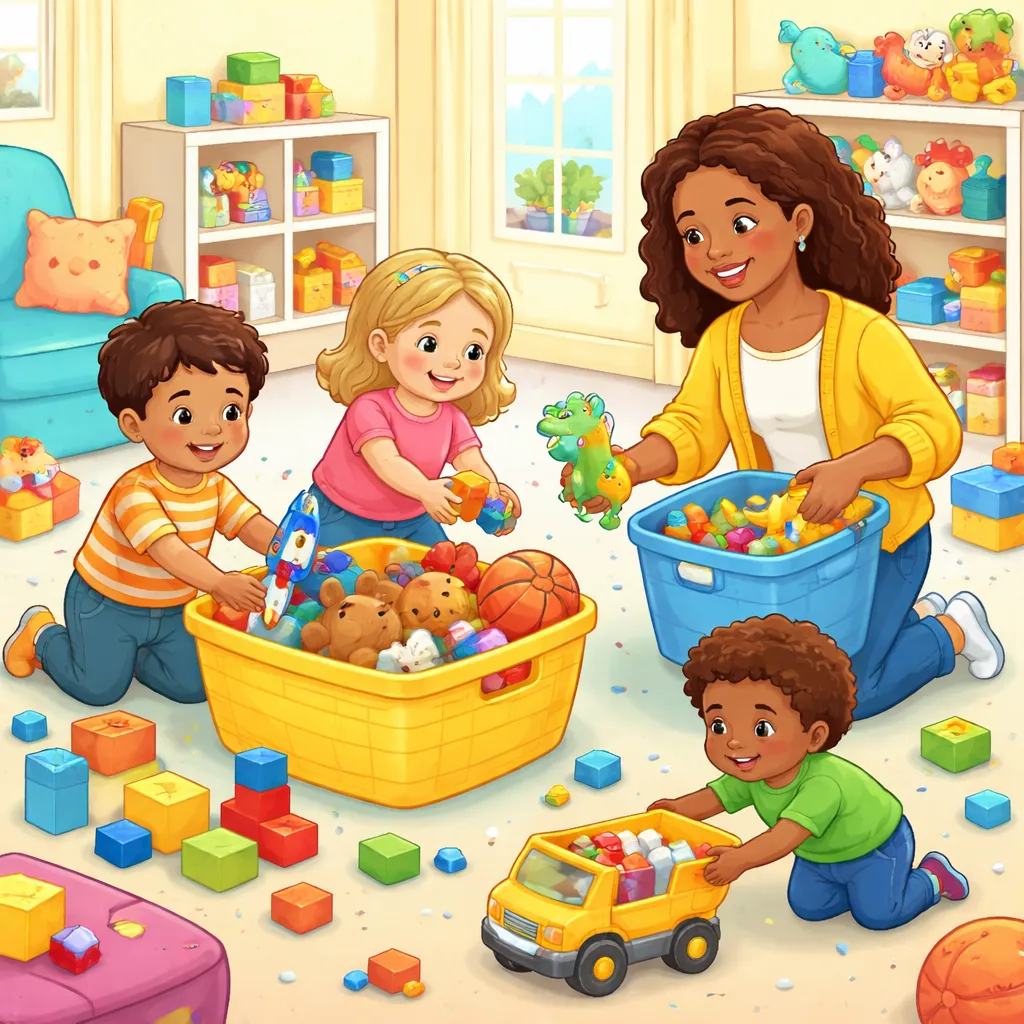

What Is This Situation? Playtime is fun. Toys cover the floor. Blocks are everywhere. Stuffed animals sit on the couch. Then playtime ends. It is time to put everything away. This is the moment that many children resist.
English phrases for cleaning up toys give you gentle words to make this transition smoother. Instead of a command, you offer an invitation. Instead of a battle, you create a team effort. The words turn a chore into a shared activity.
This situation happens in living rooms, bedrooms, and playrooms. It happens before meals, before bedtime, or when it is time for a new activity. Cleanup is a daily routine. With the right words, it becomes a positive part of the day.
These phrases are encouraging and clear. They tell your child what to do. They make cleanup feel like a game. They celebrate the effort. With these words, your child learns responsibility and cooperation.
Key English Phrases for This Situation Use phrases that signal cleanup time. "It is time to clean up" announces the transition. "Let us put the toys away" invites cooperation. "Cleanup time" is short and clear.
Use phrases that give specific directions. "Put the blocks in the box" tells where things go. "The books go on the shelf" gives a clear location. "Can you put the cars here?" points to the spot.
Use phrases that make it a game. "Let us see who can pick up the most toys" adds fun. "Can you put the red blocks away first?" gives a focus. "Let us race" turns cleanup into play.
Use phrases for teamwork. "I will pick up the big toys. You get the small ones." divides the work. "We are a cleanup team" builds partnership. "Let us do it together" invites connection.
Use phrases for praise. "You are such a good helper" celebrates cooperation. "Look how clean the room is!" shows the result. "We did it together" shares the success.
Simple Conversations for Kids Dialogue 1: Starting Cleanup Parent: "Playtime is almost over. It is time to clean up." Child: "No. I am still playing." Parent: "Let us put the toys away together. Then we can have a snack." Child: "Okay." Parent: "I will pick up the blocks. You get the cars. Ready, set, go."
This conversation acknowledges the child's resistance. The parent offers a positive reason to clean up. The parent divides the task. Cleanup becomes a game with a reward.
Dialogue 2: Giving Directions Parent: "Let us clean up. Where do the books go?" Child: "On the shelf." Parent: "Good. Put the books on the shelf." Child puts books away. Parent: "Now where do the dolls go?" Child: "In the basket." Parent: "Yes. Put the dolls in the basket."
This conversation uses questions to guide. The child knows where things go. The parent confirms. The child does the work. The parent provides the next direction.
Dialogue 3: Working Together Parent: "We are a cleanup team. I will pick up the big toys. You pick up the little toys." Child picks up small toys. Parent: "Good job. What is left?" Child: "The crayons." Parent: "Let us put them in the box together." They put crayons away. Parent: "We did it! The room looks great."
This conversation emphasizes teamwork. The parent and child each have a role. They check progress together. They finish together. The parent celebrates the result.
Vocabulary You Should Know Clean up means to put things in their proper place. You can say "Let us clean up." This is the main phrase for the activity.
Toy is something you play with. You can say "Put the toys away." This word names what you are cleaning.
Blocks are small wooden or plastic building pieces. You can say "Blocks go in the box." This is a specific direction.
Basket is a container for holding things. You can say "Put the dolls in the basket." This gives a clear location.
Shelf is a flat board where you put things. You can say "Books go on the shelf." This teaches organization.
Together means doing something with someone else. You can say "We cleaned up together." This word builds cooperation.
How to Use These Phrases Naturally Use a cheerful and encouraging tone. Cleanup does not have to be serious. If you sound happy, your child is more likely to join. Your tone sets the mood.
Say the phrases before playtime ends. Give a five-minute warning. "We will clean up in five minutes." This prepares your child. The transition is easier when they expect it.
Make cleanup part of the routine. Do it at the same times each day. Before lunch. Before dinner. Before bath. Routine builds habit. Your child knows what comes next.
Use the phrases during cleanup, not just at the start. Keep talking. "Good job putting that away. What is next?" Your words keep your child engaged.
Let your child see you cleaning up too. Do not direct from the couch. Get on the floor. Put toys away. Your actions teach as much as your words.
Common Mistakes to Avoid One mistake is giving too many directions at once. "Put the blocks in the box and the cars on the shelf and the dolls in the basket" is overwhelming. One direction at a time works better.
Another mistake is expecting a young child to clean up alone. Cleanup is a team activity for young children. Do it together. Your presence makes it possible.
Some parents use cleanup as punishment. "You have to clean up because you made a mess" creates negative feelings. Cleanup should be neutral. It is just what you do after play.
Avoid doing it all yourself while your child watches. That teaches that you will do it. Cleanup together teaches responsibility.
Tips for Parents and Practice Ideas Have a place for everything. Labeled bins and low shelves help children know where things go. When the home is organized, cleanup is easier.
Sing a cleanup song. "Clean up, clean up, everybody everywhere. Clean up, clean up, everybody do your share." Music makes the task fun.
Use a timer. "Let us see if we can clean up before the timer goes off." The timer adds fun and focus. It turns cleanup into a game.
Praise the effort, not just the result. "You worked so hard putting the blocks away" celebrates the process. Your child feels good about helping.
Start small. A young child can put away three toys. That is success. Do not expect the whole room. Small steps build the habit.
Fun Practice Activities Play the cleanup race game. "I will put away five toys. You put away five toys. Ready, go!" Racing makes cleanup active and fun.
Make a cleanup chart. Draw pictures of each toy category. Your child puts a sticker on the chart after putting that category away. The chart tracks progress.
Use a cleanup basket. Have a special basket for cleanup. Your child puts one toy in the basket and carries it to the shelf. The basket makes the task feel special.
Play "I spy" during cleanup. "I spy something blue that goes in the box." Your child finds the blue block and puts it away. This adds a thinking game to the task.
Role-play cleanup with toys. Your child makes a doll clean up. The doll says "I put my toys away." Your child practices the language through play.
English phrases for cleaning up toys turn a daily chore into a time of connection and learning. Your child learns responsibility. They learn cooperation. They learn that cleaning up is not a punishment. It is just what you do after play. With your cheerful words and steady presence, cleanup becomes part of the rhythm of the day. And when the room is clean and the toys are in their places, you both can feel proud. You did it together. That is the power of the right words at the right time.