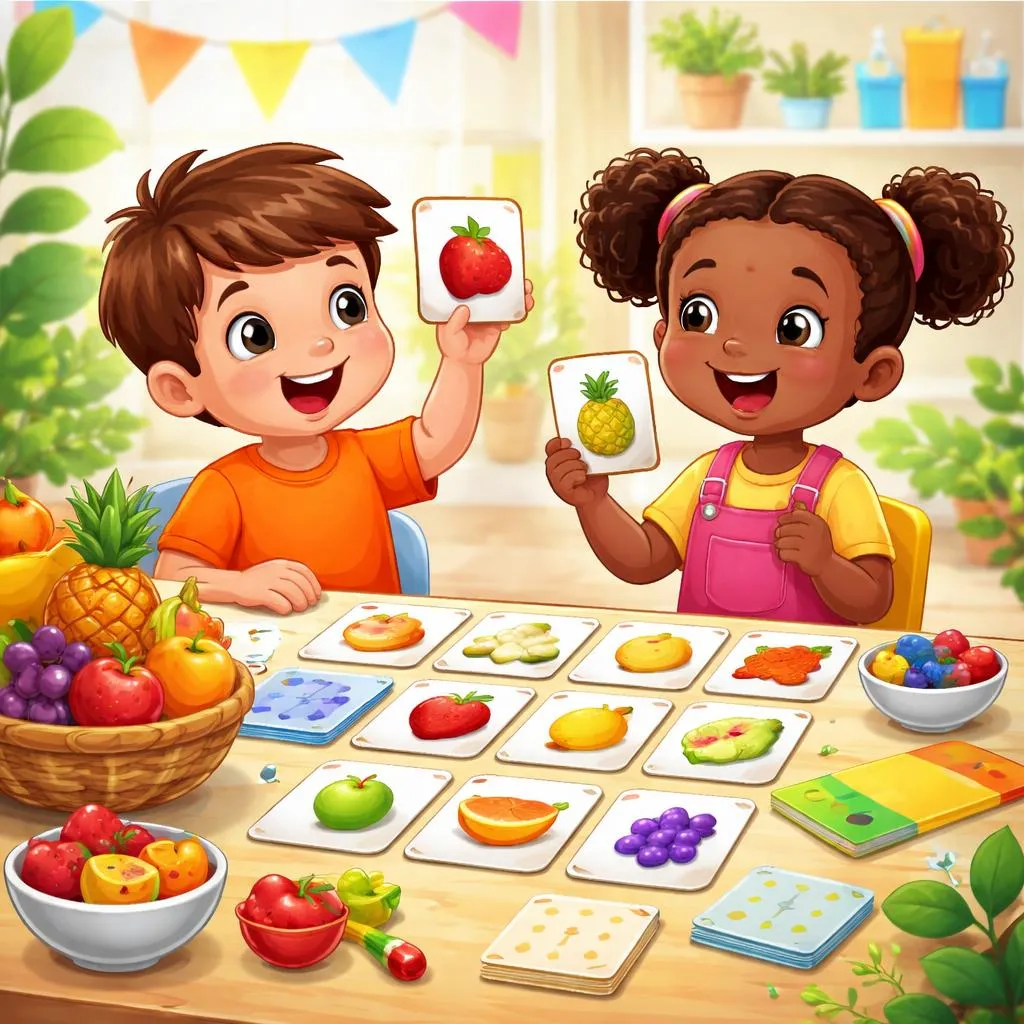

What Is This Situation? Matching games are simple and fun. You have cards with pictures. You have cards with words. You match them. Apple to apple. Banana to banana. It is a game. It is learning. Children love it.
Free ESL matching games for fruits give children a playful way to learn fruit names. Apple, banana, orange, grapes. They see the picture. They match the word. They learn vocabulary while having fun.
This situation happens during game time, during quiet time, during moments when children need a calm activity. Matching games are portable. You can play at home, on a trip, anywhere.
These games are best used playfully. Match cards. Say the words. Celebrate matches. With fruit matching, your child learns vocabulary while playing.
Key English Phrases for This Situation Use phrases for introducing the game. "Let us play a matching game. These are fruit cards. Match the picture to the word." "Find the apple picture. Now find the apple word. Match them."
Use phrases for playing. "Your turn. Find a picture. Now find the word that matches." "Good. You matched apple. Now try banana."
Use phrases for practicing words. "What fruit is this? Apple. Can you say apple?" "Apple. Good. Now find the apple word."
Use phrases for celebrating. "You matched apple. Good job." "You matched all the fruits. You win."
Use phrases for learning new fruits. "This is a kiwi. Have you ever eaten a kiwi?" "Kiwi is green inside. Let us match the kiwi card."
Simple Conversations for Kids Dialogue 1: Introducing the Game Parent: "Let us play a fruit matching game. Here are the fruit pictures. Here are the words. Match the picture to the word." Child: "I see an apple." Parent: "Yes. Find the apple word." Child finds apple word. Parent: "Match them. Good. Now find banana."
This conversation introduces the game. The parent guides. The child matches. The learning begins.
Dialogue 2: Playing Together Parent: "Your turn. Pick a picture." Child picks banana picture. Parent: "What fruit is that?" Child: "Banana." Parent: "Good. Now find the banana word." Child finds banana word. Parent: "Match them. You did it."
This conversation continues the game. The child names the fruit. The child matches. The parent praises.
Dialogue 3: Learning a New Fruit Parent: "This fruit is called a kiwi. Can you say kiwi?" Child: "Kiwi." Parent: "Good. Kiwi is green inside. Now find the kiwi word." Child finds kiwi word. Parent: "Match them. You learned a new fruit."
This conversation introduces a new fruit. The child repeats. The child matches. The vocabulary grows.
Vocabulary You Should Know Apple is a red or green fruit. You can say "I eat an apple." It is a common fruit.
Banana is a yellow fruit. You can say "I peel a banana." It is a favorite.
Orange is a round, orange fruit. You can say "I drink orange juice." It is sweet.
Grapes are small, round fruits that grow in bunches. You can say "I eat grapes." They are fun.
Strawberry is a red, sweet fruit. You can say "I love strawberries." They are a treat.
Kiwi is a brown fruit with green inside. You can say "Kiwi is fuzzy on the outside." It is exciting to learn.
How to Use These Phrases Naturally Use a playful and curious tone. Fruits are fun. Your voice should show it. "Let us match the apple. Yum!"
Say the phrases as you play. "Apple. Match it." The words keep the game moving.
Let your child lead. If they want to match a certain fruit, let them. Their interest is the engine.
Talk about the fruits. "Do you like bananas? I like bananas." Conversation builds vocabulary.
Celebrate every match. "You matched the strawberry. Good job." Celebration makes the game fun.
Common Mistakes to Avoid One mistake is making the game too hard. Start with four fruits. Add more as your child learns.
Another mistake is correcting pronunciation too much. If your child says "bana" instead of "banana," gently model. "Banana. Can you say banana?"
Some children want to play the same game again and again. That is good. Repetition builds mastery.
Avoid making it a test. Matching games are for fun. If your child is tired, stop. Play another day.
Tips for Parents and Practice Ideas Print the cards on cardstock. They last longer. Laminate them if you can.
Store the cards in a box or bag. Keep them where your child can reach. Independent play is learning.
Play with real fruit. Match the card to the real fruit. "Apple. This is a real apple."
Take the game outside. Match fruit cards to fruit trees or plants. Learning happens everywhere.
Let your child be the teacher. They show you the cards. They say the words. Teaching builds confidence.
Fun Practice Activities Play fruit bingo. Use the matching cards as calling cards. Your child covers the fruit on a bingo card. Bingo makes practice fun.
Make a fruit book. Staple paper together. Your child glues matching cards on each page. The book is a reference.
Play fruit memory. Turn all the cards face down. Flip two at a time. Find matching pairs. Memory builds concentration.
Create a fruit store. Use real fruit or toy fruit. Your child sells fruit. They use the matching cards as price tags. The store builds vocabulary.
Sing the fruit song. "Apple, apple, red and sweet. Banana, banana, a tasty treat. Orange, orange, orange juice. Fruit is good for you." Music makes learning fun.
Free ESL matching games for fruits turn vocabulary learning into a game. Apple, banana, orange, grapes. Match the picture to the word. With playful practice and patient guidance, your child will learn fruit names. They will match, say, and play. That is the power of games. One fruit at a time, your child will learn. And you will be there to match and celebrate together.