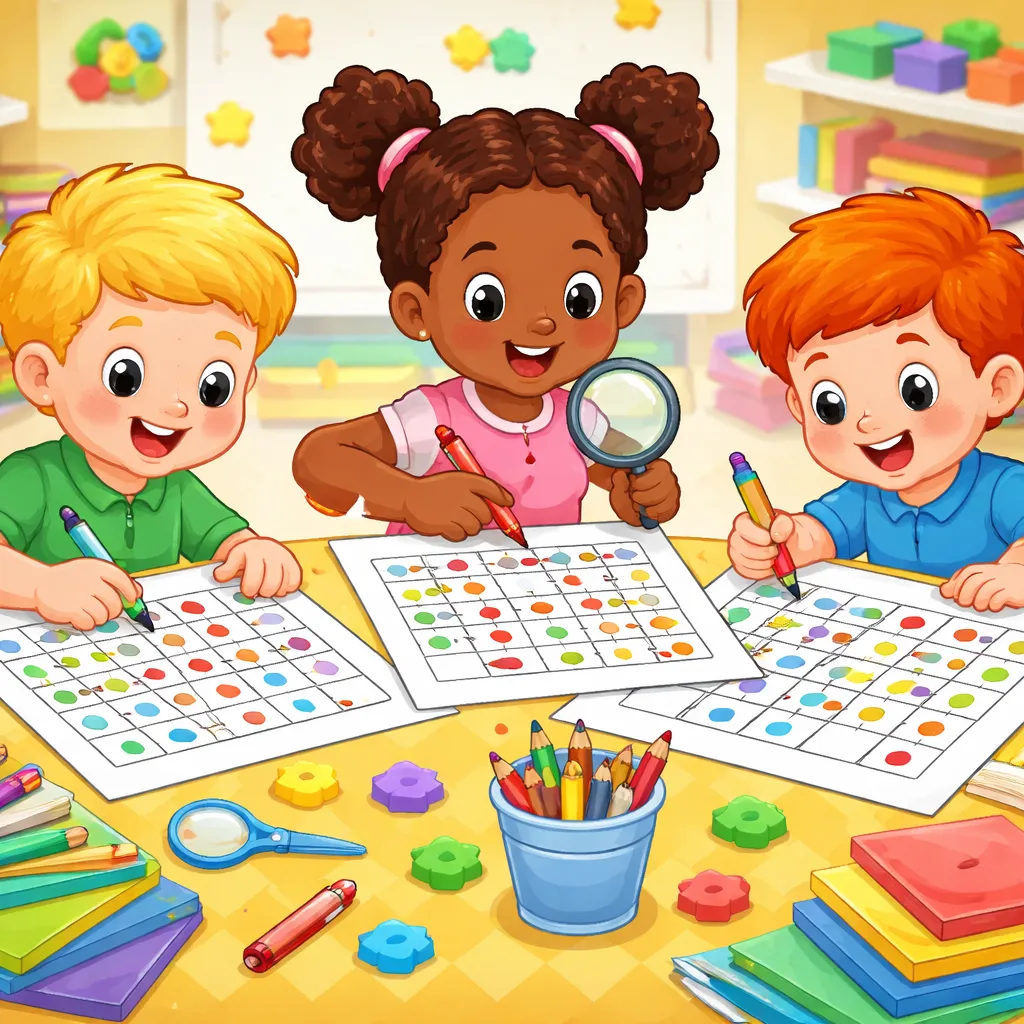

What Is This Situation? Sight words are the most common words in English. Words like the, and, was, and are. Children need to know them instantly. Word search puzzles make practice fun. You find the word in a grid. You circle it. You see it again and again.
Free sight word search puzzles give children a playful way to practice these important words. They search for the word. They read it. They circle it. The puzzle builds recognition. The game builds fluency.
This situation happens during quiet time, during practice time, during moments when children need a calm activity. Word searches are portable. You can do them at home, on a trip, anywhere.
These puzzles are best used with conversation. Read the word. Find the word. Say the word. The learning happens while searching.
Key English Phrases for This Situation Use phrases for introducing the puzzle. "Let us do a sight word search. Here is a list of words. Find them in the puzzle." "The first word is the. Can you find the?"
Use phrases for searching. "Look across. Look down. The might be in a line." "You found the. Good. Circle it."
Use phrases for reading. "What word did you find? The. Good." "Now find and. And. Can you find and?"
Use phrases for celebrating. "You found the. Good job." "You found all the words. You are a word detective."
Use phrases for practicing. "Let us read all the words you found. The, and, was, are." "You know these sight words."
Simple Conversations for Kids Dialogue 1: Starting the Puzzle Parent: "Let us do a sight word search. The first word is the. Look in the puzzle. Can you find the?" Child looks. Child: "Here it is." Parent: "Good. Circle it. What word is it?" Child: "The." Parent: "Yes. The. Good job."
This conversation introduces the puzzle. The child searches. The parent guides. The learning begins.
Dialogue 2: Finding More Words Parent: "Next word is and. Can you find and?" Child looks. Child: "Here." Parent: "Good. Circle it. What word is it?" Child: "And." Parent: "Yes. And. Now find was." Child finds was. Parent: "Good. You found three words."
This conversation continues the puzzle. The child finds more words. The parent praises. The vocabulary grows.
Dialogue 3: Finishing the Puzzle Parent: "Now find are. The last word." Child finds are. Parent: "Good. You found all the words. Let us read them." Child: "The, and, was, are." Parent: "You know these sight words. Good job."
This conversation finishes the puzzle. The child reads the words. The parent celebrates. The learning is complete.
Vocabulary You Should Know Sight word is a word you know instantly. You can say "The is a sight word." These are common words.
Word search is a puzzle with words hidden in a grid. You can say "Let us do a word search." This is the activity.
Find means to discover something. You can say "Find the word the." This is the action.
Circle means to draw a ring around. You can say "Circle the word." This is the action.
Grid is the box with letters. You can say "Look in the grid." This is the puzzle.
List is the words you need to find. You can say "Here is the list." This is the guide.
How to Use These Phrases Naturally Use a patient and encouraging tone. Word searches take focus. Your patience says "You can find it."
Say the phrases as your child works. "Look for the. The starts with T." The words guide the search.
Let your child work at their own pace. Some children search quickly. Some take time. Both are fine.
Read the word together when they find it. "You found the. The." Reading reinforces recognition.
Celebrate each find. "You found the. Good job." Small celebrations build confidence.
Common Mistakes to Avoid One mistake is making the puzzle too hard. Start with a small grid and a few words. Add more as your child learns.
Another mistake is doing the puzzle for them. Let them search. The searching is the learning.
Some children get frustrated. If your child is frustrated, help. Point to the area where the word is. Then let them find it.
Avoid making it a test. Word searches are for fun. If your child is tired, stop. Try another day.
Tips for Parents and Practice Ideas Print the puzzles on good paper. Keep them in a folder. Your child can do them again.
Start with words your child knows. Success builds confidence. Add new words slowly.
Use a highlighter or crayon. Circling is fun. Colors make it bright.
Do the puzzle together. You find one word. Your child finds the next. Teamwork is fun.
Keep the puzzles. Your child can do them again. Repetition builds mastery.
Fun Practice Activities Play sight word detective. Hide sight word cards around the room. Your child finds them and reads them. The hunt builds recognition.
Make your own word search. Draw a grid. Write sight words. Your child finds them. Making the puzzle is learning.
Sing the sight word song. "The, and, was, are. Sight words, sight words, I know them well." Music makes learning fun.
Create a sight word notebook. Glue finished puzzles in a notebook. Your child sees their progress.
Use a magnifying glass. Your child pretends to be a detective. The magnifying glass makes the search exciting.
Free sight word search puzzles make learning high-frequency words fun. The, and, was, are. Find them. Circle them. Read them. With playful practice and patient guidance, your child will learn sight words. They will recognize them instantly. They will read smoothly. That is the power of puzzles. One word at a time, your child will learn. And you will be there to search and celebrate together.