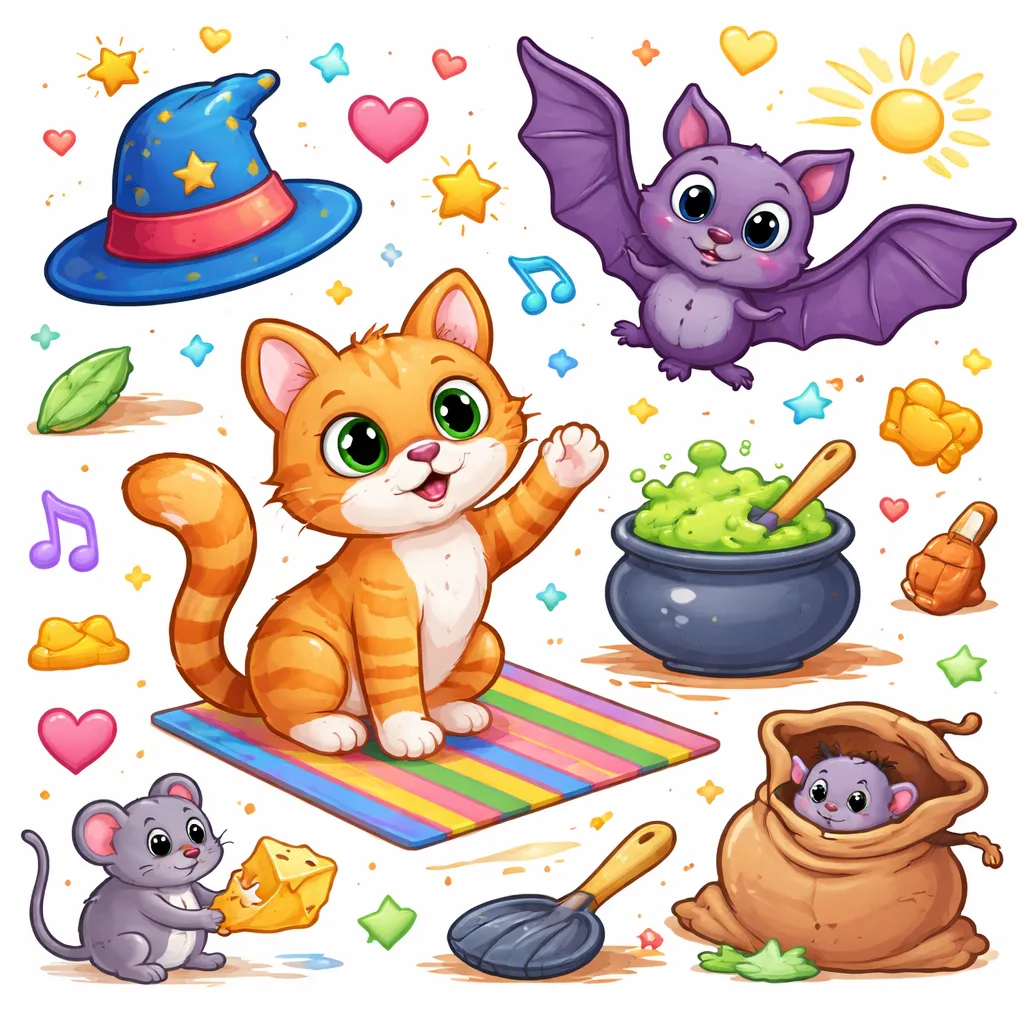

What Is This Situation? Rhyming is one of the first ways children learn about sounds. When words rhyme, they share the same ending sound. Cat and bat rhyme. They both end with "at." Rhyming helps children hear the parts in words. That helps them read.
Rhyming words for cat and bat give children a fun way to learn word families. Cat, bat, hat, mat, sat, rat. All these words rhyme. When a child knows cat, they can read bat. The pattern helps them read many new words.
This situation happens during reading time, during songs, during word games. Rhyming is playful. It is a game with sounds. Children love it. And while they play, they are building the skills they need to read.
These words are best learned through playful practice. Songs, games, and stories make the rhymes stick. With cat and bat, your child learns that words can share the same ending sound.
Key English Phrases for This Situation Use phrases for introducing rhyming. "Cat and bat rhyme. They end with the same sound. At. Cat, bat."
Use phrases for building word families. "Words that end with at are a family. Cat, bat, hat, mat. They all rhyme."
Use phrases for practicing. "Let us think of words that rhyme with cat. Bat. Hat. Mat. Sat. Rat." "What else rhymes with cat?"
Use phrases for reading. "Let us read these rhyming words. Cat, bat, hat, mat, sat, rat." "You read them all. They rhyme with cat."
Use phrases for celebrating. "You found a word that rhymes with cat. Good job." "You are a rhyming expert."
Simple Conversations for Kids Dialogue 1: Learning to Rhyme Parent: "Cat and bat rhyme. They both end with at. Cat. Bat. Say them with me." Child: "Cat. Bat." Parent: "Good. Do they sound the same at the end?" Child: "Yes. At." Parent: "That is rhyming."
This conversation introduces rhyming. The parent explains. The child hears the pattern. Rhyming becomes clear.
Dialogue 2: Building the Word Family Parent: "Let us find more words that rhyme with cat. What rhymes with cat? Hat." Child: "Hat rhymes with cat." Parent: "Yes. What else? Mat." Child: "Mat rhymes with cat." Parent: "Good. Sat? Rat?" Child: "Sat. Rat. They all rhyme with cat."
This conversation builds the at word family. The child finds rhyming words. The pattern becomes familiar.
Dialogue 3: Reading Rhyming Words Parent: "Let us read these rhyming words. Cat, bat, hat, mat, sat, rat." Child: "Cat. Bat. Hat. Mat. Sat. Rat." Parent: "Good. They all rhyme with cat. You read them all."
This conversation practices reading. The child reads the list. The parent praises. The skill builds.
Vocabulary You Should Know Cat is an animal. It rhymes with bat, hat, mat. You can say "The cat is soft." At family.
Bat is an animal or a sports tool. It rhymes with cat, hat, mat. You can say "The bat flies at night." At family.
Hat is something you wear. It rhymes with cat, bat, mat. You can say "Put on your hat." At family.
Mat is a floor covering. It rhymes with cat, bat, hat. You can say "Sit on the mat." At family.
Sat means to sit down. It rhymes with cat, bat, hat. You can say "I sat on the chair." At family.
Rat is a small animal. It rhymes with cat, bat, hat. You can say "The rat ran away." At family.
How to Use These Phrases Naturally Use a playful and rhythmic tone. Rhyming is fun. Your voice should show it. "Cat and bat. They rhyme like that."
Say the phrases with songs. Sing "The cat in the hat sat on the mat." Songs make rhyming natural.
Practice one word family at a time. At family first. Cat, bat, hat, mat, sat, rat. Master one before adding another.
Use pictures. Show a cat, a bat, a hat. Pictures help children remember the words.
Celebrate when they find a rhyme. "You found a word that rhymes with cat. Good job." Celebration makes learning feel good.
Common Mistakes to Avoid One mistake is thinking rhyming is about spelling. Rhyming is about sound. Cat and bat rhyme even though they are spelled differently.
Another mistake is choosing words that do not rhyme. "Cat and cake" do not rhyme. Help your child hear the ending sound.
Some children add extra sounds. "Cat and bat" rhyme. "Cat and basket" do not. Help them focus on the ending sound.
Avoid frustration. If your child is confused, start with simple pairs. Cat and bat. Hat and mat. Keep it easy.
Tips for Parents and Practice Ideas Sing rhyming songs. "The cat in the hat sat on the mat." Music makes rhyming natural.
Read rhyming books. Dr. Seuss books are full of rhymes. Read them together. Point out the rhymes.
Play the rhyming game. You say a word. Your child says a word that rhymes. "Cat." "Bat." "Hat." "Mat." The game builds skill.
Use rhyming puzzles. Make cards with pictures. Your child matches the rhyming pairs. The puzzles build recognition.
Create a rhyming book. Each page has a rhyme. "Cat and bat. Hat and mat." Your child draws pictures. The book is a reference.
Fun Practice Activities Play rhyming bingo. Make bingo cards with rhyming words. Call out a word. Your child finds a rhyme. Bingo makes practice fun.
Use a rhyming hunt. Go around the house. Find things that rhyme with cat. A hat. A mat. The hunt makes learning active.
Make rhyming cards. Write words that rhyme with cat. Your child reads them. The cards build word recognition.
Sing the at family song. "At, at, cat and bat. At, at, hat and mat. At, at, sat and rat. Words that rhyme with at." Music makes learning fun.
Draw rhyming pictures. Your child draws a cat, a bat, a hat, a mat. They label each drawing. The pictures make the words real.
Rhyming words for cat and bat open the door to word families. Cat, bat, hat, mat, sat, rat. All rhyme. All share the at sound. When children know one, they can read many. That is the power of rhyming. It helps children hear sounds. It helps them read words. With playful practice and patient guidance, your child will master rhyming. They will know that cat and bat sound the same at the end. They will read new words. They will become confident readers. That is the power of play. One rhyme at a time, your child will learn. And you will be there to celebrate every rhyme.