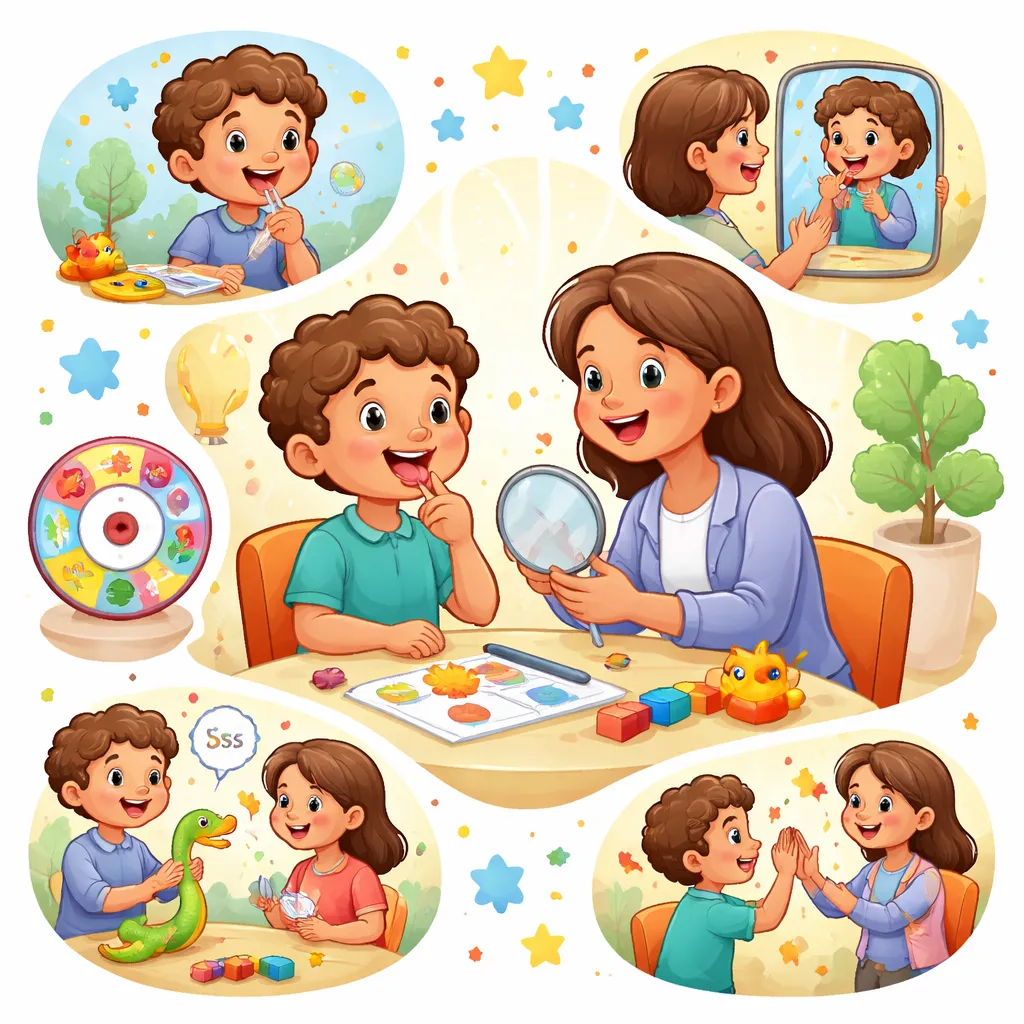

What Is This Situation? A lisp is when a child says the "s" sound like "th." Sun sounds like thun. Snake sounds like thnake. This is common in young children. Most grow out of it. But some need a little help. Gentle practice can help them learn the correct tongue position.
How to fix lisping in English for kids gives parents simple, playful ways to help. The key is tongue position. For "s," the tongue goes behind the teeth, not between them. For "th," the tongue goes between the teeth. Helping your child feel the difference is the first step.
This situation happens during speech practice, during word games, during everyday moments. It takes patience. It takes play. With gentle guidance, your child can learn to say "s" clearly.
These steps are gentle and playful. They use mirrors, straws, and games. With patience and practice, your child will learn the correct sound.
Key English Phrases for This Situation Use phrases for showing tongue position. "For the s sound, put your tongue behind your teeth. Like this. Sssss." "For the th sound, your tongue goes between your teeth. Thhhh."
Use phrases for practicing. "Let us practice the s sound. Put your tongue behind your teeth. Sssss. Sun." "Good. Now try snake. Ssssnake."
Use phrases for comparing. "Listen: sssun. Thhun. Do you hear the difference? S has the tongue behind. Th has the tongue between."
Use phrases for playing. "Let us play the snake game. Snakes say ssss. Can you hiss like a snake? Sssss."
Use phrases for celebrating. "You said the s sound. Good job." "Your tongue was in the right place. That was great."
Simple Conversations for Kids Dialogue 1: Learning the Tongue Position Parent: "Let us learn the s sound. Put your tongue behind your teeth. Like this." Parent models. Child tries. Parent: "Good. Now blow air. Sssss. That is the s sound." Child: "Sssss." Parent: "Yes. Your tongue is in the right place."
This conversation teaches tongue position. The parent models. The child tries. The sound becomes clear.
Dialogue 2: Comparing S and TH Parent: "Now let us compare s and th. For s, tongue behind teeth. Sss. For th, tongue between teeth. Thhh. Listen: sssun, thhun. Can you hear the difference?" Child: "Sssun. Thhun." Parent: "Good. Now say sun with s." Child: "Sun." Parent: "Yes. Good job."
This conversation compares the two sounds. The child hears the difference. The practice builds.
Dialogue 3: Practicing in Words Parent: "Let us practice s words. Put your tongue behind your teeth. Sun. Snake. Soap. Sit." Child: "Sun. Snake. Soap. Sit." Parent: "Good. You said all the s words. Your tongue was behind your teeth."
This conversation practices s words. The child says the words. The parent praises. The skill builds.
Vocabulary You Should Know Lisp is when s sounds like th. You can say "We are working on your lisp." This is the issue.
Tongue is the muscle in your mouth. You can say "Put your tongue behind your teeth." This is the key.
Behind means at the back of. You can say "Tongue behind teeth." This is the position for s.
Between means in the middle of. You can say "Tongue between teeth." This is the position for th.
Sound is what you hear. You can say "Say the s sound." This is the goal.
Practice means to do something many times. You can say "Let us practice." This is the process.
How to Use These Phrases Naturally Use a gentle and patient tone. Lisping is not a big problem. Your patience says "You can learn this."
Say the phrases with a mirror. Stand in front of a mirror. Show your child the tongue position. Let them watch themselves. Seeing helps.
Use silly games. "Let us hiss like snakes. Sssss." Games take the pressure off.
Practice in short sessions. Two minutes is enough. Let your child's interest guide the length. Short, frequent practice works best.
Celebrate every try. "You tried the s sound. Good job." Celebrating the effort encourages more tries.
Common Mistakes to Avoid One mistake is correcting too much. If you correct every word, your child may stop trying. Practice one sound at a time.
Another mistake is using the wrong words. "S" and "th" are different. Practice them separately. Do not confuse your child.
Some children get frustrated. If your child is frustrated, stop. Try again later. Learning should feel good.
Avoid pressure. Do not make it a test. Gentle practice works better than pressure.
Tips for Parents and Practice Ideas Use a mirror. Watch your tongue. Let your child watch. Then let them watch themselves. Seeing the tongue helps.
Use a straw. Put a straw in front of your mouth. Say "s." The straw moves. The visual helps.
Make it a game. "Let us hiss like snakes. Sssss." The game makes practice fun.
Read books with s words. Point them out. "This word starts with s. Snake." Reading reinforces the sound.
Practice during everyday moments. "Let us put on our socks. Socks starts with s." Real words are the best practice.
Fun Practice Activities Play the snake game. You say "sssss." Your child says "sssss." Take turns. The game makes the sound fun.
Use a tongue puppet. Make a puppet that talks. The puppet says s words. Your child helps.
Create s word cards. Write words that start with s. Sun, snake, soap, sit. Your child reads them. The cards build recognition.
Sing the s sound song. "S says sss, snake and sun. S says sss, soap and sun. Tongue behind teeth, blow the air. S is a sound we can share." Music makes learning fun.
Draw s pictures. Your child draws a sun, a snake, some soap. They label each drawing. The pictures make the words real.
How to fix lisping in English for kids is about gentle practice. The s sound needs the tongue behind the teeth. The th sound needs the tongue between the teeth. With a mirror, with games, with patience, your child will learn the difference. They will say "sun" instead of "thun." They will say "snake" instead of "thnake." They will speak clearly. That clarity is a gift. It helps them be understood. It helps them feel confident. With your gentle guidance, they will learn the s sound. One gentle try at a time. And you will be there to celebrate every sssss.