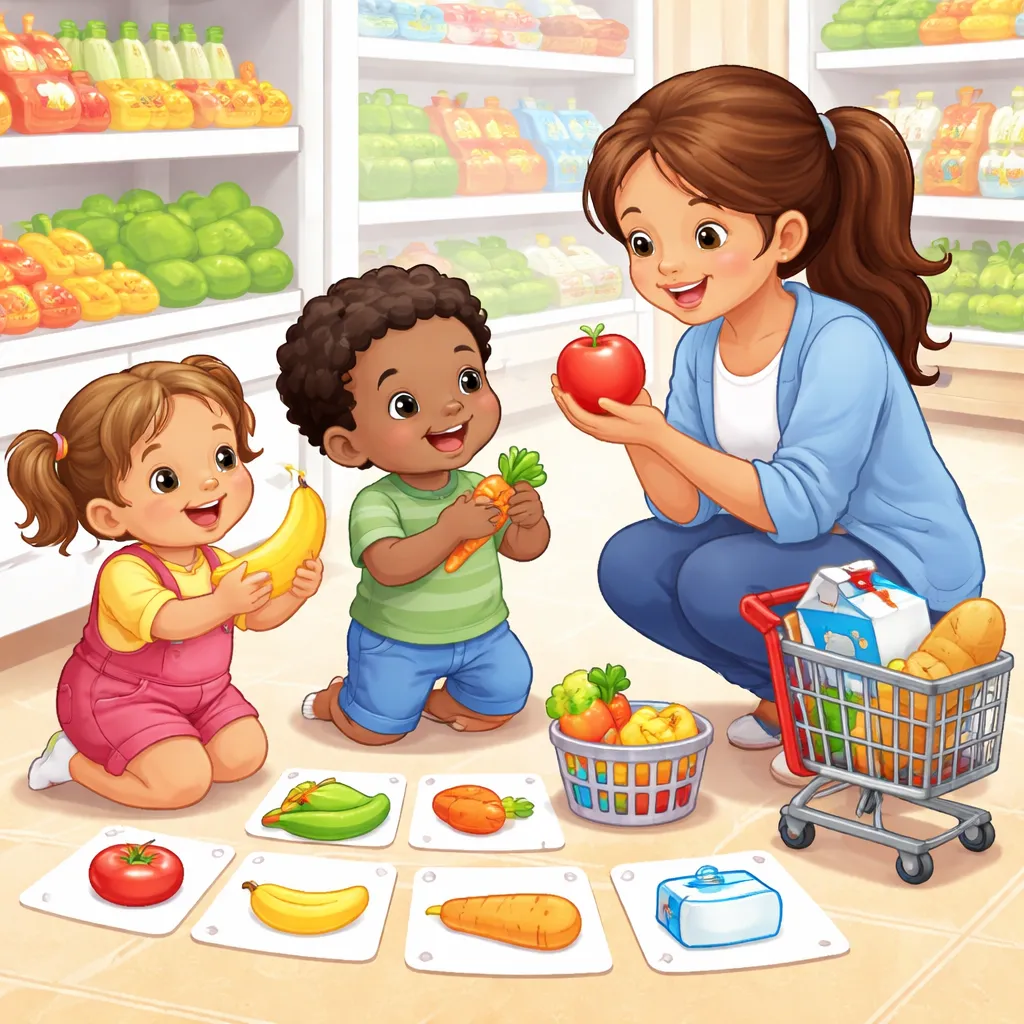

What Is This Situation? The grocery store is a busy place. It has bright colors, many sounds, and rows of interesting items. For a toddler, it feels like a large playground of things to see. For a parent, it is a weekly task. Together, it can become a wonderful chance to learn.
This situation happens once or twice a week. You walk through the aisles with your child in the cart. You point to apples, pick up milk, and wait in line. Every moment holds a chance to say a new word. The store becomes a living classroom.
Children learn best when they connect words to real objects. At the grocery store, they see the apple. They touch the apple. They hear you say the word. This makes the learning real. The words stick because they matter right now.
Using English during grocery trips is natural. You are already talking about what you see. You just add a few clear words. Your toddler hears the language in action. They see that words help us get things done.
Key English Phrases for This Situation Start with simple nouns. Point to an item and say “Look, apples.” Then add a short sentence. “We need apples.” This connects the word to your purpose. Your toddler learns that words have jobs.
Use phrases that involve your child. Say “Can you put the apples in the cart?” This gives them a small task. It also repeats the word in a new way. They hear “apples” again while doing something.
Use size and color words too. Say “Big watermelon” or “Yellow bananas.” These describing words make the language richer. Your toddler begins to notice details. They learn that words can tell us more about an object.
Use action phrases as you move. Say “Let us push the cart.” Say “We walk to the bread.” These phrases teach verbs. They also help your child understand the sequence of the trip.
When you pay, say “Mommy pays now.” Or say “Thank you to the cashier.” These are social phrases. They show your child that shopping involves talking to people. These phrases are high-frequency in daily life.
Simple Conversations for Kids Dialogue 1: Choosing Fruit Parent: “Do you see the apples?” Child: “Apple.” Parent: “Yes. Red apples. Let us take three.” Child: “Three.” Parent: “One, two, three. Good counting.”
This conversation is short and full of repetition. The parent uses simple questions. The child says one word. The parent builds on it. The child hears numbers and colors naturally.
Dialogue 2: Finding an Item Parent: “We need milk. Where is the milk?” Child: “There.” Parent: “Yes, you see the milk. Let us get it.” Child: “Milk.” Parent: “Good job. You found the milk.”
Here, the child practices pointing and speaking. The parent gives clear praise. The word “milk” repeats several times. This repetition helps memory.
Dialogue 3: Asking for Help Parent: “Can you reach the crackers?” Child: “No.” Parent: “I will help. Please say ‘help me.’” Child: “Help me.” Parent: “Of course. Here are the crackers. Thank you for asking.”
This dialogue teaches a polite request. The parent models the phrase first. The child imitates. The parent responds with help and praise. This builds both language and social skills.
Vocabulary You Should Know Fruit is a category word for sweet foods like apples and bananas. You can say “Let us get some fruit.” This word helps toddlers group items in their mind.
Vegetables are foods like carrots and broccoli. You can say “Vegetables are good for us.” Naming the category builds thinking skills.
Cart is the metal basket on wheels. You can say “Hold the cart.” This is a safety word and a location word. Toddlers learn it quickly.
Money is what we use to pay. You can say “Mommy gives money to the cashier.” This introduces an abstract concept in a concrete way.
Cashier is the person who helps at the checkout. You can say “Say hello to the cashier.” This teaches a community helper word.
Bag is what we put groceries in. You can say “Put the bag in the cart.” This word appears at the end of the trip. It signals the routine is almost done.
How to Use These Phrases Naturally Use a friendly and slow tone. Your toddler needs time to hear the word and think about it. Speak at a pace that matches their attention. A happy voice makes the store feel fun, not rushed.
Say the phrases when you are close to the object. Point to the bananas as you say “bananas.” Hand your child the box of crackers as you say “crackers.” This timing links the word to the real thing.
Repeat the same words each time you shop. Consistency helps toddlers remember. If you always say “milk” when you pick up the carton, they will start saying it too. They learn through routine.
Let your toddler lead sometimes. If they point to something, say the word. If they try to say a word, add one more. They say “apple.” You say “Yes, green apple.” This builds on their effort.
Use these phrases even when your child does not talk back. Language learning begins with listening. Your voice and the context do the work. They are absorbing the sounds and meanings.
Common Mistakes to Avoid One mistake is asking too many questions. A toddler can feel pressured if you constantly say “What is this?” Instead, name the item yourself. Say “Look, cheese.” Let them repeat if they want.
Another mistake is using long explanations. Do not say “This is a dairy product that comes from cows and we drink it for strong bones.” Just say “milk.” Short words work best for toddlers.
Some parents correct pronunciation sharply. If your child says “ba-na” for banana, do not say “No, say banana.” Instead, say “Yes, banana. Let us put the banana in the cart.” You model the word without making them feel wrong.
Avoid rushing. Toddlers need time to look and think. If you hurry through the store, they cannot focus on words. Build in extra time for learning moments.
Tips for Parents and Practice Ideas Talk about the grocery trip before you leave. Say “We are going to the store. We will buy apples and milk.” This preview prepares your child. They start thinking about the words.
Bring a small list with pictures. You can draw an apple and a carton of milk. Let your child hold the list. Check items off together. This connects words to pictures and actions.
Let your toddler hold one safe item. A box of pasta or a bunch of grapes works well. They feel involved. You can say “You are holding the pasta.” This gives them ownership of a word.
Praise their efforts. If they say a word, smile and say “Yes, you said apple!” Positive reactions encourage them to try again. They feel proud of their new skill.
Do this regularly. The more you go, the more familiar the routine becomes. Familiarity builds confidence. A confident toddler is more willing to try new words.
Fun Practice Activities Set up a pretend grocery store at home. Use toy food or empty boxes. Let your child push a small cart or basket. You take turns being the shopper and the cashier. Use the phrases you say at the real store.
Play “I Spy” in the store aisles. Say “I spy something red.” Your child looks around. When they point, you say the word. “Yes, red apples.” This turns shopping into a game.
Sing a simple shopping song. Use a tune your child knows. Put in words like “apples, apples, we buy apples.” Music makes words stick. It also keeps the mood light.
Let your child put items in the cart. Hand them one thing at a time. Say “Put the carrots in.” They practice following a direction. They also hear the word again.
Draw pictures of grocery items after the trip. Sit with crayons and paper. Say “Let us draw the milk.” Your child practices the word again in a new setting. This reinforces the vocabulary.
The grocery store becomes more than an errand. It turns into a shared adventure in learning. Your toddler builds vocabulary with every apple you pick and every cart you push. The words you say together become part of your family’s daily language. With patience and a playful spirit, each trip to the store strengthens your child’s connection to English—and to you.