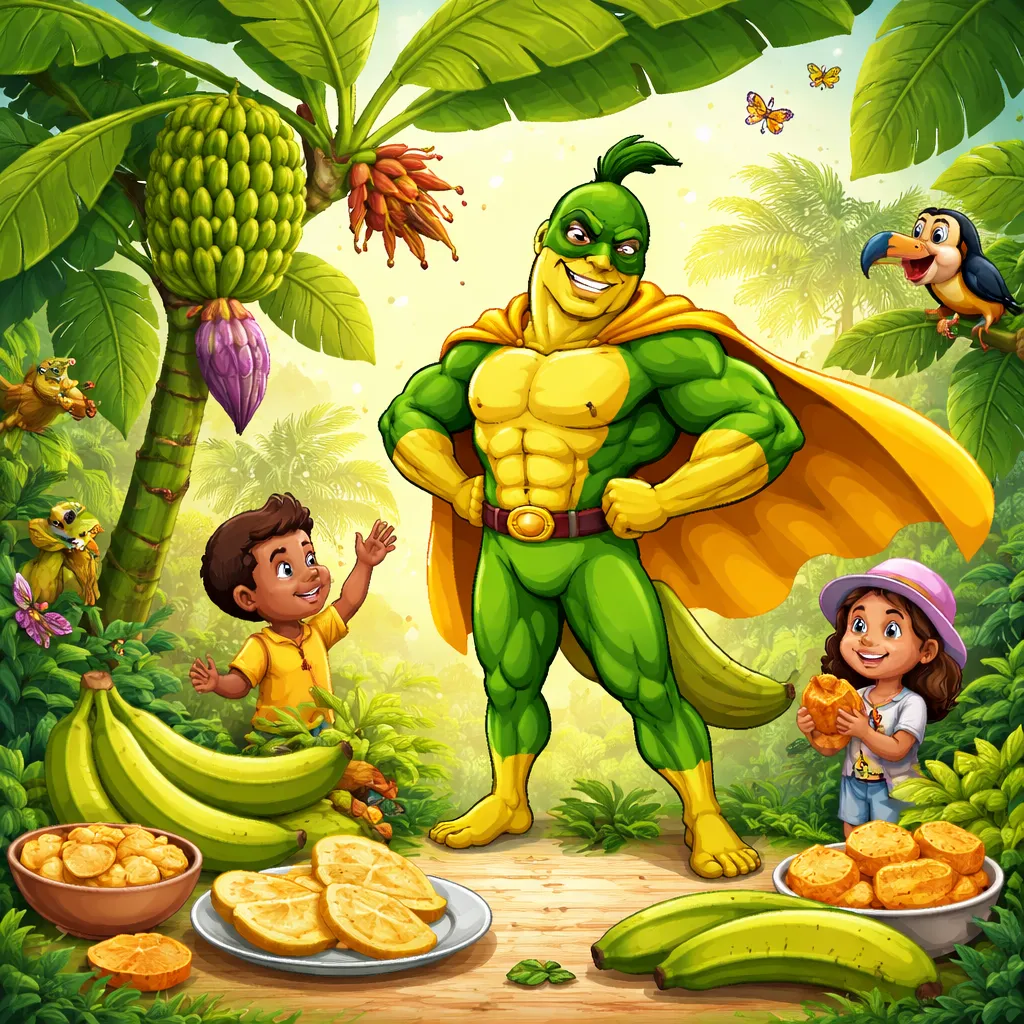

Have you ever seen a fruit that looks like a banana, but it’s bigger, greener, and harder? In many warm countries, you’ll see people buying these at the market, not to eat raw, but to cook! They might fry them until golden and crispy, boil them, or mash them into a delicious side dish. This fruit is not sweet like a dessert banana; it’s starchy and hearty, more like a potato that grows on a giant herb. It is a superhero food that feeds millions of people every day. Let’s meet the mighty and meal-worthy Plantain plant.
Let’s Learn the Word! – Open the Treasure Box of Language
Formal Name and Pronunciation
This cooking champion is called a Plantain. Its scientific name is Musa × paradisiaca. You can say it like this: /ˈplæn.tɪn/ (PLAN-tin) or sometimes /ˈplæn.teɪn/ (plan-TAYN). The first way is more common. It rhymes with “mountain” without the “moun.” Plan-tain. Say it: Plantain. It’s a strong, solid-sounding word.
The Etymology Tale
The word “Plantain” has a global journey! It comes from the Spanish word “plátano,” which originally came from the Taíno word for the plant. Taíno people lived in the Caribbean long ago. Spanish explorers took the word and the plant around the world. In English, we changed it a bit to “plantain.” Its name carries the history of exploration and the sharing of foods between continents.
Nicknames and Friendly Aliases
Plantains are known by names that tell how they are used. In many places, they are simply called Cooking Bananas or Green Bananas. In Spanish, they are Plátanos. In some countries, the large, starchy types are called Machos or Horse Bananas. Because they are a main food, people call them a Staple Food or Bread of the Tropics.
Building Your Word Web: Core Parts
Let’s learn the words for a Plantain’s body. The plant looks just like a banana plant! The Pseudostem is the tall, fake trunk made of wrapped leaf stalks. The Leaf is huge, green, and easily torn by wind. The Fruit is the plantain itself. It is longer, more angular, and has thicker skin than a sweet banana. A group of fruits is a Bunch. A smaller cluster on the bunch is a Hand. A single fruit is a Finger. The Flower is a large, purple Bell. The Rhizome is the underground stem that grows new plants.
Action and State Words
Plantain plants are busy providers. Farmers harvest the green fruits. People cook, fry, boil, or mash them. The fruit ripens slowly from green to yellow to black, getting sweeter. The plant grows quickly in the tropics. A plantain is starchy, versatile, nutritious, and essential.
Ecosystem Friends Vocabulary
Just like the banana, the plantain plant is a mini ecosystem. Bats may pollinate the flowers. Insects live among the leaves. The large leaves collect water for frogs and insects. Fallen leaves and stems decompose quickly, feeding the soil with help from fungi and bacteria. It is a living part of the tropical garden.
Cultural Imprint in Language
Plantains are a symbol of home, nourishment, and everyday meals in many cultures. A common saying in the Caribbean is, “When plantain is in the pot, no one goes hungry.” This means it is a filling, reliable food. In stories and songs, the plantain tree near a home symbolizes stability and self-sufficiency. It is the quiet, dependable hero of the dinner plate.
Ready for Discovery
We know its hearty, cooking name. Are you ready to dig into the secrets of this staple food that feeds nations? Let’s explore the world of the Plantain plant.
Discover the Plant’s Secrets! – A Nature Detective’s Notebook
The Plant Passport
The Plantain belongs to the same family as the banana: Musaceae. Its scientific group is Musa. It is a gigantic herb, not a tree. It has a soft, juicy pseudostem and enormous leaves. The plant looks almost identical to a sweet banana plant, but the fruit is different—larger, starchier, and with a thicker skin. It grows in hot, wet tropical regions and is a critical crop in Africa, Latin America, Southeast Asia, and the Caribbean.
Survival Smarts
The plantain’s strategy is the same as the banana’s: incredible speed and teamwork. It grows from a powerful rhizome, shooting up quickly to tower over weeds. Its leaves are designed to tear in the wind, minimizing damage. After the main plant fruits, it dies, but its “pups” (new shoots) are already growing to replace it. This makes a permanent patch of food. The plant’s real survival trick is its partnership with humans, who have spread and cared for it for thousands of years.
Its Role and Gifts
In the ecosystem, it provides quick shade and habitat. Its greatest gift is to people. The plantain is a staple food, meaning it is the main source of carbohydrates for millions. It is packed with energy, vitamins, and minerals. Unlike sweet bananas, plantains are almost always cooked, which makes them incredibly versatile—they can be chips, fries, mash, or part of stews. The leaves are also used as natural plates and food wrappers for steaming.
Human History and Cultural Symbol
Plantains were first domesticated in Southeast Asia thousands of years ago. From there, they traveled with explorers and traders to Africa and then to the Americas. In many tropical countries, they became a fundamental part of the diet and culture. Dishes like tostones (fried plantains), mofongo, and matoke are central to national identities. The plantain is a symbol of resilience, sustenance, and culinary creativity across the tropics.
Fun “Wow!” Facts
Get ready for a size fact! A single bunch of plantains can weigh over 50 pounds and have hundreds of “fingers”! That’s enough to feed a big family for days. And here’s a ripening fact: A green plantain is starchy like a potato. A yellow plantain is a bit sweeter. A black plantain is very sweet and soft, perfect for desserts. One fruit has three different culinary personalities!
From Global Staple to Home Garden
The Plantain plant’s story is one of nourishment and culture. Would you like to try growing this amazing provider? You can grow your own tropical food forest! Let’s see how.
Let’s Grow It Together! – A Little Guardian’s Action Guide
Good for Home Growing?
Yes, if you have the right climate! Like bananas, plantains need a warm, frost-free, tropical or subtropical climate to thrive and produce fruit. You can grow a dwarf plantain variety, like the 'Dwarf Plantain,' in a very large pot on a sunny patio in a warm area. In cooler places, you can grow it as a spectacular foliage plant in a big pot for the summer, but it likely won’t fruit. It’s a fun project for the leaves and the experience.
Little Gardener’s Toolkit
You will need a plantain “pup” (a young sucker plant) from a garden center or a friend’s plant. Get the largest, sturdiest pot you can find. Use rich, well-draining potting soil mixed with compost. Have a watering can, liquid fertilizer high in potassium, and a sunny spot ready.
Step-by-Step Growing Guide
Planting Your Food Factory
Plant in warm spring or summer. Place the pup in the center of the large pot. Fill with soil, keeping the base of the stems at the same level it was growing before. Water it deeply to settle the roots. Place it in the sunniest, warmest spot you have. It loves heat!
Care Calendar
Plantains are thirsty and hungry plants. Water regularly to keep the soil consistently moist but not soggy. They need full sun for at least 6 hours a day. Feed it every two weeks during the growing season with a liquid fertilizer made for fruit trees or palms (high in potassium). In winter, reduce watering and stop fertilizing if it’s cool.
Watch and Be Friends
Watch for the spectacular new leaves that unroll from the center. Count the leaves. Measure the height. The most exciting moment is if a purple flower bud appears, which will eventually become your bunch of plantains! This can take over a year, so be a patient gardener.
Problem Diagnosis
If leaf edges turn brown, the air might be too dry. Mist the leaves. Yellow leaves can mean overwatering or a need for more fertilizer. Watch for aphids on the undersides of leaves; spray them off with water. The biggest enemy is cold—temperatures below 50°F (10°C) can hurt the plant.
Your Rewards and Gifts
Your gift is the experience of growing a major world food crop. You are learning about tropical agriculture, patience, and the work that goes into the food we eat. Caring for a plantain teaches responsibility, the science of plant growth, and the satisfaction of nurturing a providing plant. You become a grower of knowledge and, maybe, food.
Creative Fun
Start a Global Food Journal. Draw your plant and also research a plantain dish from another country. Make a leaf rubbing on a huge piece of paper. Help an adult cook a simple plantain dish, like baked plantain chips, and write the recipe in your journal. Draw a map of the world and trace the journey of the plantain from Asia to your home. Create a “Passport” for your plantain plant, stamping it with imaginary countries it has “visited.”
Growing a World of Flavors
By tending a plantain plant, you are not just growing a herb. You are growing a connection to global food cultures, a lesson in botany and nutrition, and a deep appreciation for the plants that feed the world. You are a cultivator of understanding.
Conclusion and Forever Curiosity
What a nourishing journey around the world! You started by learning the word “Plantain,” you discovered its secrets as the starchy, versatile staple of the tropics, and you learned how to care for this generous giant. You now know the Plantain is not just a cooking banana; it is a pillar of food security, a lesson in history and migration, a canvas for culinary art, and a testament to nature’s abundance. Remember, its power is in its ability to fill bellies and bring people together. Your curiosity helps you see the world on a plate. Keep exploring where your food comes from, asking questions about the plants that feed communities, and tasting the wonderful diversity of our planet. Your adventure to learn about the Plantain plant shows us that sometimes, the most humble foods have the most powerful stories to tell.