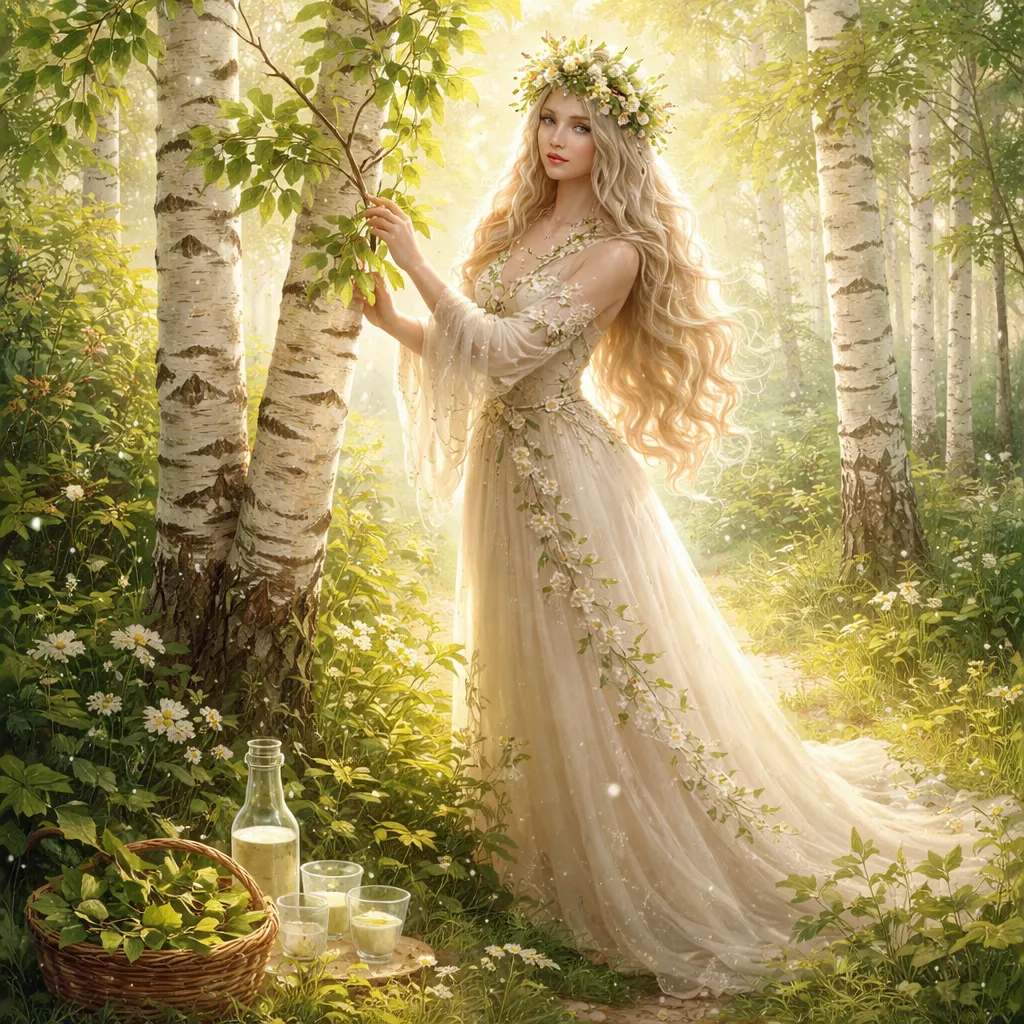

Have you ever seen a tree that seems to glow in the dark forest? Its trunk is a smooth, bright white, marked with thin, black lines that look like secret writing or friendly eyes. In the winter, it stands out like a quiet, pale ghost against the gray sky. In the summer, its small, delicate leaves shimmer in the breeze, making a soft, rustling sound. This elegant, bright tree feels both magical and friendly. Let’s go on a journey to the cool northern woods to learn about the beautiful Birch plant.
Let’s Learn the Word! – Open the Treasure Box of Language
Formal Name and Pronunciation This glowing tree is called a Birch. You can say it like this: /bɜːrtʃ/ (burch). It rhymes with “church” and “perch.” It’s a short, crisp word. Say it: Birch. It sounds like a soft whisper, just like the sound its leaves make.
The Etymology Tale The word “Birch” is very old. It comes from an ancient root word that meant “to shine” or “bright.” This is a perfect name because the white bark of the birch tree shines and glows! The name has been used for thousands of years, passed down from parents to children, always connected to this bright, beautiful tree.
Nicknames and Friendly Aliases Birches have lovely, poetic names. The most common type is the “Silver Birch” or “European White Birch,” named for its stunning silvery-white bark. In North America, the “Paper Birch” is famous because its bark peels off in thin, papery layers. People sometimes call it the “Lady of the Woods” because of its graceful, slender, and pale appearance. Another fun name is the “Canoe Birch,” because Native Americans used its bark to make strong, lightweight canoes.
Building Your Word Web: Core Parts Let’s learn the words for a Birch’s body. The Bark is the superstar. It is thin, papery, and bright white, often with horizontal Lenticels (those black dash marks) that help the tree breathe. The Leaf is small, triangular or diamond-shaped, with a toothed edge, like a little green flag. Catkins are the long, dangling flowers. Male catkins are long and yellow; female catkins are shorter and green. The Trunk is tall, slender, and straight. Twigs are the thin, flexible ends of the branches, sometimes with small, warty bumps. Seeds are tiny, with little wings, and they fly from the catkins like brown dust. A Grove is a group of birch trees growing together, creating a magical white forest.
Action and State Words Birches are gentle movers. Their leaves tremble and quiver in the wind, just like aspens. The papery bark peels and curls back in horizontal strips. The tree colonizes open ground, often being one of the first to grow in a cleared area. It is pioneering, graceful, and luminescent (light-filled).
Ecosystem Friends Vocabulary The birch is a busy hub of life. Woodpeckers and other birds peck insects from under its bark. Sapsuckers drill neat rows of holes to drink the sweet sap. Moths and butterflies, like the beautiful Luna moth, lay eggs on the leaves for their caterpillars to eat. Squirrels eat the seeds and buds. Deer and rabbits nibble on the young twigs in winter.
Cultural Imprint in Language There is an old Russian proverb: “A birch is a tree with four purposes: to light up the world, to soothe a cry, to heal the sick, and to keep things clean.” This speaks to its uses for light (torches), sound (musical instruments), medicine, and cleaning (brooms). The poet Robert Frost wrote in “Birches”: “One could do worse than be a swinger of birches.” He meant that there is joy and freedom in climbing and swinging on the flexible young birch trees. In some cultures, a bundle of birch twigs was used in a sauna for gentle beating, believed to improve health—this is called “venik” in Russian.
Ready for Discovery Now we know its shining name and its gentle nature. Are you ready to uncover the secrets behind the glowing bark? Let’s become detectives and discover the Birch plant’s hidden world.
Discover the Plant’s Secrets! – A Nature Detective’s Notebook
The Plant Passport Birches are part of the Betulaceae family. Their group name is Betula. A birch looks like a slender, elegant dancer in a white dress, reaching for the sky. Its most famous feature is its bark—smooth, white, and marked with dark horizontal lines (lenticels). The leaves are small, bright green, and triangular with jagged edges, turning a glorious bright yellow in autumn. In spring, it grows long, dangling yellow catkins. The seeds are tiny nutlets with papery wings. It is a deciduous tree, losing its leaves in winter, but its white bark makes it a star of the winter landscape.
Survival Smarts The birch is a pioneer. It is often the first tree to grow back after a forest fire or in a cleared field. It grows fast and makes lots of light seeds that fly far on the wind. Its white bark is a genius trick! The white color reflects sunlight, which keeps the thin-barked tree from getting too hot and damaged in winter, and it may also help protect it from insects. Another trick is its shallow roots. They spread wide to quickly soak up water and nutrients, helping it grow fast in poor soil.
Its Role and Gifts The birch is a wonderful provider. Its leaves feed over 300 species of insects and caterpillars, which then feed birds. Its seeds are food for small birds in winter. The tree itself is a habitat; woodpeckers make holes in it, and lichens and mosses grow on its bark. As an environmental helper, its pioneering roots help stabilize and improve bare, damaged soil. It is a “nurse tree,” creating sheltered conditions that allow slower-growing trees like oaks and pines to start growing under its light shade.
Stories and Symbols In many northern cultures, the birch is a symbol of new beginnings, purity, and protection. In Celtic tradition, it was the tree of the first month of the year, symbolizing renewal. In Russia, it is a deeply loved national symbol of home and beauty. People have used its strong, flexible wood for centuries to make furniture, tools, and toys. The waterproof bark was used for roofing, writing paper, and even baskets. The sweet sap can be tapped in spring to make a refreshing drink or syrup.
Fun “Wow!” Facts Get ready for a cool secret! That amazing white bark isn’t a color pigment—it’s a substance called betulin that fills the bark cells. It’s a natural sunscreen and insect repellent for the tree! And here’s a historical fact: the first ever aircraft built by the Wright Brothers, the “Wright Flyer,” was made from spruce and birch wood because birch is so strong yet lightweight.
From Forest to Your Family Learning about the Birch plant connects us to ancient forests. But you can grow a little piece of this magical, white-barked world yourself. Let’s see how you can become a birch guardian.
Let’s Grow It Together! – A Little Guardian’s Action Guide
Good for Home Growing? Yes, you can! Many birch varieties, like the dwarf ‘Young’s Weeping Birch’, are perfect for a large pot on a patio or a small garden. They love cool climates. Remember, birches have wide, shallow roots, so they need space. A large container or a spot away from pipes and paths in the garden is best. They love a sunny or partly shady spot.
Little Gardener’s Toolkit You will need a young birch sapling from a garden center (seeds are very slow). Choose a large, deep pot with excellent drainage holes or pick a garden spot. Get well-draining, slightly acidic potting soil (ericaceous compost is good). Have a watering can and mulch (like bark chips) ready.
Step-by-Step Growing Guide
Planting Your White Lady The best time to plant is in late autumn or early spring when the tree is sleeping. Dig a hole in your pot or garden twice as wide as the root ball. Place the tree in, making sure it’s not deeper than it was in its nursery pot. Fill the hole with soil and pat it down gently. Water it deeply to settle the roots. Spread a layer of mulch around the base to keep the roots cool and moist.
Care Calendar Birches are thirsty trees! Water your tree deeply and regularly, especially in its first few years and during dry spells. The soil should stay moist but not soggy. It enjoys full sun to light shade. Feed it in early spring with a slow-release, balanced fertilizer. Avoid heavy feeding; birches are not greedy.
Watch and Be Friends Be a patient observer. In spring, watch for the long, yellow catkins. In summer, notice how the leaves shimmer. In autumn, celebrate the shower of golden leaves. In winter, admire the beautiful white bark. Measure the tree’s height each year. Gently feel the amazing papery texture of the bark.
Problem Patrol If leaves turn yellow with green veins, the soil might be too alkaline (not acidic enough). You can add a special feed for acid-loving plants. A common issue is the birch leaf miner, a bug that makes brown blotches on leaves. Pick off affected leaves. The tree is usually strong enough to survive this. For aphids, spray them off with water.
Your Rewards and Gifts Your gift is a lifelong friend. You are growing a tree of light and beginnings. Caring for a birch teaches you about nurturing delicate beauty and providing for wildlife. You learn patience as it grows and the joy of having a living piece of art that changes with every season. You become a steward of a ancient symbol.
Creative Extensions Start a Birch Bark Journal. Use thick paper to mimic the feeling of bark. Do beautiful leaf rubbings of the triangular leaves. Carefully collect a few fallen curls of white bark (only if they’ve naturally fallen) and use them in a collage. Write a short poem about the “Lady of the Woods” or paint a picture of your tree in all four seasons.
Growing a Legacy By planting a birch, you are not just planting a tree. You are planting a symbol of hope, a beacon for wildlife, and a future source of shade and beauty. You are a keeper of light.
Conclusion and Forever Curiosity Look at the wonderful journey you’ve taken! You started by learning the word “Birch,” you discovered its secrets as a glowing pioneer of the forest, and you learned how to invite this graceful friend into your own world. You now know the Birch is not just a white tree; it is a symbol of new starts, a home for hundreds of creatures, a friend to the soil, and a tree of practical magic. Remember, its strength is in its resilience and its light. Your curiosity is like the birch seed—ready to travel, find new ground, and grow. Keep looking for the quiet, shining wonders in the woods, in parks, and in your own garden. Your adventure to learn about the Birch plant shows us that even the most delicate-looking things are filled with strength and stories.