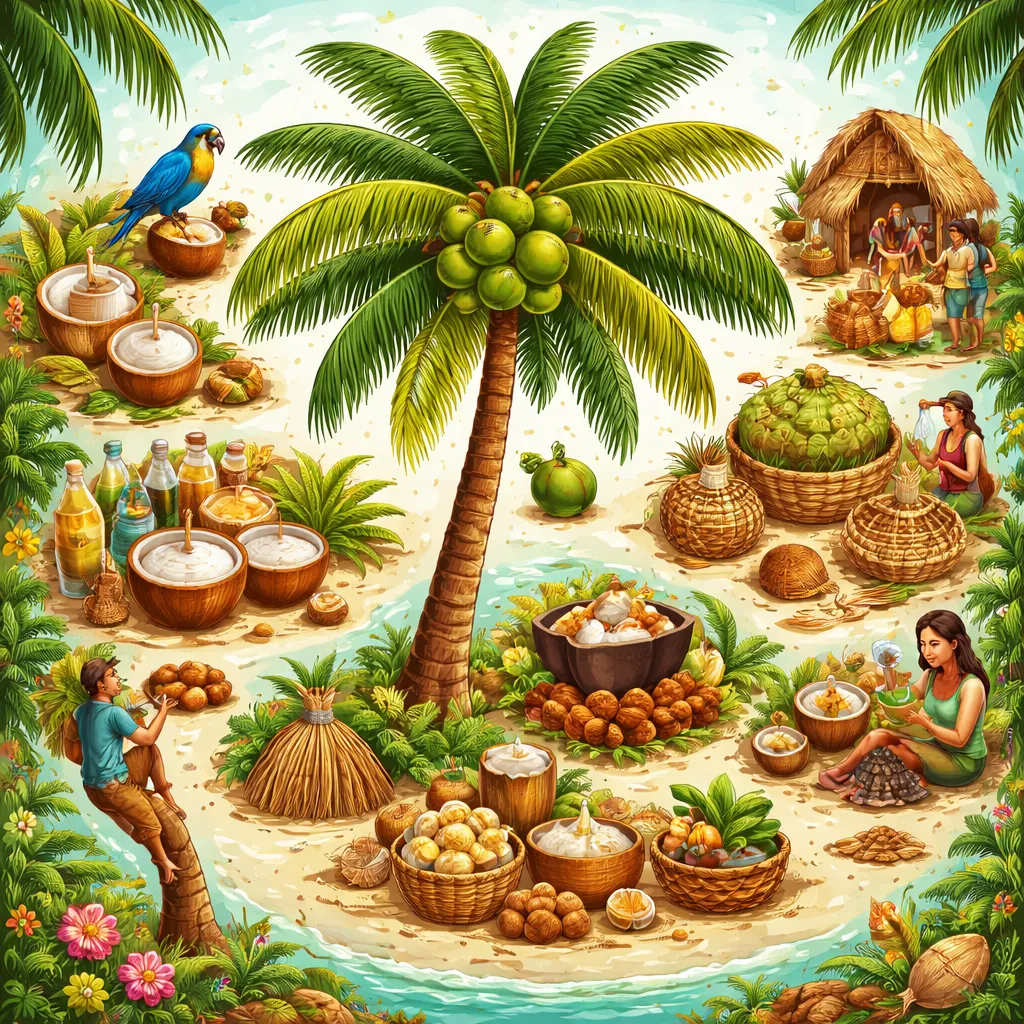

Imagine a tall, slender tree that seems to be dancing. It leans over a bright blue ocean, its long, feathery leaves rustling in the salty breeze. High up in its crown, it holds clusters of big, brown, hairy balls. What’s inside? Cool, refreshing water and sweet, white meat! This tree is a hero of tropical islands. It provides food, drink, shelter, and even material for building. It is a supermarket, a hardware store, and a playground, all in one amazing plant. Let’s take a trip to the sunny beach to learn about the incredible Coconut Tree plant.
Let’s Learn the Word! – Open the Treasure Box of Language
Formal Name and Pronunciation
This dancing giant is called the Coconut tree. Its scientific name is Cocos nucifera. You can say it like this: /ˈkoʊ.kə.nʌt triː/ (KOH-kuh-nut tree). The first part, “Co,” sounds like “go,” and “conut” rhymes with “donut.” Co-co-nut. Say it: Coconut. It’s a fun, bouncy word.
The Etymology Tale
The word “coconut” has a funny history. Long ago, Portuguese and Spanish explorers saw this fruit in the tropics. The three holes on the hairy shell looked like a funny face! It reminded them of a “coco” or “grinning face” from their stories. So, they called it “coco,” meaning a grinning goblin or elf. The “nut” part was added later because of the hard seed inside. So, the name means the “grinning face nut”!
Nicknames and Friendly Aliases
The coconut tree is known by wonderful names. It is the Tree of Life because it provides so many things for people. In tropical places, it is often just called the Palm Tree or Coconut Palm. Because it grows by the sea, it is the Beach Palm or the Sea Coconut. Its fruit is sometimes called the Wonder Nut.
Building Your Word Web: Core Parts
Let’s learn the words for a Coconut tree’s amazing body. The Trunk is tall, slender, and ringed with scars from old leaves. The Frond is the long, graceful leaf, shaped like a giant green feather. The Crown is the very top of the tree, where all the fronds grow. The Coconut is the big, round fruit. Its hairy, brown coat is the Husk. The hard, round shell inside is the Endocarp. The white, yummy part is the Kernel or Meat. The clear, sweet liquid inside is the Water. The Roots are thick and grow outwards near the surface.
Action and State Words
Coconut trees are busy givers. They sway and bend in the ocean breeze. They produce fruit all year round. A coconut can float on the ocean for months, traveling to new islands. The tree provides shade, food, and materials. A coconut tree is tall, graceful, bountiful, and salt-tolerant.
Ecosystem Friends Vocabulary
The coconut tree is a hub for tropical life. Crabs, like the giant Robber Crab, climb the trunk to crack open the nuts. Bats and insects visit the sweet-smelling flowers. Monkeys love to eat the young, soft kernel. Birds rest and sometimes nest in the crown. Even the ocean is a friend, carrying the seeds to new beaches.
Cultural Imprint in Language
The coconut is famous in sayings. “The coconut shell is full of water” is an Indian proverb meaning even something small can hold great value. There is a fun tongue twister: “Sally sells seashells by the seashore, but coconuts don’t have shells!” In many island songs and dances, the swaying of the coconut tree represents the rhythm of life. It is a symbol of hospitality, resilience, and tropical paradise.
Ready for Discovery
We know its friendly, grinning name. Are you ready to be a beach detective and discover the life-saving secrets of this tree? Let’s explore the world of the Coconut Tree plant.
Discover the Plant’s Secrets! – A Nature Detective’s Notebook
The Plant Passport
The Coconut tree is in the Palm family, Arecaceae. Its scientific group is Cocos. It is a tall, slender giant that can lean gracefully, sometimes over the water. The trunk is smooth and gray, marked with rings. The fronds are huge, arching, and can be over 15 feet long! The flowers grow in large clusters and are creamy white. The fruit, the coconut, is a drupe (a stone fruit). The tree produces fruit all year and can live for 60 to 80 years, bearing fruit for most of its life.
Survival Smarts
The coconut is a master of ocean travel! Its fruit has a waterproof, fibrous husk that helps it float. The hard shell protects the seed inside from the salty sea. It can drift for thousands of miles and still sprout when it washes up on a new beach. The tree itself is a salt champion. It can grow right next to the ocean, using its roots to filter out salt from the water it drinks. Its flexible trunk bends in storms instead of breaking.
Its Role and Gifts
The coconut is the ultimate provider. Its water is a natural, sterile drink full of minerals. The meat is a nutritious food, and can be dried or pressed for milk and oil. The husk gives us coir, a strong fiber for ropes and mats. The leaves are woven into roofs, baskets, and fans. The trunk is used for building. It cleans the air, stabilizes sandy soil, and creates the classic shady spot on a tropical beach.
Human History and Cultural Symbol
For thousands of years, the coconut tree has been essential for people living on tropical islands and coasts. In the Pacific, it was so important that it was called the “Tree of Life.” It provided everything needed to live. Coconut oil is used in cooking and skincare. The shell is used for crafts and charcoal. In many cultures, offering a coconut is a sign of welcome and respect. It represents self-sufficiency and abundance.
Fun “Wow!” Facts
Get ready for a traveling fact! Coconuts are one of the world’s largest seeds! And they are designed to be sailors. A coconut can float on the ocean for 110 days and still be able to grow! And here’s a cool inside fact: the “eyes” of the coconut (the three dark spots) are soft spots. The baby plant, or embryo, is behind one of them, waiting to grow out when the coconut finds land.
From Tropical Beach to Your Home
The Coconut Tree plant’s story is one of adventure and generosity. Would you like to start your own tropical adventure? You can grow a coconut tree from a simple nut! Let’s see how.
Let’s Grow It Together! – A Little Guardian’s Action Guide
Good for Home Growing?
Yes, you can! But it needs the right conditions. A coconut tree will become a giant and is not for a small pot forever. You can start a coconut in a large pot and keep it as a houseplant in a sunny room for a few years. It needs lots of light, warmth, and humidity. If you live in a very warm, frost-free climate, you can plant it in the ground and watch it become a real tree. It is a long-term, fun project.
Little Gardener’s Toolkit
You will need a whole, unhusked coconut (a “seed nut”) that still has some water inside. Get a very large, deep pot. Use a sandy, well-draining potting mix. Have a watering can and a warm, sunny spot ready. A clear plastic bag can help with humidity.
Step-by-Step Growing Guide
Planting Your Tropical Sailor
Find a coconut that is still in its hairy, brown husk. Shake it—you should hear water sloshing inside! Soak the whole coconut in a bucket of warm water for 2-3 days. Then, place the coconut on its side in the large pot. Bury it about halfway in the sandy soil, so half is above the dirt. Water it well. You can cover it with a clear plastic bag to keep it warm and moist.
Care Calendar
Keep the soil warm and constantly moist, but not soaking wet. It needs a very warm spot (around 80°F or 27°C) to sprout. This can take 3 to 6 months, so be patient! Once the sprout appears, it will grow a long shoot and then leaves. It needs as much bright, direct sunlight as you can give it. Water it regularly and give it palm tree fertilizer a few times a year.
Watch and Be Friends
This is a lesson in slow, magical beginnings. Watch for the first shoot, which will look like a white finger poking out of the coconut. Then, watch the first green leaves unfold. Notice how the first leaves don’t look like the long fronds yet. Talk to your plant about its ocean-faring ancestors. Imagine it on a beach.
Problem Diagnosis
If the coconut starts to smell bad or gets moldy, it might have rotted. Start with a fresh one. If the leaves turn yellow, it might need more fertilizer (especially magnesium, which palms love). If growth is very slow, it might need more heat or light. The most common problem is not enough light indoors.
Your Rewards and Gifts
Your gift is growing a piece of the tropics. You are learning about the amazing journey of a seed that can cross oceans. Caring for a coconut tree teaches incredible patience, responsibility, and the joy of nurturing a unique life. You are becoming a grower of resilience and adventure.
Creative Fun
Start a Tropical Sailor’s Log. Draw your coconut’s progress. Make a pirate map showing how a coconut might travel from an island to your home. Use dried coconut husk fibers in an art project. Learn a hula dance or a song about palm trees. Draw a comic strip of the adventures of a coconut sailing the seven seas. Write a postcard from your coconut plant to a friend on a beach.
Growing Your Own Paradise
By planting a coconut, you are not just growing a plant. You are growing a symbol of hospitality, a lesson in seed dispersal, and a living reminder of sunny, faraway places. You are a cultivator of joy.
Conclusion and Forever Curiosity
What an amazing journey from the high seas to your hands! You started by learning the word “Coconut,” you discovered its secrets as the floating, life-giving “Tree of Life,” and you learned how to help a world-traveling seed start its own rooted life. You now know the Coconut Tree is not just a beach decoration; it is a master of survival, a provider of countless gifts, a symbol of welcome, and a seed built for epic journeys. Remember, its strength is in its versatility and its ability to travel and thrive. Your curiosity is your own personal sail. Keep it open to the winds of wonder. Keep looking at everyday things, like a simple nut, and imagining their incredible stories. Your adventure to learn about the Coconut Tree plant shows us that the whole world is connected by seeds, stories, and sunshine.