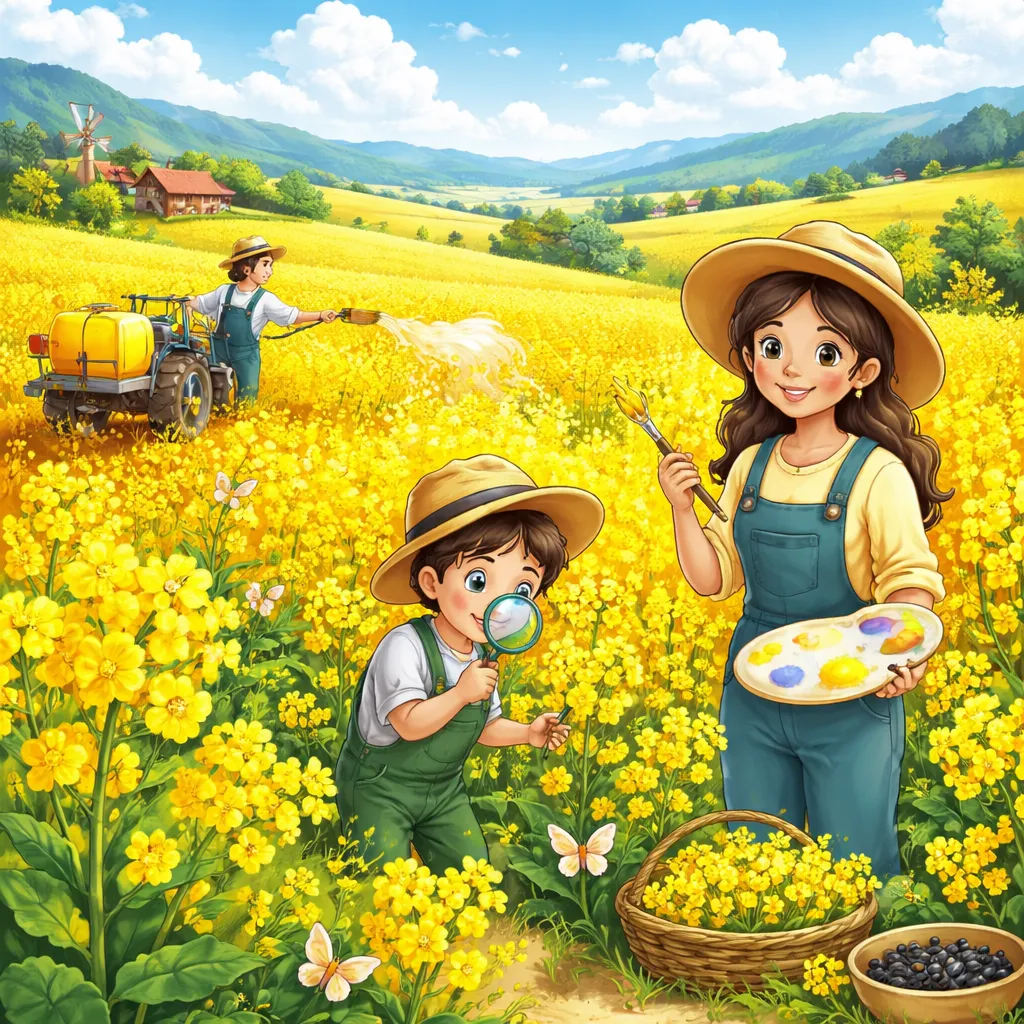

Have you ever driven past a field in spring that looks like a giant, sunny yellow blanket spread over the hills? The color is so bright it almost glows! This amazing sight is a field of blooming rapeseed. It’s not just a pretty picture; it’s a very important plant. The tiny seeds from these flowers are crushed to make cooking oil, animal feed, and even fuel! Let’s explore the brilliant world of the Rapeseed plant.
Let’s Learn the Word! – Open the Treasure Box of Language
Formal Name and Pronunciation
This brilliant yellow plant is called Rapeseed. Its scientific name is Brassica napus. You can say it like this: /ˈreɪp.siːd/ (RAPE-seed). The “rape” part rhymes with “tape,” and “seed” is like a plant seed. Rape-seed. Say it: Rapeseed. Its other, friendlier name is Canola.
The Etymology Tale
The name “Rapeseed” is quite old! The “rape” part comes from the Latin word “rapum,” which means “turnip.” Why? Because the rapeseed plant is a close cousin to turnips and cabbages! So, its name means the “seed of the turnip-like plant.” The name Canola is a special, modern name for a healthy type of rapeseed oil, made from the words “Canada” and “ola” (meaning oil).
Nicknames and Friendly Aliases
This plant is best known by its two main names. The traditional name is Rapeseed or Rape. The healthy, modern variety for oil is Canola. Because of its stunning yellow flowers, it is often called Oilseed Rape or just the Yellow Flower Crop. In some places, it’s called Colza.
Building Your Word Web: Core Parts
Let’s learn the words for a Rapeseed plant’s body. The Plant is tall, with a main sturdy stem. The Flower is the famous bright yellow bloom with four petals in the shape of a cross. The Pod (also called a silique) is a long, thin, beak-like fruit that holds the seeds. A single Seed is tiny, round, and can be black or brown. The Oil is the golden liquid pressed from the seeds. A Field in full bloom is a rapeseed field or canola field.
Action and State Words
Rapeseed plants are busy and beautiful. They grow quickly in cool weather. In spring, they burst into brilliant yellow bloom. The flowers are pollinated by bees. The pods form and swell with seeds. The seeds are harvested and crushed for oil. A rapeseed plant is brilliant, oil-rich, cool-season, and annual.
Ecosystem Friends Vocabulary
A blooming rapeseed field is a buzzing paradise! Honeybees and bumblebees absolutely love the bright yellow flowers. They visit by the thousands to collect nectar and pollen, which helps make the honey we eat and pollinates the flowers so they can make seeds. The field provides a huge feast for these important insects in the spring.
Cultural Imprint in Language
Rapeseed fields are a powerful symbol of spring’s arrival and agricultural beauty. Artists and photographers love to capture the sight of endless yellow fields under a blue sky. While there aren’t old rhymes about it like peas, the modern phrase “field of gold” is often used to describe it. It represents renewal, agricultural abundance, and the beauty of farmlands.
Ready for Discovery
We know its golden, oily name. Are you ready to be a field detective and discover how this beautiful plant makes oil for our kitchens and fuel for machines? Let’s explore the secrets of the Rapeseed plant.
Discover the Plant’s Secrets! – A Nature Detective’s Notebook
The Plant Passport
Rapeseed belongs to the Brassicaceae family, the mustard and cabbage family. Its scientific name is Brassica napus. It is an annual plant that grows 3 to 5 feet tall. The lower leaves are large and lobed, while upper leaves clasp the stem. The flowers are bright yellow with four petals forming a cross shape. The fruit is a slender pod. The seeds are tiny, round, and contain about 40-45% oil. It grows best in cool, temperate climates and is planted in fall or early spring.
Survival Smarts
Rapeseed is a cool-weather specialist. It can survive light frosts, which makes it perfect for planting in autumn or very early spring. Its bright yellow flowers are a clever advertisement for bees, ensuring they get pollinated. The plant stores lots of energy in the form of oil inside its tiny seeds. This oil is food for the baby plant when it sprouts, and it’s also the valuable product that humans harvest.
Its Role and Gifts
A rapeseed field is a giant restaurant for pollinators in early spring, helping bee populations. Its most important gift is the seed. Rapeseed (canola) is the third-largest source of vegetable oil in the world! The oil is used for cooking, in margarine, and in processed foods. The leftover seed cake is a high-protein animal feed. The oil can also be made into biodiesel, a renewable fuel for cars and trucks.
Human History and Cultural Symbol
Rapeseed has been grown in Asia and Europe for thousands of years, originally for lamp oil and animal feed. The modern canola variety was developed by Canadian scientists in the 1970s to have very low levels of unhealthy acids, making the oil good for people to eat. This transformation made it a major global crop. Today, it symbolizes agricultural innovation, sustainable energy, and the marriage of beauty and utility on the farm.
Fun “Wow!” Facts
Get ready for a bee fact! One beehive can collect up to 15 pounds of honey from a single acre of blooming rapeseed! And here’s a fuel fact: It takes about 11 pounds of rapeseed to make one gallon of biodiesel fuel. That’s a lot of power in those tiny seeds!
From Golden Field to Your Garden
The story of the Rapeseed plant is one of beauty and utility. Would you like to grow a splash of this brilliant gold in your own space? You can grow a few rapeseed plants in a garden bed! Let’s see how.
Let’s Grow It Together! – A Little Guardian’s Action Guide
Good for Home Growing?
Yes, as a beautiful and educational garden plant! You won’t grow enough to make oil, but you can enjoy the gorgeous flowers and maybe harvest a few seeds. It needs a sunny spot and cool weather to start. It’s best grown in a garden bed as it gets quite tall. It’s a fantastic project to learn about oilseed crops and attract bees.
Little Gardener’s Toolkit
You will need a packet of rapeseed or canola seeds from a garden store. Get a sunny garden spot with well-draining soil. Have a watering can, some compost, and a sunny spot ready. A small stick for support might be helpful if it’s windy.
Step-by-Step Growing Guide
Planting Your Golden Flowers
For a spring bloom, plant seeds in late summer or early fall. For a summer/fall bloom, plant in early spring as soon as the soil can be worked. Scatter the seeds thinly over prepared soil and rake them in lightly, about a quarter-inch deep. Water the area gently. They need cool temperatures to germinate well.
Care Calendar
Keep the soil moist until seedlings are established. Once growing, water during dry spells. They love full sun. You can mix a little compost into the soil before planting, but they don’t need much extra food. The main care is keeping them weeded when they are small.
Watch and Be Friends
Watch for the first heart-shaped leaves. The plant will grow a tall central stem. In cool weather, it forms a leafy rosette close to the ground. When the days get longer and warmer, it will shoot up and produce buds. Then, the magic happens—a burst of bright yellow flowers! Watch the bees visit. After the flowers fade, long, thin pods will form. Let them dry on the plant until they turn brown.
Problem Diagnosis
If leaves have many holes, look for small green caterpillars (like the larvae of the cabbage white butterfly); you can pick them off. Aphids might also visit; spray them off with water. The most common issue is planting them in hot weather, which they don’t like. Plant in the cool seasons for best results.
Your Rewards and Gifts
Your gift is a brilliant splash of gold and a buzzing bee habitat. You are learning about an important global crop, the life cycle of an oilseed, and the vital work of pollinators. Caring for rapeseed teaches patience, observation, and the joy of growing something both beautiful and useful. You become a grower of golden resources.
Creative Fun
Start a Golden Field Journal. Draw the stages of growth. Press a bright yellow flower. When the pods are dry, carefully open one and count the tiny seeds inside. Plant your patch in the shape of a giant sunflower or a letter. Research how oil is pressed from seeds and draw the process. Write a poem about a bee’s busy day in a yellow field. Make a “biodiesel” label for a toy car, explaining that some real cars can run on plant oil.
Growing a Patch of Sunshine
By planting rapeseed, you are not just growing flowers. You are growing a lesson in agriculture, a helping hand for bees, and a living example of how plants give us food, feed, and fuel. You are a cultivator of brightness and knowledge.
Conclusion and Forever Curiosity
What a brilliant, golden, and useful journey! You started to learn about the Rapeseed plant, you discovered its secrets as the oil-rich, bee-feeding superstar of spring fields, and you learned how to grow your own patch of sunshine. You now know the Rapeseed plant is not just a pretty view; it is a member of the cabbage family, a treasure chest of oil, a feast for bees, and a source of renewable energy. Remember, its power is locked in tiny seeds within delicate yellow flowers. Your curiosity helps you see the incredible value and beauty in farm fields. Keep looking at the world around you, asking how plants power our lives, and planting seeds of wonder. Your adventure to learn about the Rapeseed plant shows us that a field of gold can feed us, fuel us, and fill our hearts with the simple joy of spring.