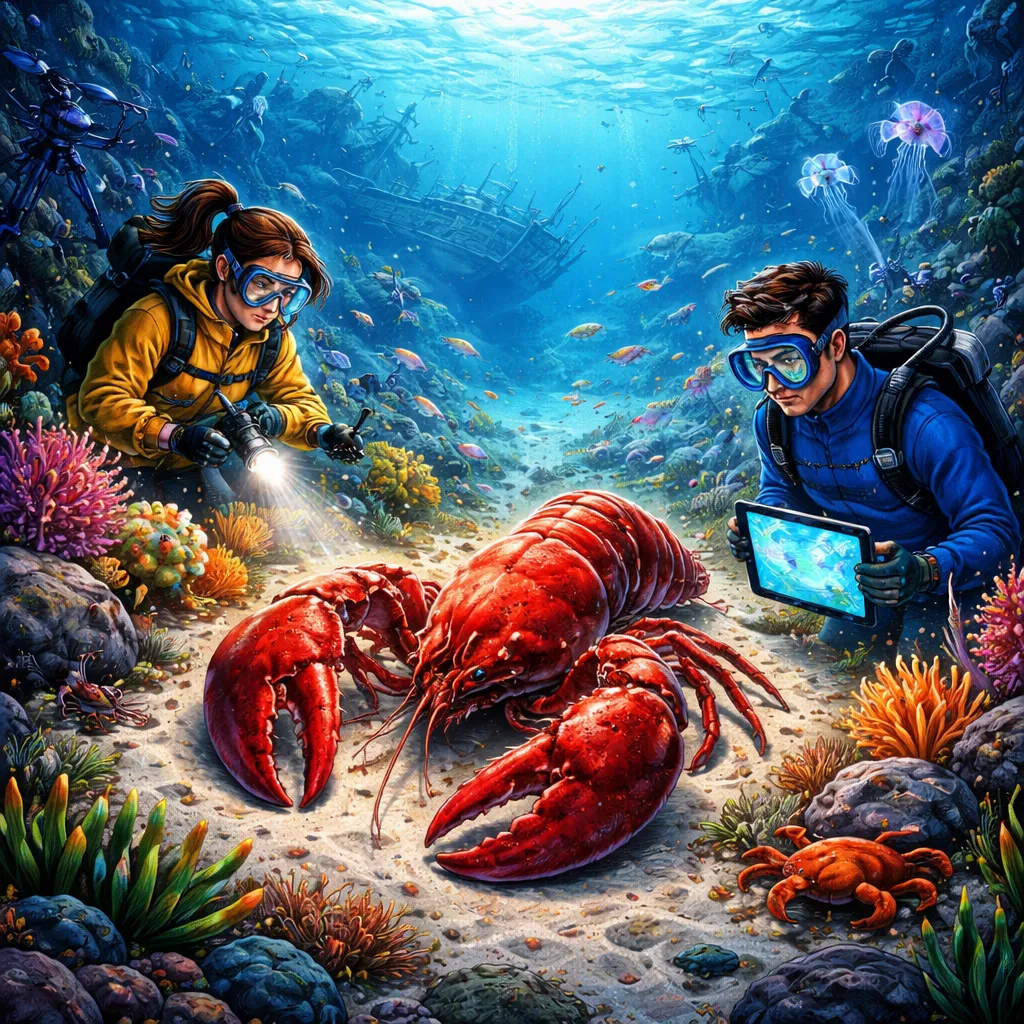

Some animals walk forward. The lobster walks sideways. It moves with purpose across the ocean floor. It wears armor. It carries powerful claws. For children, learning about Lobster opens a window to the rugged world of the seafloor. Parents and children can explore this armored creature together. No diving gear is needed. Just curiosity about one of the ocean’s most recognizable residents.
The lobster looks like something from ancient times. Its body is built for protection and hunting. Let us begin our journey to the rocky bottom where lobsters live.
What Is This Animal? A lobster is a large crustacean with a hard outer shell. Its body is divided into two main parts. The front part is the cephalothorax. It holds the eyes, mouth, and claws. The back part is the abdomen, often called the tail. The lobster uses its tail to swim backward quickly when escaping danger.
Lobsters live on the ocean floor in cold waters. They hide in rocky crevices and burrows during the day. They come out at night to hunt. Their dark coloring helps them blend with the rocks and shadows.
Children often find lobsters fascinating because of their large claws and armored appearance. Learning about Lobster becomes an exploration of how animals use strength and protection to survive.
English Learning About This Animal Let us begin with the word “lobster.” It is pronounced /ˈlɑːbstər/. Say it with your child: lob-ster. Two syllables. The first part sounds like “lob” in “lobster.” The second part sounds like “ster” in “sister.” The word has been used in English for over a thousand years.
When learning about Lobster in English, we meet words about armor and hunting. Here are a few to share.
Crusher claw – the larger claw used to break hard shells.
Pincher claw – the smaller, sharper claw used to tear soft food.
Antenna – long, sensitive feelers on the lobster’s head.
Carapace – the hard shell covering the lobster’s front body.
Use these words in simple sentences. “The lobster uses its crusher claw to break shells.” “Its antennae sense food in the dark.” These sentences help children understand the lobster’s tools for survival.
Here is a proverb that fits the lobster. “Forewarned is forearmed.” Lobsters are always armed. Their claws are ready. Their armor is strong. This teaches children that being prepared gives you confidence. Knowing what you have and how to use it matters.
Another meaningful thought comes from author Henry David Thoreau. He wrote, “Simplify, simplify.” Lobsters have a simple, effective design. Armor. Claws. Antennae. No extra parts. This reminds children that simple designs often work best.
Animal Facts and Science Knowledge Lobsters belong to the family Nephropidae. They are crustaceans. Their relatives include crabs, shrimp, and crayfish. There are several species. The American lobster lives in the Atlantic Ocean. The European lobster lives in waters near Europe. Both are prized for their meat.
Lobsters have two different claws. The crusher claw is larger and heavier. It breaks open clam shells and crab shells. The pincher claw is smaller and sharper. It tears soft food like fish and worms. Lobsters can use both claws with great skill.
Lobsters grow by molting. They shed their old shell. A new, larger shell forms underneath. The lobster is soft and vulnerable after molting. It hides until the new shell hardens. This process takes weeks. Lobsters can molt many times over their lives. Some lobsters live over 50 years and grow very large.
Lobsters are nocturnal. They hide during the day. At night, they emerge to hunt. They eat clams, crabs, sea urchins, and dead animals. They use their antennae to smell food from far away. Their eyes work well in dim light.
Lobsters have blue blood. Their blood contains copper, not iron like human blood. The copper turns blue when exposed to oxygen. This is one of many ways lobsters differ from mammals.
Lobsters can regenerate lost limbs. If a lobster loses a claw or leg, it grows a new one. The new limb is smaller at first. It grows with each molt. This ability helps lobsters survive fights and escapes.
How to Interact With This Animal Safely Lobsters are wild animals. Their claws are powerful. A large lobster can crush a clam shell. It can also give a painful pinch. Never put your fingers near a lobster’s claws. If you see a lobster in the wild, observe from a distance. Do not try to catch it with your hands.
If your family goes crabbing or lobstering, follow local rules. Many areas have seasons and size limits. Use traps or nets. Wear gloves. Handle lobsters carefully. If you catch a lobster that is too small or out of season, release it gently.
Lobsters are not pets. They require cold, saltwater tanks with precise conditions. They need hiding places and specific food. Most families should enjoy lobsters through observation or as food from sustainable sources.
If you eat lobster, talk to children about where it comes from. Choose lobster from sustainable fisheries. Some lobster populations are carefully managed. Understanding food sources helps children appreciate the animal and the ocean.
Teach children that lobsters are living creatures. Whether in the ocean or on a plate, respect for the animal matters.
What Can We Learn From This Animal Lobsters teach us about protection. They wear armor. They carry weapons. They hide when vulnerable. Children can learn that protecting yourself is wise. Boundaries, safety habits, and knowing your strengths are forms of armor.
Lobsters also show us the value of regeneration. They lose limbs and grow them back. They do not despair over loss. They grow again. Children can learn that setbacks are not permanent. Healing and growth happen over time.
Another lesson is patience. Lobsters hide for weeks after molting. They wait until their new shell hardens. They do not rush. Children can learn that waiting for the right time is smart. Rushing when you are not ready leads to trouble.
Lobsters teach us about using different tools for different jobs. The crusher claw breaks hard things. The pincher claw tears soft things. Children can learn that different situations need different approaches. Having multiple ways to handle challenges is strength.
Fun Learning Activities Turn learning about Lobster into hands-on exploration. Here are a few simple ideas.
Make a Claw Craft Draw a lobster shape. Cut out two claws from cardboard. Make one larger and one smaller. Let your child decorate them. Talk about why lobsters have two different claws.
Create a Molting Story Ask your child to imagine being a lobster growing too big for its shell. You shed it. Now you are soft. Where do you hide? What happens next? Write or draw the story together. Use new words like molting, carapace, and regenerate.
Play the Lobster Walk Crouch down. Walk sideways. Hold your arms up like claws. Move slowly across the floor. Explain that lobsters walk forward but can swim backward quickly.
Build a Lobster Hideout Use pillows, blankets, or boxes to create a hiding place. Explain that lobsters hide in rocky crevices during the day. This activity builds imagination and understanding of lobster behavior.
Watch and Wonder Find a short video of a lobster walking, molting, or using its claws. Watch together. Pause and ask open questions. “What do you notice about its claws?” “Why do you think it moves that way?” Let your child share observations freely.
Learning about Lobster takes us to the cold, rocky ocean floor. It is a world of armor and claws, of hiding and hunting. This ancient creature has walked the seafloor for millions of years. It wears its protection. It grows by shedding. It regenerates what it loses. As parents and children explore together, they build language, knowledge, and a shared appreciation for one of the ocean’s most resilient residents. The lobster tucks itself into a rocky crevice, antennae waving, claws ready. And in that armored stillness, young learners discover something true—that protection, patience, and the ability to grow anew are strengths worth carrying wherever you go.