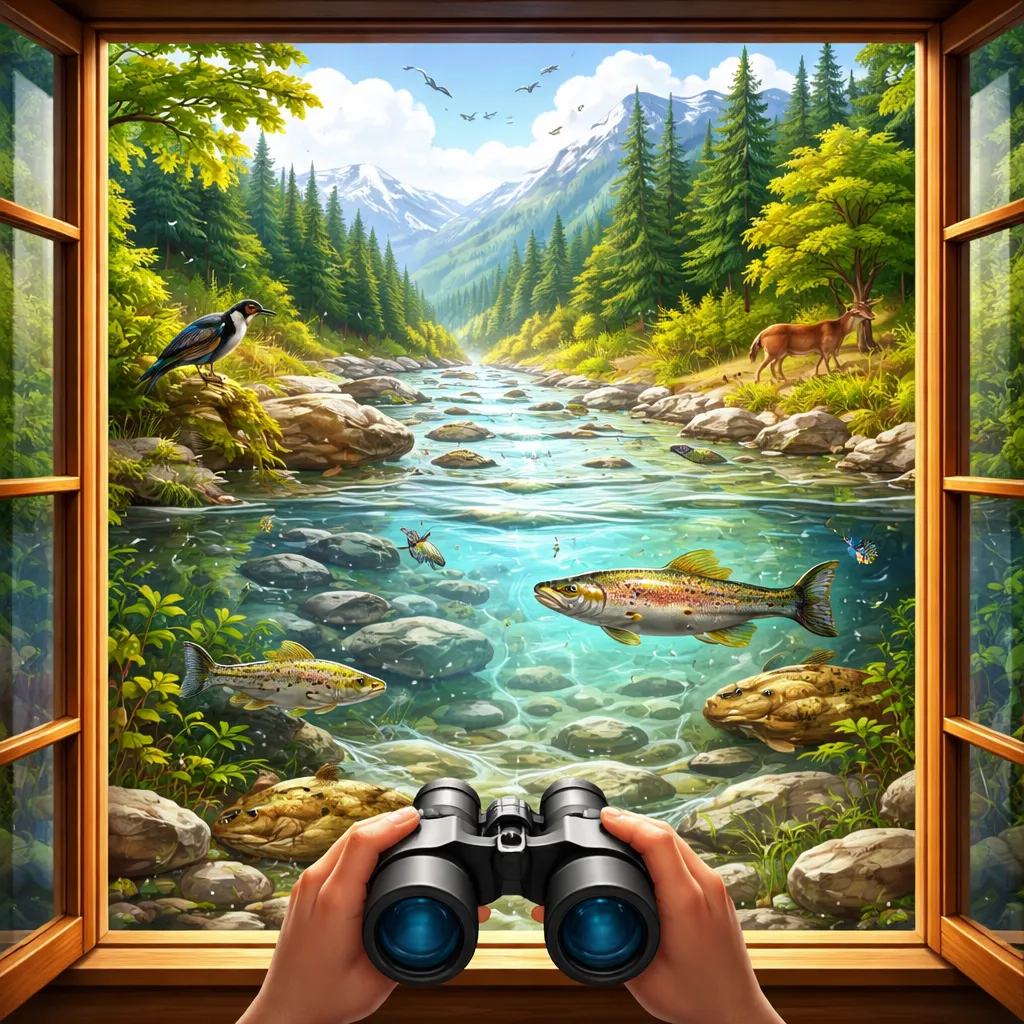

Some fish thrive in warm, slow rivers. The trout prefers something different. It seeks cold, clear water with a steady current. For children, learning about Trout reveals a world of sparkling streams, hidden pools, and quiet beauty. Parents and children can explore this graceful fish together. No fishing gear is required. Just a sense of curiosity and a willingness to look closely at nature's details.
The trout is not a single fish. It comes in many varieties. Each one shares a love for clean, oxygen-rich water. Let us begin our journey.
What Is This Animal? A trout is a sleek fish with a streamlined body. Its back often shows shades of olive, brown, or blue. Dark spots dot its sides and fins. The belly is usually lighter. This coloring helps the trout blend into the streambed when seen from above.
Trout live in cold, clear rivers, streams, and lakes. They need water with high oxygen levels. You will find them in places where water moves quickly over rocks. They also gather in deeper pools where they can rest. Their home must be clean. Trout cannot survive in polluted waters.
Children often find trout fascinating because of their beautiful spots and lively movements. Learning about Trout becomes an exploration of healthy rivers and the creatures that depend on them.
English Learning About This Animal Let us begin with the word "trout." It is pronounced /traʊt/. The sound rhymes with "shout" and "about." Say it with your child: tr-ow-t. The "ou" makes a strong, clear sound. It is a one-syllable word. Easy to say. Easy to remember.
When learning about Trout in English, we meet words connected to water and movement. Here are a few to share.
Current – the steady flow of water in a river or stream.
Spawning – the process of laying and fertilizing eggs.
Crevice – a narrow crack or gap between rocks.
Oxygen – a gas in water that fish need to breathe.
Use these words in simple sentences. "Trout need oxygen-rich water." "They hide in crevices between rocks." These sentences help children connect words to real environments.
Here is a proverb that fits the trout's world. "Still waters run deep." Trout often rest in deep pools where the surface looks calm. Yet these pools hold life and activity below. The proverb teaches children that quiet places can hold great richness.
Another meaningful thought comes from author John Gierach. He wrote, "Trout do not live in ugly places." This simple statement reminds us that healthy trout mean healthy rivers. Clean, beautiful places matter for all living things. Children can learn to appreciate and protect the natural spaces around them.
Animal Facts and Science Knowledge Trout belong to the family Salmonidae. Their relatives include salmon and char. Common species include rainbow trout, brown trout, and brook trout. Rainbow trout often have a pink stripe along their sides. Brown trout display dark spots on a golden-brown body. Brook trout have worm-like markings on their backs.
Trout are carnivores. They eat insects, small fish, and crustaceans. Young trout feed on aquatic insects like mayflies and caddisflies. Adult trout may eat larger prey like minnows. They often wait in current seams where food drifts by. Their quick strikes show their speed and accuracy.
Trout have excellent eyesight. They see in color. This helps them identify food and avoid predators. They also sense vibrations through their lateral line. This sensory system runs along each side of the body. It detects movement in the water.
Most trout live in freshwater their entire lives. Some species, like steelhead trout, migrate to the ocean and return to rivers to spawn. This anadromous lifestyle mirrors that of salmon. Spawning occurs in autumn or spring, depending on the species. Females dig nests called redds in gravel bottoms. They lay hundreds of eggs. Males fertilize them.
Trout are cold-water fish. They thrive in temperatures between 50 and 60 degrees Fahrenheit. Warmer water holds less oxygen. This makes trout sensitive to climate changes and human activity. Protecting cold, clean water protects trout.
How to Interact With This Animal Safely In the wild, trout are shy fish. They will flee if they sense danger. If you visit a stream or lake, approach slowly. Walk quietly along the bank. Look into clear pools from a distance. Do not wade into areas where you see trout resting. Sudden movements and shadows can frighten them.
If your family enjoys fishing, teach children to handle trout gently. Use wet hands to avoid removing their protective slime coat. Support the fish in water while removing the hook. Release it quickly. If you keep a fish for food, make sure it is legal to do so in your area. Follow local fishing regulations.
Never feed wild trout. Human food can harm them. Feeding also makes fish lose their natural wariness. This puts them at greater risk from predators and anglers.
In areas where trout are present, avoid using soaps or lotions near the water. These chemicals pollute the stream. Pack out all trash. Fishing line left behind can entangle fish and other wildlife. Teaching children to leave no trace protects trout habitats for years to come.
What Can We Learn From This Animal Trout teach us the value of clean environments. They cannot survive in polluted water. This makes them indicators of river health. Children can learn that our actions affect the natural world. Keeping water clean helps trout and people alike.
Trout also show us the importance of finding the right place to thrive. They choose cold, oxygen-rich water. They do not live where conditions do not suit them. This teaches children that finding where you belong matters. It is okay to seek environments where you can grow best.
Another lesson is patience. Trout wait in current seams for food to drift by. They do not chase endlessly. They choose good positions and wait. Children can learn that waiting in the right place can be more effective than constant motion.
Trout are survivors. They navigate fast currents, avoid predators, and find food in challenging conditions. This resilience teaches children that they too can face challenges. Small fish in big rivers. Small people in big worlds. Both can succeed with awareness and effort.
Fun Learning Activities Turn learning about Trout into hands-on discovery. Here are a few simple ideas.
Paint a Spotted Trout Draw a fish shape on paper. Let your child paint it in olive, brown, or blue. Add dark spots with a cotton swab. Talk about why spots help trout hide in rocky streams.
Create a Stream in a Box Fill a shallow box with sand and small rocks. Add water gently. Create a current by tilting the box. Place a toy trout in different spots. Talk about where trout like to rest and where they feed.
Write a Life Story Ask your child to imagine being a tiny trout egg in a gravel nest. What does it feel like to hatch? How does it learn to find food? Write or draw the journey together. Use new words like spawning, current, and oxygen.
Play the Current Game Lay a blue blanket or fabric on the floor. Place pillows as rocks. Ask your child to move like a trout through the "current." Swim slowly in some parts. Rest in deeper "pools." This movement activity builds understanding through play.
Watch and Wonder Find a short video of trout swimming in a clear stream. Watch together. Pause and ask open questions. "What do you notice about the water?" "Where do the trout choose to rest?" Let your child share observations freely.
Learning about Trout invites us into some of the most beautiful places on Earth. Cold, clear streams. Sparkling pools. Quiet forests. This fish shows us what clean water looks like. It teaches us patience, resilience, and the importance of home. As parents and children explore together, they build language, knowledge, and a shared love for nature's hidden gems. The trout rests in the current, its spots catching light through clear water. And in that peaceful moment, young learners discover something true—that the healthiest places are worth protecting, and the quietest ones often hold the greatest wonder.