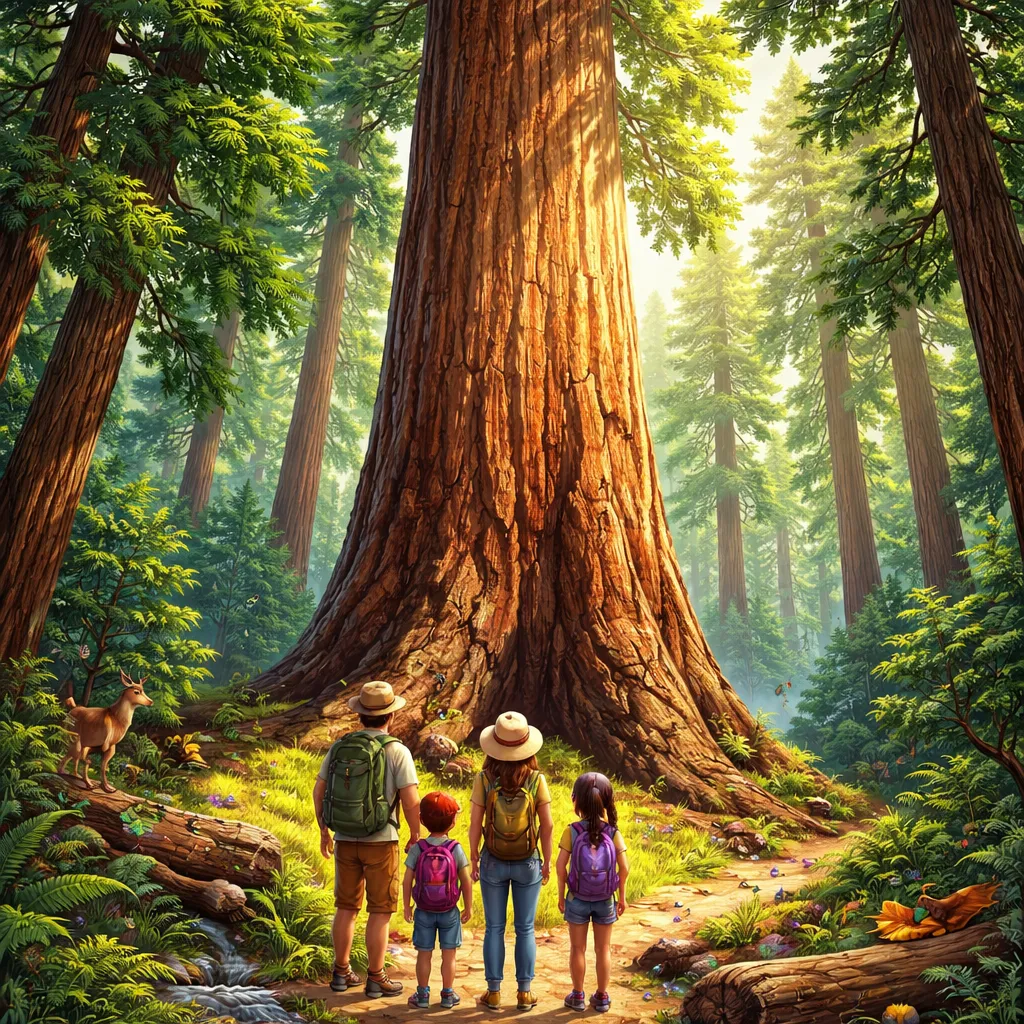

Imagine a living tower so tall, its top hides in the clouds. Think of a tree wider than your classroom door, older than your great-great-grandparents, and strong enough to live for thousands of years. It sounds like a giant from a storybook, doesn’t it? But this gentle giant is real. It grows in special forests where the air is cool and foggy. Its name comes from the beautiful, rich red color of its strong wood. Let’s go on an adventure to learn about the amazing Redwood plant.
Let’s Learn the Word! – Open the Treasure Box of Language
Formal Name and Pronunciation This giant is called a Redwood. You can say it like this: /ˈrɛd.wʊd/ (RED-wood). It is a fun, strong-sounding word. Just say the color “red” and then the material “wood” – Redwood! Its name is a perfect picture of what it is.
The Etymology Tale The name tells a simple story. Long ago, when people first cut into this tree, they saw the heart of the wood inside. It wasn’t brown like many trees. It was a warm, beautiful red color! So, they naturally called it the “red wood,” which became one word: Redwood. The name celebrates its most famous feature.
Nicknames and Friendly Aliases Redwoods have wonderful nicknames that tell us about their superpowers. The very tallest type is often called the “Coast Redwood” because it loves the foggy Pacific coast. Another type, which grows fatter, is the “Giant Sequoia” or “Sierra Redwood.” People also call them “Living Skyscrapers” or “Gentle Giants” because they are so huge but peaceful.
Building Your Word Web: Core Parts Let’s learn the words for the parts of this giant. The Trunk is the massive, straight, reddish-brown pillar that holds the tree up. It’s like a building’s main pillar. The Bark is the super-thick, soft, fibrous, reddish-brown skin. It can be as thick as your arm is long! It protects the tree. Needles are the green leaves. They are flat, soft, and look like fluffy feathers or a fern. Cones are the small, round, woody seed-holders, about the size of a large olive. Roots are wide and shallow; they spread out under the ground to hold the giant steady, often linking with other redwood roots. The Crown is the very top of the tree, high in the sky, where the branches and needles are. A Groove is the tall, deep channel that runs up the trunk, like a natural ladder.
Action and State Words Redwoods are masters of quiet action. They tower over the entire forest. They withstand forest fires because of their amazing bark. A redwood forest creates its own cool, moist microclimate. The trees are ancient, majestic, and resilient, standing for centuries.
Ecosystem Friends Vocabulary The redwood forest is a busy city for wildlife. The Spotted Owl nests in the high branches. Black bears find shelter in the hollows of old trees. Banana Slugs, bright yellow crawlers, help recycle leaves on the damp forest floor. The Pacific Fisher, a shy relative of the weasel, hunts in the trees. Even a special type of salamander lives its whole life in the treetops, never touching the ground!
Cultural Imprint in Language John Muir, a great nature lover, said, “The clearest way into the Universe is through a forest wilderness.” Walking among redwoods feels just like that. A poet named Joseph B. Strauss wrote about the Giant Sequoia: “Here sown by the Creator’s hand, In serried ranks, the Redwoods stand.” “Serried ranks” means standing close together in tall, proud lines, like an army of peaceful giants. It shows how they grow in mighty groups.
Ready for Discovery Now we know the words for this giant’s world. Are you ready to put on your detective hat and discover the Redwood plant’s deepest secrets?
Discover the Plant’s Secrets! – A Nature Detective’s Notebook
The Plant Passport Redwoods belong to the Cypress family. Their scientific group is Sequoia for the tall Coast Redwood and Sequoiadendron for the giant, wide Sequoia. A redwood is like a huge, rusty-red column wearing a soft, spongy coat, with a fluffy green crown tickling the sky. Its needles are dark green on top and have two white lines underneath. Its tiny cones are small and round. The tree grows slowly but steadily for thousands of years. It is an evergreen, keeping its needles all year, and makes new, bright green growth each spring.
Survival Smarts Its most amazing superpower is its bark. It can be over a foot thick! This bark is soft, full of air, and does not burn easily. It acts like a super-fireproof jacket, protecting the living part inside during forest fires. Another trick is its love for fog. The tall trees catch the fog on their needles. The fog turns into water droplets that fall to the ground, giving the tree and the whole forest a drink. Redwoods only grow in a special strip along the coast of northern California and southern Oregon, USA, where this magical fog happens.
Its Role and Gifts The redwood is a whole ecosystem. Its thick bark provides homes for insects, birds, and even mammals. Fallen needles make a soft carpet that feeds the soil. Its greatest gift is being a “climate helper.” One single redwood can store more carbon dioxide, a gas that can warm our planet, than almost any other tree. The forest also makes clean air, stores vast amounts of water, and prevents erosion with its strong, interlocking roots.
Stories and Symbols Because they live for millennia, redwoods are global symbols of strength, longevity, and peace. Native American tribes, like the Yurok and Miwok, have always lived with them, using the wood for canoes and houses, and honoring them in stories. A huge historical event was saving them! People like John Muir fought to create national parks to protect these trees from being all cut down. Today, we use fallen redwood for garden benches and fences, but we protect the living giants in parks.
Fun “Wow!” Facts Get ready for a big surprise! The very tallest living tree on Earth is a Coast Redwood named “Hyperion.” It is taller than a 35-story building! And here’s another: a single redwood tree can be over 2,000 years old. Some were already ancient giants when the Roman Empire was young!
From Ancient to New These secrets are incredible. But can we bring a little piece of this ancient magic to our own homes? Let’s explore how you can help grow the future.
Let’s Grow It Together! – A Little Guardian’s Action Guide
Good for Home Growing? You cannot grow a 300-foot giant in your backyard, of course! But you can grow a baby redwood from a seed. It will be a slow-growing potted friend for many years. It will need a large pot eventually and loves a cool, moist spot, like a shady patio. It is a project of great patience and love.
Little Gardener’s Toolkit You will need Redwood seeds, which you can find from special garden stores online. Get a small pot with drainage holes for starting. Use a moist, seed-starting soil mix. Have a spray bottle for gentle watering. Clear plastic wrap or a dome helps keep humidity high. A bigger pot will be needed later for transplanting.
Step-by-Step Growing Guide
Planting Your Ancient Baby The best time to start is in spring. Place the tiny seeds on top of the damp soil in your pot. Do not bury them; they need light to wake up! Just press them gently onto the soil. Cover the pot with clear plastic to make a mini-greenhouse. Put it in a warm spot with indirect light.
Care Calendar Keep the soil always slightly damp, like a wrung-out sponge. Use the spray bottle to mist it, so you don’t wash the seeds away. Once the little seedlings pop up, remove the plastic. They love bright, indirect sunlight. Be very patient; they grow slowly. You do not need to feed them in their first year.
Watch and Be Friends This is a test of your watchful eyes! Check for the first green sprouts—it may take weeks. Draw your seedling every month. Measure its height with a ruler. Notice how the soft, feathery needles grow. Talk to it and encourage it as it begins its long, long life journey.
Problem Patrol If the seedling looks weak or leggy, it needs more light. Move it to a brighter spot. If you see white fuzz (mold) on the soil, you are watering too much. Let it dry a tiny bit and remove the mold carefully. Good air flow helps.
Your Rewards and Gifts Your gift is the magic of beginnings. You are holding a tiny piece of an ancient giant. Caring for it teaches you incredible patience, as it grows just a little each year. It teaches you responsibility for a living piece of history. You become a guardian of the future.
Creative Fun Keep a Millennium Journal. Draw your tree each year on the same date. Watch its slow change over time. Make art by doing a bark rubbing of a fallen branch or a picture of a giant redwood you imagine. Write a short poem or story about what your seedling might see in a hundred years.
A Long-Term Friendship Growing a redwood is not about quick results. It is about starting a friendship that could last your whole life. You are not just growing a tree; you are growing hope and a connection to the ancient world.
Conclusion and Forever Curiosity Look how much you know now! You started by learning the word “Redwood,” you discovered its secrets as the tallest, oldest, and one of the strongest living things on Earth, and you even learned how to help a tiny one begin its journey. You now know the Redwood is more than a tree; it is a forest creator, a climate protector, a historical monument, and a symbol of timeless peace. Remember, every big thing starts small. Your curiosity is the first step to protecting these wonders. Keep looking up, wondering, and planting seeds of care—for trees, for animals, and for our planet. The adventure to learn about the Redwood plant never really ends, and that is the most beautiful part.