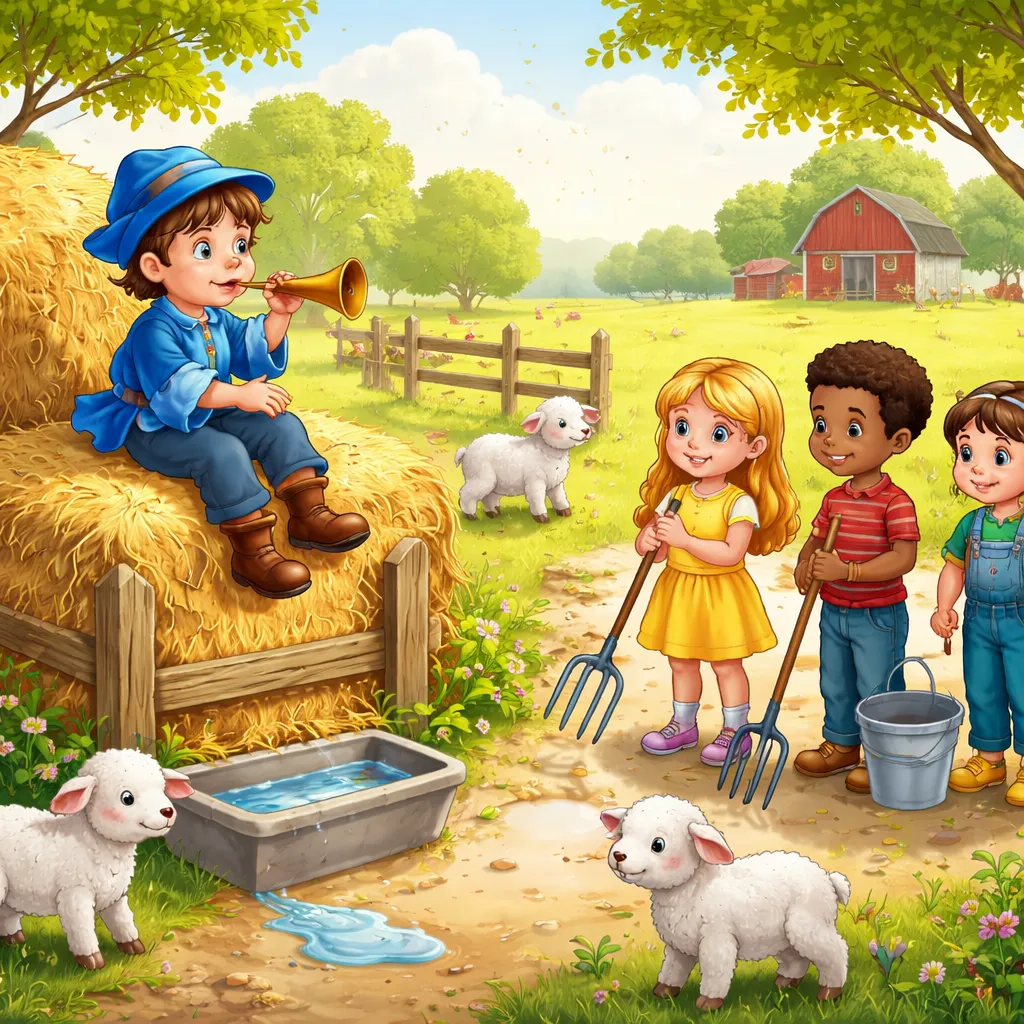

Some songs carry gentle lessons wrapped in sweet melodies. The English song: Little Boy Blue does exactly that. This short nursery rhyme tells of a young boy who falls asleep while watching over sheep and cows. For families learning English together, this song offers a simple way to explore animal names, responsibility, and the consequences of falling asleep on the job. Let us discover what makes this traditional rhyme so meaningful for young learners.
What Is the Story Behind This Famous Song?
The English song: Little Boy Blue is a traditional nursery rhyme that first appeared in print around 1744. Like many old rhymes, it may have hidden meanings that scholars still debate. Some think it refers to Cardinal Wolsey, a powerful figure in Tudor England. Others believe it simply describes a sleepy farm boy.
The rhyme features a boy who should be working but sleeps instead. The sheep are in the meadow, which is a grassy field. The cows are in the corn, meaning they have wandered into the grain field where they should not be. The boy cannot tend them because he is fast asleep under a haystack.
The rhyme asks a question. Who will wake the boy? His mother might call him, but if he sleeps through that, only the horn of a hunter or farmer will rouse him. The horn was used in old times to call workers or signal during hunts.
This simple story has charmed children for nearly three centuries. It teaches about duties and what happens when we forget them. Yet it does so gently, without scolding. The sleepy boy is not bad, just tired. Understanding this背景 helps families appreciate the rhyme's gentle wisdom.
The Complete Lyrics of the Song
Reading the words helps us understand the simple story. Here are the lyrics to the English song: Little Boy Blue. Let us look at them.
Little Boy Blue, come blow your horn The sheep's in the meadow, the cow's in the corn Where is the boy who looks after the sheep? He's under the haystack, fast asleep
Will you wake him? No, not I For if I do, he's sure to cry Little Boy Blue, come blow your horn The sheep's in the meadow, the cow's in the corn
Learning New Words from the Song
The English song: Little Boy Blue introduces many useful words. Let us explore them together.
First, "Little Boy Blue" is the character's name. Blue might describe his clothes or his sad mood. Children learn that colors can be part of names, like "Snow White" or "Goldilocks".
"Blow your horn" means to make sound come from a horn instrument. Shepherds used horns to call sheep or signal others. This phrase teaches action words.
"Sheep" are fluffy animals that give wool. The word is both singular and plural. One sheep, many sheep. Children learn this special plural form.
"Meadow" is a field of grass. This beautiful word paints a picture of green countryside. Children can imagine peaceful fields where sheep graze.
"Cow's in the corn" uses a contraction. "Cow's" means "cow is". The corn means the grain field, not sweet corn as we know it today. In old England, "corn" meant any grain like wheat or barley.
"Haystack" is a pile of dried grass called hay. Farmers stack hay for animal food. The boy sleeps under one, probably warm and comfortable.
"Fast asleep" means sleeping deeply. "Fast" here means firmly or completely, not quickly. This phrase appears often in stories. "The baby is fast asleep" or "I fell fast asleep on the couch".
The question "Will you wake him?" teaches about helping and choices. "No, not I" means "No, not me". The speaker refuses to wake the boy because he will cry.
"He's sure to cry" means he will definitely cry. "Sure to" shows certainty. For example, "If you fall, you're sure to get hurt" or "She's sure to be happy with that gift".
Exploring Pronunciation and Rhythm
The English song: Little Boy Blue offers gentle practice with English rhythm. The rhyming pattern makes it easy to remember.
Listen to the opening lines "Little Boy Blue, come blow your horn, The sheep's in the meadow, the cow's in the corn". The rhythm goes LIT-tle Boy BLUE, come BLOW your HORN, The SHEEP's in the MEAD-ow, the COW's in the CORN. The strongest beats fall on "Lit", "Blue", "blow", "horn", "sheep's", "mead", "cow's", and "corn". Clapping along helps children feel this pattern.
The question and answer section has a conversational rhythm. "Will you wake him? No, not I. For if I do, he's sure to cry." This teaches the natural rise and fall of English questions and answers.
The repetition of the first two lines at the end creates a satisfying circle. Children love knowing what comes next.
Finding Grammar Patterns in the Lyrics
The English song: Little Boy Blue offers useful grammar examples. One pattern appears in the commands. "Come blow your horn" uses the imperative form. This tells someone what to do. We use imperatives for requests and instructions. For example, "Come here" or "Blow your whistle".
The song uses contractions throughout. "Sheep's" means "sheep is". "Cow's" means "cow is". These contractions teach how English speakers shorten words in speech. Children learn to recognize and use them.
Another pattern appears with the possessive. "Little Boy Blue" shows a name. No apostrophe needed. But "the boy who looks after the sheep" uses "who" to describe the boy. This teaches relative clauses in a simple way.
The question "Will you wake him?" uses the future with "will". This asks about a future action. Children learn to form questions about what someone will do.
The answer "No, not I" uses an old form. Modern English would say "No, not me". But children hear both forms in songs and stories.
The phrase "he's sure to cry" uses "sure to" plus verb. This shows certainty. We use this structure often. For example, "It's sure to rain" or "She's sure to win".
Fun Learning Activities for the Whole Family
Listening to the English song: Little Boy Blue can inspire many family activities. Here are some ideas to try together.
First, create a farm animal matching game. Draw or print pictures of sheep and cows. Also include other farm animals like horses, pigs, and chickens. Name each animal in English. Practice sentences like "The sheep are in the meadow" or "The cows are in the corn". This builds animal vocabulary.
Second, have a responsibility discussion. Talk about jobs children have at home. Maybe they put away toys or feed a pet. What happens if they forget? Use English to share. "If I forget to feed the cat, she gets hungry" or "When I put away my toys, my room stays tidy". This connects the song to real life.
Third, act out the rhyme. One person is Little Boy Blue and pretends to sleep under a blanket "haystack". Others are sheep and cows wandering where they shouldn't. Someone calls "Little Boy Blue, come blow your horn!" The boy wakes and pretends to blow a horn. Everyone returns to their places. This dramatic play builds language through movement.
Creating Printable Materials at Home
Families can make simple learning tools based on the English song: Little Boy Blue. These activities help reinforce new ideas.
Create farm animal flashcards. On one side, draw or paste pictures of sheep and cows. On the other side, write the animal name and a simple sentence. "Sheep give us wool" or "Cows give us milk". Add other farm animals too. Review these cards together.
Make a meadow and corn coloring page. Draw a simple scene with a meadow on one side and a corn field on the other. Add a haystack with a sleeping boy. Color and label the parts. "Meadow", "corn", "haystack", "sheep", "cows". This builds vocabulary through art.
Create a fill-in-the-blank page using song lyrics. Remove key words like "horn", "sheep", "meadow", "cow", "corn", "haystack", "asleep", and "cry". Leave blanks where those words belong. Listen to the song together and fill in the missing words. This builds listening and spelling skills.
Connecting the Song to Daily Life
The English song: Little Boy Blue connects to daily life through the theme of responsibility. Everyone has jobs to do. Sometimes we get tired and forget. That is human.
Talk with your children about times they felt too tired to finish something. Use English to share these moments. "I was so tired I fell asleep on the couch" or "I forgot to feed the dog because I was playing". This builds vocabulary about feelings and mistakes.
The song also teaches that others notice when we don't do our jobs. The sheep and cows wander off. In daily life, forgotten jobs have consequences. The trash smells. The plant wilts. These gentle lessons help children understand why responsibility matters.
Parents can model grace when children forget. Instead of scolding, say "You forgot like Little Boy Blue. Let's fix it together." This teaches that mistakes are normal and we can always try again.
Educational Games to Play Together
Games make learning with the English song: Little Boy Blue exciting. Here are some simple games to try.
Play the animal sounds game. One person makes the sound of a sheep or cow. Others guess which animal. Say the full sentence. "That is a sheep" or "I hear a cow". This builds animal vocabulary through listening.
Try the responsibility charades game. One person acts out a chore like feeding a pet, watering plants, or putting away toys. Others guess the chore and say "You are feeding the dog" or "You are watering flowers". This builds action vocabulary.
Play the where are they game. Hide toy sheep and cows around the room. One person is Little Boy Blue who should be watching them. But he falls asleep. Others find the animals and say where they are. "The sheep is under the chair" or "The cow is on the bookshelf". This builds preposition vocabulary.
Why This Song Helps English Learning
The English song: Little Boy Blue helps learners in special ways. The short length makes it easy to master. Children can learn the whole song quickly, building confidence.
The simple vocabulary matches what beginners need. Words like sheep, cow, meadow, corn, sleep, and cry appear in early lessons. Learning them through song makes them easy to recall.
The story structure helps comprehension. Children understand narratives before individual words. They follow the story of the sleepy boy and remember the words through context.
The gentle lesson about responsibility creates meaningful discussion. Children connect the song to their own lives, making language personal and memorable.
Making Music Part of Your Routine
Families can make songs a regular part of English time. Choose one song each week to explore together. Listen during quiet moments or while driving.
The English song: Little Boy Blue works perfectly for winding down. Its gentle rhythm calms and soothes. Play it at naptime or bedtime. Let the music remind everyone that even sleepy boys are loved.
Remember that language learning thrives in gentle moments. When children associate English with cozy haystacks and sleepy farm boys, they feel safe and happy. They learn that English is not just lessons. It is the language of lullabies and bedtime stories.
Keep singing, keep dreaming, and keep sharing the gentle wisdom of traditional rhymes together. In the peaceful meadow of English learning, every new word blooms like wildflowers, sweet and natural and meant to be enjoyed.