
Some songs hide little treasures in their words. The Spanish Song: Under a Button (Debajo un botón) does exactly that. This playful children's song tells of a tiny mouse named Martín who lives under a button and finds a delicious piece of candy. For families learning Spanish together, this song offers a wonderful way to explore location words, animal names, and the joy of discovery. Let us discover what makes this traditional song so delightful for young learners.
What Is the Story Behind This Famous Song?
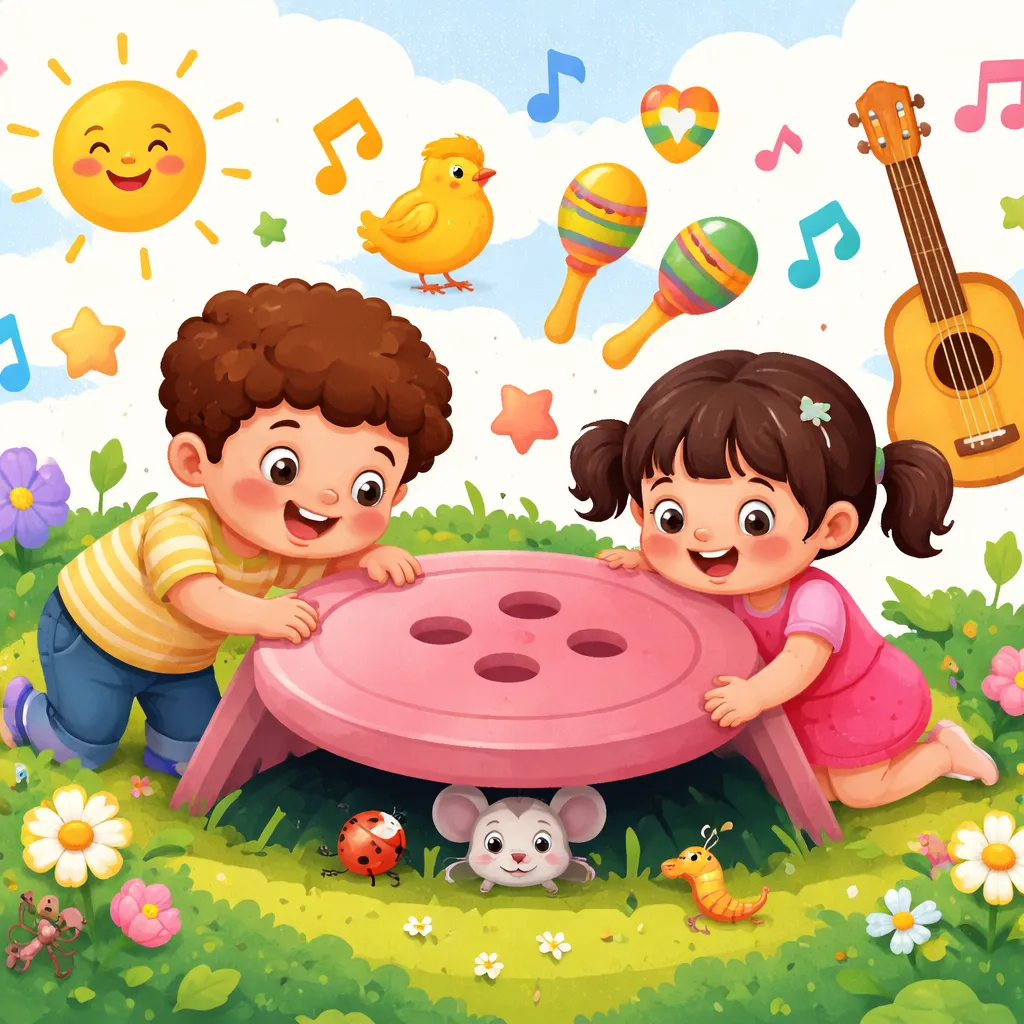
The Spanish Song: Under a Button (Debajo un botón) is a beloved children's song from the Spanish-speaking world. It tells a simple story about a mouse named Martín who lives under a button. One day, he finds a piece of candy and enjoys it very much.
The song has a playful, bouncy rhythm that makes children want to move. The story is easy to follow. A tiny mouse, a small hiding place, a sweet discovery. These elements capture children's imagination.
The name "Martín" gives the mouse a personality. He becomes a character children can picture. They imagine him scurrying around, finding his treasure, and enjoying his treat.
The repetition in the song helps children learn quickly. Each verse follows a similar pattern, building confidence as they sing along.
Understanding this背景 helps families appreciate the song's playful spirit. It opens conversations about mice, hiding places, and the simple joy of finding something sweet.
The Complete Lyrics of the Song
Reading the words helps us understand this tiny mouse adventure. Here are the lyrics to the Spanish Song: Under a Button (Debajo un botón) in Spanish and English.
Debajo un botón, ton, ton Que encontró Martín, tín, tín Había un ratón, ton, ton Ay, qué chiquitín, tín, tín Under a button, ton, ton That Martín found, tín, tín There was a mouse, ouse, ouse Oh, how tiny, tíny, tíny
Ay, qué chiquitín, tín, tín Era aquel ratón, ton, ton Que encontró Martín, tín, tín Debajo un botón, ton, ton Oh, how tiny, tíny, tíny Was that mouse, ouse, ouse That Martín found, tín, tín Under a button, ton, ton
Por eso Martín, tín, tín Pegó un gran gritón, tón, tón "Encontré un maní, ní, ní" "Que rico está, tá, tá" That's why Martín, tín, tín Let out a big shout, out, out "I found a peanut, nut, nut" "How yummy it is, is, is"
Learning New Words from the Song
The Spanish Song: Under a Button (Debajo un botón) introduces many useful words. Let us explore them in both Spanish and English.
First, "debajo" means under or beneath. This important location word helps children describe where things are. "Debajo de la mesa" (under the table) or "debajo de la cama" (under the bed).
"Un botón" means a button. Buttons are on clothes, but here it's a hiding place for a tiny mouse.
"Martín" is the mouse's name. Giving animals names makes stories more engaging.
"Un ratón" means a mouse. This is a common animal word children enjoy learning.
"Qué chiquitín" means how tiny. "Chiquitín" is an affectionate way to say very small. The "-ín" ending adds cuteness.
"Era" means was. This past tense verb tells us the story happened before.
"Aquel" means that (over there). This demonstrative word helps point to things.
"Por eso" means that's why. This phrase explains reasons and consequences.
"Pegó un gran gritón" means let out a big shout. "Gritón" is a big shout, with "-ón" making it larger than a normal shout.
"Encontré" means I found. This past tense verb expresses discovery.
"Un maní" means a peanut. In some countries, "maní" is peanut. In others, it might be "cacahuete". This word teaches food vocabulary.
"Qué rico está" means how yummy it is. "Rico" literally means rich, but here it means delicious.
Exploring Pronunciation and Rhythm
The Spanish Song: Under a Button (Debajo un botón) offers wonderful practice with Spanish pronunciation and rhythm. The playful repetition of syllables makes it irresistible.
Notice how each line ends with a repeated sound. "Debajo un botón, ton, ton" repeats "ton". "Que encontró Martín, tín, tín" repeats "tín". This technique is called "eco" or echo. Children love shouting the echo parts.
The rhythm is bouncy and fun. DE-ba-jo un bo-TóN, TóN, TóN. The stress falls on the last syllable of each phrase before the echo.
The exclamation "Ay, qué chiquitín" uses "ay" which is a common Spanish exclamation of surprise or emotion, like "oh" in English.
"Pegó un gran gritón" has strong stressed syllables. pe-Gó un gran gri-TóN. The shout comes alive in the rhythm.
Finding Grammar Patterns in the Lyrics
The Spanish Song: Under a Button (Debajo un botón) offers useful grammar examples for Spanish learners. One pattern appears with location words. "Debajo un botón" uses "debajo" to show where something is. In proper Spanish, it would be "debajo de un botón", but songs often drop words for rhythm.
The song uses the past tense. "Encontró" (he found) and "era" (it was) and "encontré" (I found) all tell us this happened before. Children learn that stories use past tense.
Another pattern appears with diminutives and augmentatives. "Chiquitín" uses "-ín" to show something very small and cute. "Gritón" uses "-ón" to show something big. These suffixes are very common in Spanish.
The phrase "por eso" teaches cause and effect. Because Martín found the peanut, he shouted.
Direct speech appears with "Encontré un maní". The mouse speaks directly, teaching children how to quote someone.
Fun Learning Activities for the Whole Family
Listening to the Spanish Song: Under a Button (Debajo un botón) can inspire many family activities. Here are some ideas to try together.
First, play the hiding game. Hide a small object like a peanut or a toy mouse under something. Give clues in Spanish. "Está debajo de la silla" (It's under the chair), "Está debajo del cojín" (It's under the cushion). Children search and say "?Lo encontré!" (I found it!) when successful. This builds location vocabulary.
Second, practice diminutives. Look at small things around the house and give them cute names in Spanish. "Perrito" (little dog), "gatito" (little cat), "mesita" (little table), "sillita" (little chair). This teaches an important Spanish pattern.
Third, have a peanut tasting. If no allergies, taste peanuts or other nuts. Describe them in Spanish. "Está rico" (It's yummy), "Está salado" (It's salty), "Me gusta" (I like it). This connects food vocabulary to real experience.
Creating Printable Materials at Home
Families can make simple learning tools based on the Spanish Song: Under a Button (Debajo un botón). These activities help reinforce new ideas.
Create bilingual preposition flashcards. On one side, write the Spanish word and draw a simple picture. Debajo (under), encima (on top), dentro (inside), fuera (outside). On the other side, write the English word. Practice by placing objects and describing where they are.
Make a mouse and button craft. Cut out a button shape from paper and a tiny mouse. Hide the mouse under the button. Practice saying "El ratón está debajo del botón" (The mouse is under the button). Move the mouse and practice other prepositions.
Create a fill-in-the-blank page using song lyrics. Remove key words like "botón", "Martín", "ratón", "chiquitín", "maní", and "rico". Leave blanks where those words belong. Listen to the song together and fill in the missing words. This builds listening and spelling skills.
Connecting the Song to Daily Life
The Spanish Song: Under a Button (Debajo un botón) connects to daily life through hiding and finding. Every child loves discovering things.
Talk with your children about things they have found. A lost toy, a pretty rock, a coin on the sidewalk. Use Spanish to share. "Encontré una piedra bonita" (I found a pretty rock), "Mira lo que encontré" (Look what I found). This builds personal connection to vocabulary.
The song also teaches about size. The mouse is "chiquitín". In daily life, we encounter many small things. Use Spanish to describe them. "Una hormiga peque?a" (a small ant), "Un grano de arroz" (a grain of rice). This builds descriptive vocabulary.
Parents can model excitement about discoveries. When finding something, say "?Mira lo que encontré!" (Look what I found!). This enthusiasm makes language learning joyful.
Educational Games to Play Together
Games make learning with the Spanish Song: Under a Button (Debajo un botón) exciting. Here are some simple games to try.
Play the echo game from the song. One person says the main line, and everyone echoes the last sound. "Debajo un botón" everyone shouts "tón, tón, tón". "Que encontró Martín" everyone shouts "tín, tín, tín". This builds listening and pronunciation.
Try the hiding and finding game with prepositions. Hide an object and give clues using different location words. "Está debajo de algo rojo" (It's under something red), "Está dentro de un cajón" (It's inside a drawer). This builds comprehension.
Play the diminutive game. Take turns naming objects and making them smaller with "-ito" or "-ín". "Casa" becomes "casita", "perro" becomes "perrito", "flor" becomes "florecita". See how many you can make.
Why This Song Helps Language Learning
The Spanish Song: Under a Button (Debajo un botón) helps learners in special ways. The playful echo pattern makes it easy to remember. Children can participate immediately by shouting the echo parts.
The simple vocabulary matches what beginners need. Words for location, animals, food, and size appear in early lessons. Learning them through song makes them stick.
The diminutives and augmentatives teach an important feature of Spanish. Children learn to express size and emotion through word endings.
The discovery theme creates excitement. Children love the idea of finding hidden treasure.
Making Music Part of Your Routine
Families can make songs a regular part of Spanish learning. Choose one song each week to explore together. Listen during playtime or while doing crafts.
The Spanish Song: Under a Button (Debajo un botón) works perfectly for hide and seek games. Play it while searching for hidden objects. Let the music add to the fun.
Remember that language learning thrives in playful moments. When children associate Spanish with hiding, finding, and shouting "?Lo encontré!", they learn naturally. They understand that Spanish is the language of games and discovery.
Keep singing, keep hiding, and keep finding treasures together. In the great game of bilingual learning, every new word is like a peanut waiting to be discovered under a button.