
Some songs carry important lessons in their simple lines. The English song: Ding Dong Bell does exactly that. This traditional nursery rhyme tells of a cat trapped in a well and the children who rescue her. For families learning English together, this song offers a beautiful way to explore animal words, kindness, and the importance of helping others in need. Let us discover what makes this thoughtful rhyme so valuable for young learners.
What Is the Story Behind This Famous Song?
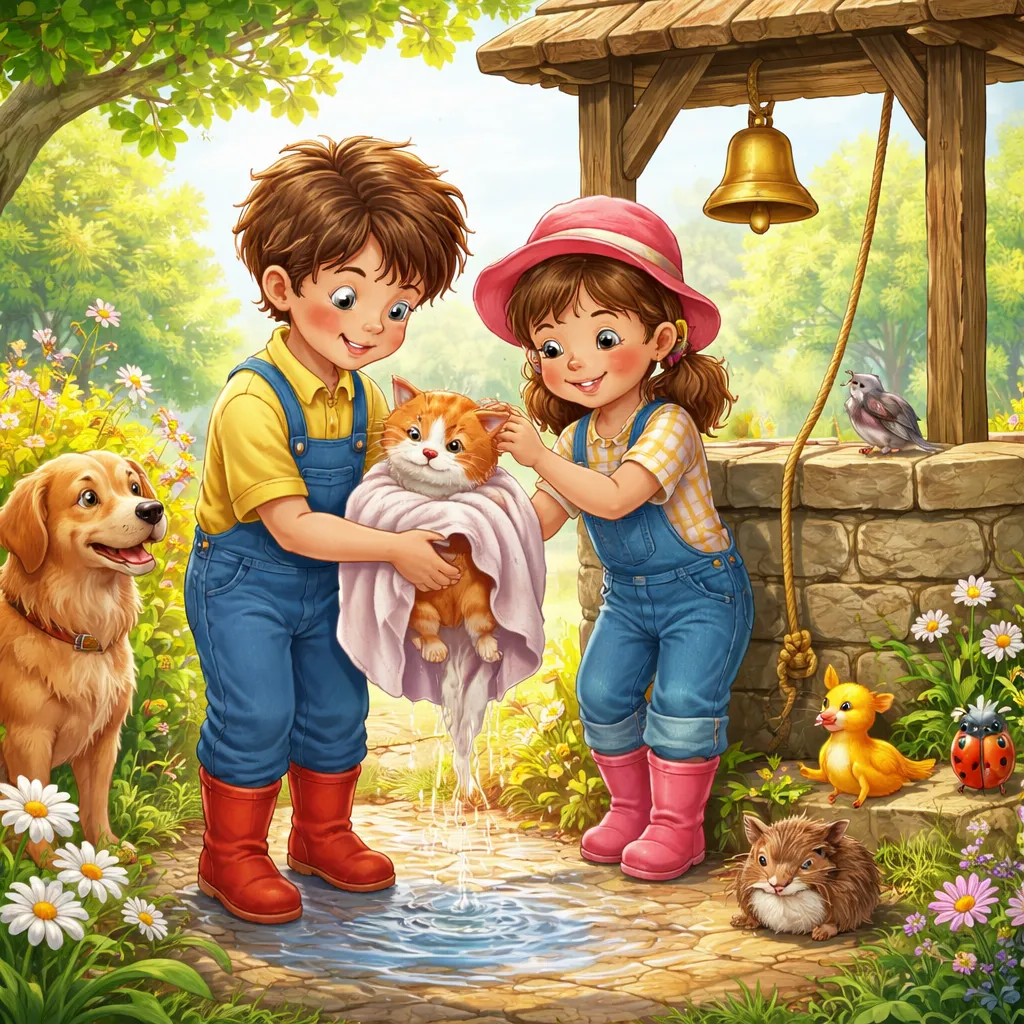
The English song: Ding Dong Bell is a very old nursery rhyme that first appeared in print around 1580. It has survived for over four hundred years because its message remains important. The rhyme tells of a cat who falls into a well. A cruel person puts her there, and kind children rescue her.
The rhyme teaches children about kindness to animals. Long ago, people often treated animals harshly. This song encouraged children to be different. It praises those who help and suggests that those who harm animals deserve punishment.
The names in the rhyme have changed over time. Little Johnny Green and little Johnny Stout appear in some versions. The cat's name is Pussy, a common old word for cat. The well is a deep hole in the ground where people got water. Falling into one was dangerous.
The song has a satisfying ending. The cat is rescued and brought home. The good children are praised. The mean person who put the cat in the well is called a naughty boy. Children learn that helping feels good and hurting feels bad.
Understanding this背景 helps families appreciate the rhyme's moral lesson. It opens conversations about kindness that still matter today.
The Complete Lyrics of the Song
Reading the words helps us understand this thoughtful story. Here are the lyrics to the English song: Ding Dong Bell. Let us look at them.
Ding dong bell, pussy's in the well Who put her in? Little Johnny Green Who pulled her out? Little Tommy Stout
What a naughty boy was that To try to drown poor pussy cat Who never did him any harm And killed the mice in his father's barn
Learning New Words from the Song
The English song: Ding Dong Bell introduces many useful words. Let us explore them together.
First, "ding dong bell" imitates the sound of a ringing bell. This onomatopoeia teaches that English has words that sound like what they describe. Bells go ding dong.
"Pussy" is an old, gentle word for cat. Children still use it today. It sounds soft and kind, fitting for an animal that needs help.
"Well" means a deep hole in the ground where water collects. Long ago, every village had wells. This word teaches about historical life.
The question "Who put her in?" uses the past tense "put". The answer names "Little Johnny Green". Colors often appear in nursery rhyme names, like Little Boy Blue or Goldilocks.
"Who pulled her out?" asks about the rescuer. "Pulled" is the past of pull, meaning to draw toward you. "Little Tommy Stout" rescues the cat. Stout can mean strong or brave.
"What a naughty boy was that" uses an exclamation. Naughty means bad or misbehaving. This word helps children talk about behavior.
"To try to drown" means to attempt to kill by putting underwater. This is a serious word for a serious action.
"Poor pussy cat" uses "poor" to show pity. We feel sorry for the cat. This builds empathy vocabulary.
"Who never did him any harm" means the cat never hurt the boy. Harm means injury or damage. This phrase teaches that punishment should only happen when someone deserves it.
"And killed the mice in his father's barn" shows the cat actually helped the boy's family. Cats catch mice that eat grain. The barn is where farmers store food. The cat was useful and kind, making the boy's cruelty even worse.
Exploring Pronunciation and Rhythm
The English song: Ding Dong Bell offers wonderful practice with English rhythm. The short lines and repeated sounds make it easy to learn.
Listen to the opening "Ding dong bell, pussy's in the well". The rhythm goes DING DONG BELL, PUSS-y's IN the WELL. The strongest beats fall on "ding", "dong", "bell", "puss", and "well". Clapping along helps children feel this pattern.
The question and answer section has a call and response feel. "Who put her in? Little Johnny Green. Who pulled her out? Little Tommy Stout." This pattern teaches natural question intonation.
The longer last section tells the moral. "What a naughty boy was that to try to drown poor pussy cat." The rhythm carries the serious message.
Finding Grammar Patterns in the Lyrics
The English song: Ding Dong Bell offers useful grammar examples. One pattern appears in the questions. "Who put her in?" and "Who pulled her out?" use question words at the beginning. "Who" asks about a person. We use this structure constantly. For example, "Who made this cake?" or "Who lives in that house?"
The song uses past tense throughout. "Put", "pulled", "was", "did" all tell us this happened before. Stories typically use past tense.
Another pattern appears with the infinitive "to try to drown". "To try" shows attempt. "To drown" shows the action attempted. We use infinitives this way often. For example, "I want to eat" or "She tried to help".
The phrase "who never did him any harm" uses "never" to mean not ever. This teaches frequency words. "Never" is a strong word meaning zero times.
The word "and" connects the cat's good actions. "Killed the mice in his father's barn" shows why the cat was helpful. This conjunction teaches addition of information.
Fun Learning Activities for the Whole Family
Listening to the English song: Ding Dong Bell can inspire many family activities. Here are some ideas to try together.
First, talk about kindness to animals. Does your family have pets? How do you care for them? If you don't have pets, what animals do you see outside? Use English to discuss. "We feed the cat every day" or "We watch birds in the garden". This builds animal care vocabulary.
Second, practice rescue scenarios. Use toys to act out rescues. A stuffed animal falls off the couch. Someone pulls it to safety. Describe the action in English. "The bear fell in the river. I pulled him out!" This builds action vocabulary and empathy.
Third, discuss fairness and consequences. Why was the boy naughty? What should happen to him? Use English to share opinions. "He should say sorry" or "He needs to learn to be kind". This builds moral vocabulary.
Creating Printable Materials at Home
Families can make simple learning tools based on the English song: Ding Dong Bell. These activities help reinforce new ideas.
Create a kindness chart. Draw a simple chart with two columns. One side says "Kind things to do for animals". The other says "Unkind things to avoid". Brainstorm ideas together and write them in English. "Give food and water" or "Never pull tails". Review the chart together.
Make a well picture with a hidden cat. Draw a deep well. Cut a slit and put a picture of a cat on a stick so it can slide down and up. Practice the rhyme while moving the cat. "Pussy's in the well" slide down. "Who pulled her out?" slide up. This kinesthetic activity makes learning fun.
Create a fill-in-the-blank page using song lyrics. Remove key words like "bell", "well", "Johnny", "Tommy", "naughty", "drown", "harm", "mice", and "barn". Leave blanks where those words belong. Listen to the song together and fill in the missing words. This builds listening and spelling skills.
Connecting the Song to Daily Life
The English song: Ding Dong Bell connects to daily life through the theme of kindness. Every day, children encounter opportunities to be kind to animals. A stray cat. A bird at the window. A dog on the street.
Talk with your children about how to treat animals they meet. Use English to discuss. "If you see a scared cat, move slowly" or "Don't chase the birds, just watch them". This builds practical vocabulary and empathy.
The song also teaches about standing up for others. Little Tommy Stout rescued the cat. In daily life, children can rescue friends who are left out or animals in trouble. Use English to encourage this. "You can be like Tommy and help" or "That was kind to rescue your friend".
Parents can model the song's lesson. When you see someone being unkind to an animal or person, speak up. Say "That's not kind" or "We need to help". Children learn by watching us.
Educational Games to Play Together
Games make learning with the English song: Ding Dong Bell exciting. Here are some simple games to try.
Play the rescue relay game. Set up an obstacle course. Place a stuffed animal in a "well" at the end. Children take turns racing to rescue it and bring it back. Use English commands. "Run to the well" or "Pull the cat out!" This builds action vocabulary through movement.
Try the kindness memory game. Take turns saying kind things you can do for animals. One person says "I can give water". Next person repeats that and adds something. "I can give water and food". Continue building the chain. This builds memory and kindness vocabulary.
Play the sound effects game. Make sounds from the song. Ding dong like a bell. Meow like a cat. Splash like falling in water. Others guess what sound it is. "That's the bell" or "That's the cat". This builds listening skills.
Why This Song Helps English Learning
The English song: Ding Dong Bell helps learners in special ways. The clear story structure helps comprehension. Children follow who did what and why it matters.
The simple vocabulary matches what beginners need. Words like cat, well, put, pull, boy, harm, and mice appear in early lessons. Learning them through song makes them easy to recall.
The moral lesson creates meaningful discussion. Children want to talk about right and wrong. This motivation makes language learning natural.
The sound words like "ding dong" are fun to say. They build confidence with English pronunciation through play.
Making Music Part of Your Routine
Families can make songs a regular part of English time. Choose one song each week to explore together. Listen during quiet moments or while talking about feelings.
The English song: Ding Dong Bell works perfectly for discussions about kindness. Sing it when you see an animal in need. Let the song remind everyone to help.
Remember that language learning thrives in meaningful moments. When children associate English with kindness and rescue, they learn deeply. They understand that words have power to help others.
Keep singing, keep rescuing, and keep building a kinder world together through English. In the well of language learning, every new word is like a rope that pulls someone up to safety.