
Some songs tell tiny stories with big lessons. The English song: Doctor Foster does exactly that. This short nursery rhyme tells of a doctor who travels to Gloucester, steps in a puddle, and never returns. For families learning English together, this song offers a simple way to explore weather words, place names, and the small frustrations that change our plans. Let us discover what makes this traditional rhyme so memorable for young learners.
What Is the Story Behind This Famous Song?
The English song: Doctor Foster is a traditional nursery rhyme that first appeared in print around 1844. Like many old rhymes, it may refer to a real person or event. Some believe Doctor Foster was a physician who visited Gloucester and had a bad experience with the city's muddy streets.
Gloucester is a real city in England. In old times, its streets could be very muddy and full of puddles. A visitor stepping in deep water would indeed be annoyed. The rhyme captures that frustration perfectly.
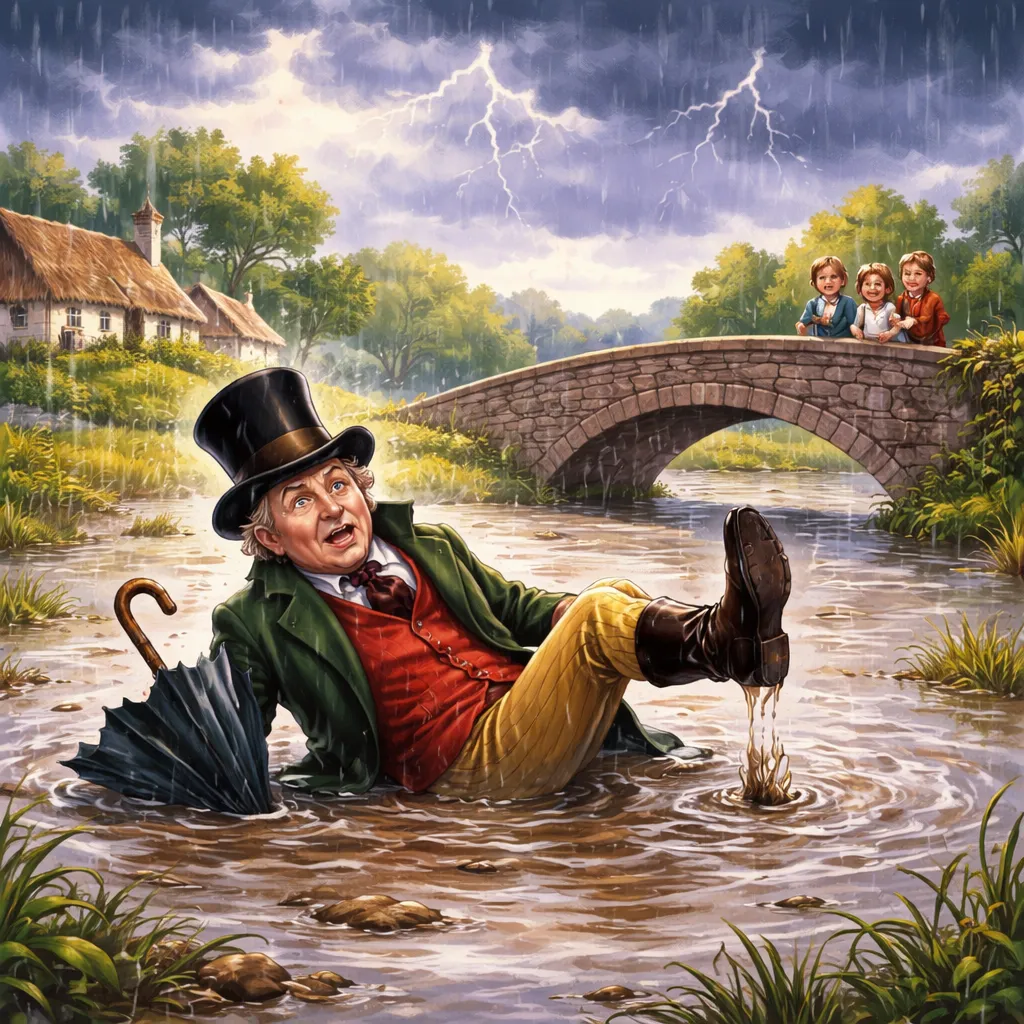
The story is simple. Doctor Foster goes to Gloucester. It rains a lot. He steps in a puddle up to his middle. He is so upset that he never goes there again.
This tiny story teaches about weather, reactions, and consequences. One bad experience can change our feelings about a place. Children understand this. They have had days when rain ruined play or puddles soaked their shoes.
The rhyme has lasted over 150 years because everyone understands the feeling. Rain spoils plans. Wet feet are uncomfortable. Sometimes we avoid places where we had bad experiences.
Understanding this背景 helps families appreciate the rhyme's simple truth. It opens conversations about weather and feelings that children experience daily.
The Complete Lyrics of the Song
Reading the words helps us understand this brief story. Here are the lyrics to the English song: Doctor Foster. Let us look at them.
Doctor Foster went to Gloucester In a shower of rain He stepped in a puddle right up to his middle And never went there again
Learning New Words from the Song
The English song: Doctor Foster introduces several useful words. Let us explore them together.
First, "Doctor Foster" is the character's name. Doctor is a title for medical professionals. Foster is his family name. Children learn that people have titles and names.
"Went to Gloucester" means traveled to that city. Went is the past of go. Gloucester is pronounced "Gloster" in English, with the "ces" silent. This teaches that place names can have surprising pronunciation.
"In a shower of rain" describes the weather. A shower is a short period of rain. This phrase teaches weather vocabulary. Children learn to describe rainy days.
"He stepped in a puddle" means his foot went into a small pool of water. Puddles form after rain. Every child knows what happens when you step in one. Wet feet and wet shoes.
"Right up to his middle" means the water reached as high as his waist. "Right" here means exactly or completely. This phrase shows how deep the puddle was. Imagine walking and suddenly sinking into water up to your waist.
"And never went there again" means he decided never to return. Never means not ever, at any time. This strong word shows his determination. One bad experience was enough.
Exploring Pronunciation and Rhythm
The English song: Doctor Foster offers perfect practice with English rhythm. The short lines make it easy to remember and repeat.
Listen to the first line "Doctor Foster went to Gloucester". The rhythm goes DOC-tor FOS-ter WENT to GLOUC-ester. The strongest beats fall on "Doc", "Fos", "went", and "Glou". Clapping along helps children feel this pattern.
The second line "In a shower of rain" flows smoothly. IN a SHOW-er of RAIN. Three strong beats on "in", "show", and "rain".
The third line "He stepped in a puddle right up to his middle" has more syllables but clear rhythm. He STEPPED in a PUD-dle RIGHT UP to his MID-dle. The action words get the strongest stress.
The final line "And never went there again" ends with emphasis. And NEV-er went THERE a-GAIN. The key words "never", "there", and "gain" carry the meaning.
Finding Grammar Patterns in the Lyrics
The English song: Doctor Foster offers useful grammar examples. One pattern appears in the past tense verbs. "Went", "stepped", and the implied "decided" all tell us this happened before. Stories use past tense.
The song uses the preposition "to" to show direction. "Went to Gloucester" teaches this basic structure. We use "to" for destinations constantly. "Go to school", "go to the store", "go to bed".
Another pattern appears with "in" to show location. "In a shower" and "in a puddle" teach this preposition. "In" shows being inside something, even rain or water.
The phrase "right up to his middle" uses multiple prepositions together. "Up to" shows reaching a point. Children learn that prepositions combine to give precise information.
The word "never" is an adverb of frequency. It means zero times. This strong word teaches about things that don't happen at all.
Fun Learning Activities for the Whole Family
Listening to the English song: Doctor Foster can inspire many family activities. Here are some ideas to try together.
First, talk about weather experiences. Has rain ever ruined your plans? Has anyone stepped in a deep puddle? Use English to share stories. "I stepped in a puddle on the way to school" or "Rain spoiled our picnic last week". This connects the song to real life.
Second, learn about real places. Find Gloucester on a map. Talk about other cities with interesting names. Practice saying place names correctly. This builds geography and pronunciation skills together.
Third, have a puddle jumping day. After rain, put on boots and find puddles. Jump and splash safely. Use English to describe the experience. "This puddle is deep" or "I splashed water everywhere". This makes the song come alive.
Creating Printable Materials at Home
Families can make simple learning tools based on the English song: Doctor Foster. These activities help reinforce new ideas.
Create weather flashcards with different conditions. Rain, sun, snow, wind, clouds. On each card, draw a picture and write the word. Practice sentences like "It is raining" or "The sun is shining". This builds weather vocabulary.
Make a puddle measuring chart. Draw a simple chart showing different depths. "Up to my ankle", "up to my knee", "up to my middle". Use actual measurements if helpful. Talk about how deep puddles can be. This builds measurement vocabulary.
Create a fill-in-the-blank page using song lyrics. Remove key words like "Doctor", "Gloucester", "shower", "rain", "stepped", "puddle", "middle", and "never". Leave blanks where those words belong. Listen to the song together and fill in the missing words. This builds listening and spelling skills.
Connecting the Song to Daily Life
The English song: Doctor Foster connects to daily life through weather and reactions. Every child experiences rain and puddles. Every child knows the disappointment of wet feet.
Talk with your children about times they felt like Doctor Foster. Maybe a playground was too wet to play. Maybe a favorite spot was closed. Use English to share these feelings. "I was sad when the park was closed" or "I didn't want to go back after I got wet". This builds emotional vocabulary.
The song also teaches about first impressions. Doctor Foster judged Gloucester by one bad experience. In life, we should give places and people second chances. Use English to discuss this. "Maybe Gloucester is nice when it's not raining" or "We should try things more than once".
Parents can model resilience. When plans go wrong, say "This is like Doctor Foster's day. But we'll try again another time." This teaches children to handle disappointment.
Educational Games to Play Together
Games make learning with the English song: Doctor Foster exciting. Here are some simple games to try.
Play the weather report game. One person pretends to be a weather reporter. They describe today's weather in English. "Today there will be showers of rain" or "It will be sunny and warm". Others listen and respond. This builds weather vocabulary.
Try the puddle jump game. Cut out blue paper puddles and place them on the floor. Label them with numbers or words. Children jump from puddle to puddle while counting or saying the words. "Jump to puddle three" or "Land on the word 'rain'". This builds number and word recognition.
Play the never again game. One person names a place or activity. "The muddy park" or "The cold pool". Others say what happened and why they might never go again. "I stepped in mud at the park, so I never went there again" or "The water was too cold, so I never swam there again". This builds sentence structure and creativity.
Why This Song Helps English Learning
The English song: Doctor Foster helps learners in special ways. The extreme shortness makes it easy to master. Children can learn the whole rhyme in minutes, building instant confidence.
The simple vocabulary matches what beginners need. Words like doctor, went, rain, stepped, puddle, middle, and never appear in early lessons. Learning them through rhyme makes them easy to recall.
The weather theme connects to daily experience. Children talk about rain and sun all the time. This song gives them words for those conversations.
The place name Gloucester teaches that English pronunciation can be tricky. This prepares children for other words where letters are silent.
Making Music Part of Your Routine
Families can make songs a regular part of English time. Choose one song each week to explore together. Listen during rainy days or weather discussions.
The English song: Doctor Foster works perfectly for rainy days. Sing it when puddles appear. Let the song add humor to wet weather.
Remember that language learning thrives in everyday moments. When children associate English with rain and puddles, they learn naturally. They understand that words describe their real world.
Keep singing, keep splashing, and keep exploring the small stories of English together. In the great puddle of language learning, every new word is a step toward deeper understanding.
本回答由 AI 生成,内容仅供参考,请仔细甄别。