
A ball hits the floor. It springs back up. That is bounce.
A child jumps on a bed. Up and down. That is also bounce.
Today we explore a happy word family. The words are “bounce,” “bouncer,” “bouncing,” and “bouncy.”
Each word shares the same idea. But each does a different job.
Parents and children can learn these words together. They are full of energy and fun.
What Does “Same Word, Different Forms” Mean?
One action can take many shapes. The action here is springing up and down.
“Bounce” is a verb. “Watch the ball bounce.” Action.
“Bounce” is also a noun. “The ball has good bounce.” Thing.
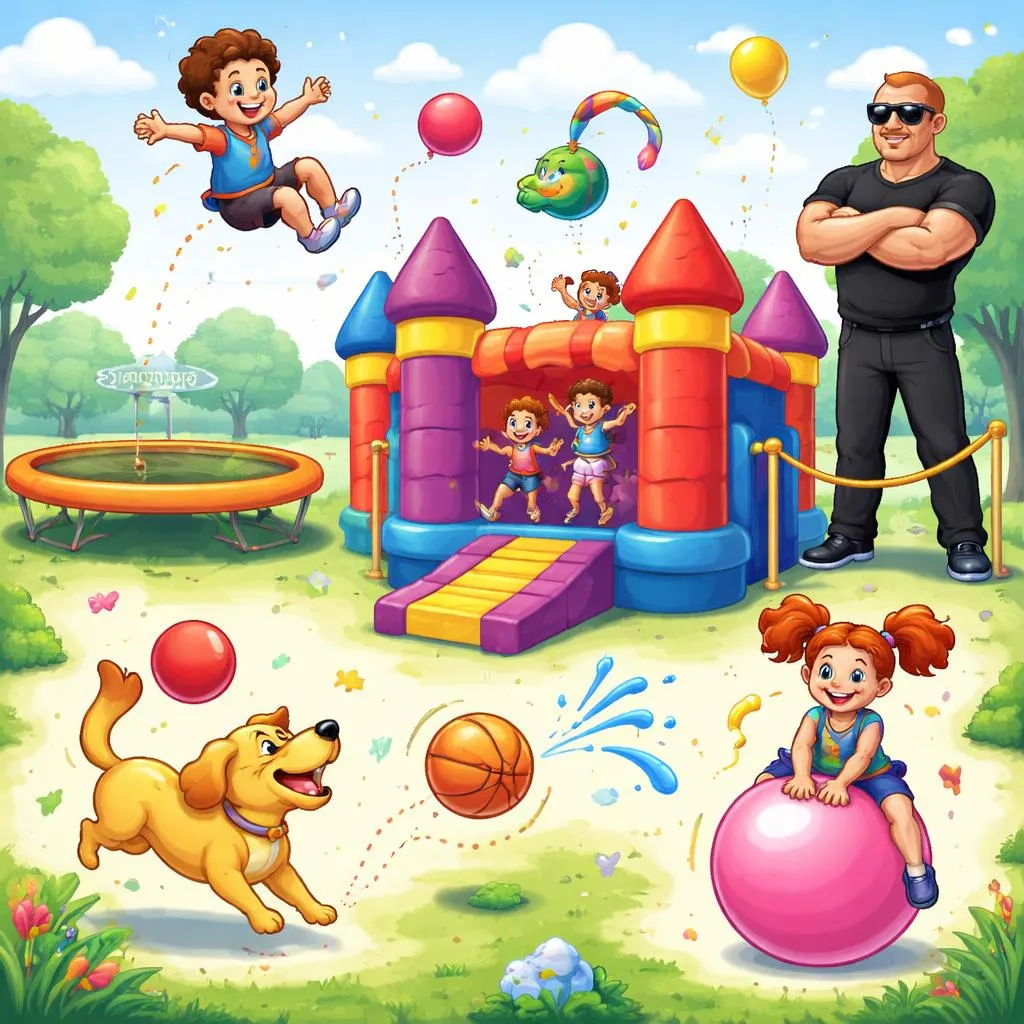
“Bouncer” is a noun. It names a person or thing that bounces. “The club bouncer stands at the door.” Or “This toy is a great bouncer.”
“Bouncing” is an adjective. “The bouncing baby giggled.” Describes something active.
“Bouncy” is also an adjective. “This bed is so bouncy.” Describes a quality.
Same root. Different endings. Different jobs. The springy heart stays the same.
Personal Pronouns Change Their Form
Pronouns change for grammar. “I” becomes “me.” “She” becomes “her.”
Our words change for who does the bouncing. And for what has the bouncy quality.
“I bounce the ball.” Action by me. “The bouncer checks IDs.” Person who bounces.
“The bouncing puppy runs fast.” Describes the puppy. “A bouncy castle is fun.” Describes the castle.
Pronouns help us avoid repetition. Word families help us paint clearer pictures.
When children learn both, their sentences become rich and varied.
From Verb to Noun to Adjective to Adverb – One Family, Many Words
“Bounce” works as a verb. “Please bounce the basketball.” Action.
“Bounce” also works as a noun. “This ball has no bounce left.” Thing.
“Bouncer” is a noun. “The bouncer at the trampoline park helps kids.” Person or thing.
“Bouncing” is an adjective. “A bouncing ball.” Describes the ball.
“Bouncy” is an adjective. “Bouncy hair curls in springy loops.” Describes a quality.
We have no common adverb. “Bouncingly” exists but is rare. Skip it for now.
Five members. Each one brings energy to your sentences.
One Root, Many Roles – How Words Grow from Actions to Qualities
The root “bounce” came into English around 1200. It may come from German “bunsen” meaning to beat.
Long ago, it meant to hit or thump. Then it took on the idea of springing back.
From that root, we grew new forms. Each form keeps the idea of upward energy.
“Bouncer” started as a ball that bounces well. Later it named a person who bounces troublemakers out of clubs.
“Bouncing” describes anything full of lively movement. “Bouncy” describes the springy quality itself.
Help your child see this growth. A seed becomes a plant. A thump becomes a bounce.
Same Meaning, Different Jobs – Is It a Verb or a Noun?
Look at “bounce” in a sentence. Ask: Is it an action? Or is it a thing?
“Bounce the ball high.” Action. Verb.
“The bounce of this ball is amazing.” Thing. Noun.
Same spelling. Two jobs. The sentence gives you the clue.
Now look at “bouncer.” Always a noun. “The bouncer smiled at us.”
“Bouncing” is an adjective. “The bouncing kangaroo crossed the road.”
“Bouncy” is an adjective. “My bouncy shoes make walking fun.”
Teach children to look at the word’s ending. And look at what the word does in the sentence.
Adjectives and Adverbs – When Do We Add -ly?
We can add “-ly” to “bouncy.” It becomes “bouncily.” This is an adverb.
“The rabbit hopped bouncily across the field.” Means with a springy motion.
We can add “-ly” to “bouncing.” It becomes “bouncingly.” Also an adverb. “She walked bouncingly down the stairs.”
These words are not common. Children do not need them yet.
Stick to the verb and the adjectives. “Bounce” for action. “Bouncy” for how something feels. “Bouncing” for what something is doing right now.
That is plenty for young learners.
Watch Out for Tricky Spelling Changes (Double Letters, y to i, and More)
Spelling here has one small change. Watch the final “e.”
“Bounce” adds “-er” to make “bouncer.” Drop the “e.” Bounce becomes bounc + er.
“Bounce” adds “-ing” to make “bouncing.” Drop the “e.” Bounce becomes bounc + ing.
“Bounce” adds “-y” to make “bouncy.” Drop the “e.” Bounce becomes bounc + y.
Same rule every time. Drop the silent “e.” Then add the ending.
This rule appears in many English words. “Dance” becomes “dancer.” “Race” becomes “racing.”
Practice this with your child. Write “bounce.” Cross out the “e.” Add “ing.” You get “bouncing.”
No double letters. No y to i changes. Just one simple rule.
Let’s Practice – Can You Choose the Right Form?
Try these sentences. Fill in the blank with bounce, bouncer, bouncing, or bouncy.
Please _____ the ball to your friend. (action verb)
The trampoline has a lot of _____. (noun meaning springiness)
A _____ at the door asked for our tickets. (person)
The _____ baby would not sit still. (adjective describing active movement)
This new ball is so _____. It flies high. (adjective describing quality)
Watch the _____ kangaroo in the video. (adjective describing ongoing action)
The club _____ was very friendly to us. (person)
Does this basketball _____ well on concrete? (action verb)
Answers: 1 bounce, 2 bounce, 3 bouncer, 4 bouncing, 5 bouncy, 6 bouncing, 7 bouncer, 8 bounce.
Notice that number 2 uses “bounce” as a noun. “A lot of bounce” means springy power.
Number 5 uses “bouncy” as an adjective. It describes the ball’s quality.
Tips for Parents – Help Your Child Learn Word Families in a Fun Way
Play with real balls. A tennis ball bounces high. A beanbag does not bounce much. Compare them.
Say the words as you play. “Watch it bounce. This ball has good bounce.”
Visit a trampoline park. Point to the worker. “That person is a bouncer. He keeps us safe.”
Use “bouncing” for living things. “A bouncing puppy. A bouncing toddler.”
Use “bouncy” for objects and qualities. “A bouncy bed. Bouncy curls. Bouncy shoes.”
Make a bouncing game. Drop different objects. A ball bounces. A book does not. Sort them into two piles.
Draw a bouncy castle. Label the parts. Write “bouncy” on the castle walls.
Sing a bouncing song. “Bounce, bounce, bounce the ball. Bouncing up and bouncing down.”
Do not correct every small mistake. If your child says “bouncy ball” correctly, celebrate.
Use the opposite word. “Flat” or “dead” means no bounce. “This ball is flat. It cannot bounce.”
Read books with bouncing characters. Frogs bounce. Bunnies bounce. Kangaroos bounce.
Celebrate when your child uses “bouncer” correctly. That is a less common word. They are doing great.
Tomorrow you will hear “This bed is bouncy.” You will smile. Your child is learning.
Soon they will say “I am bouncing with energy.” That is a beautiful sentence.
Keep playing. Keep bouncing. Keep using these springy words. Your child will grow in language and in joy.