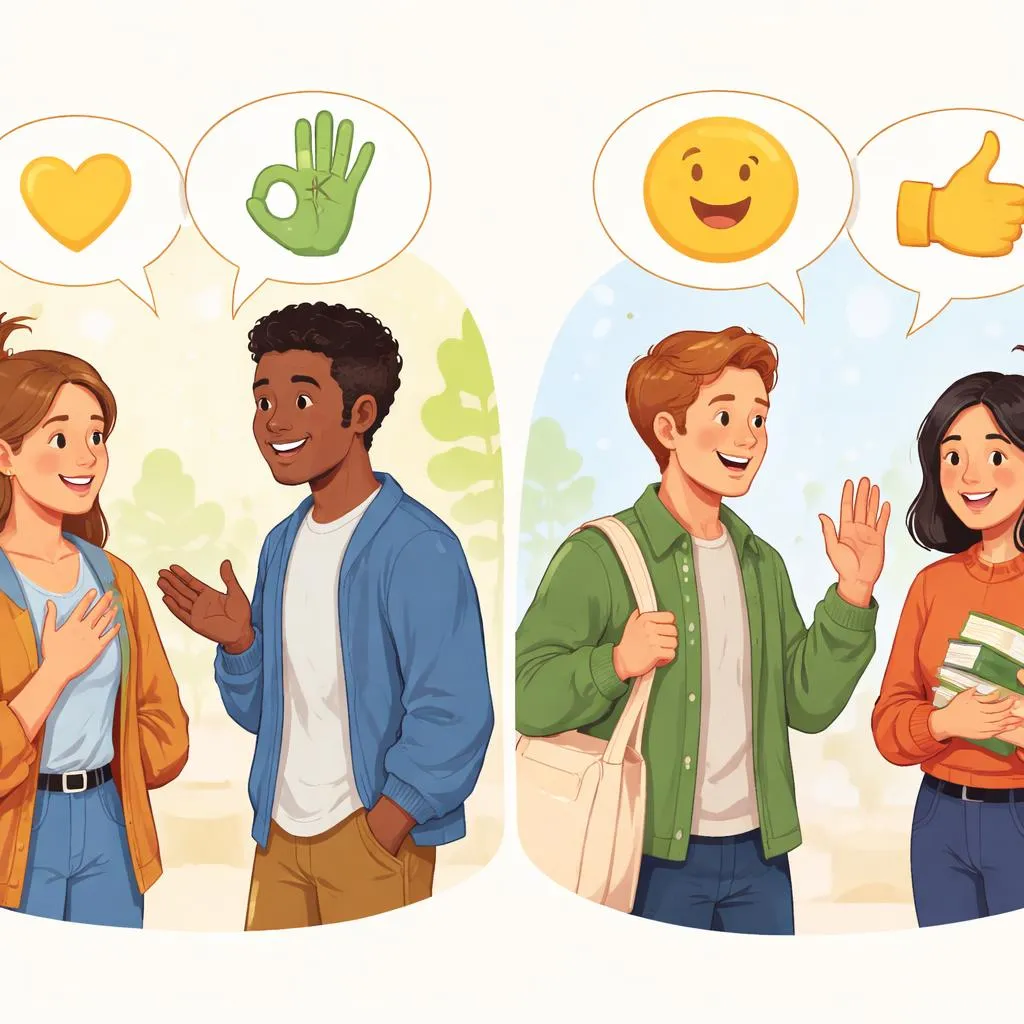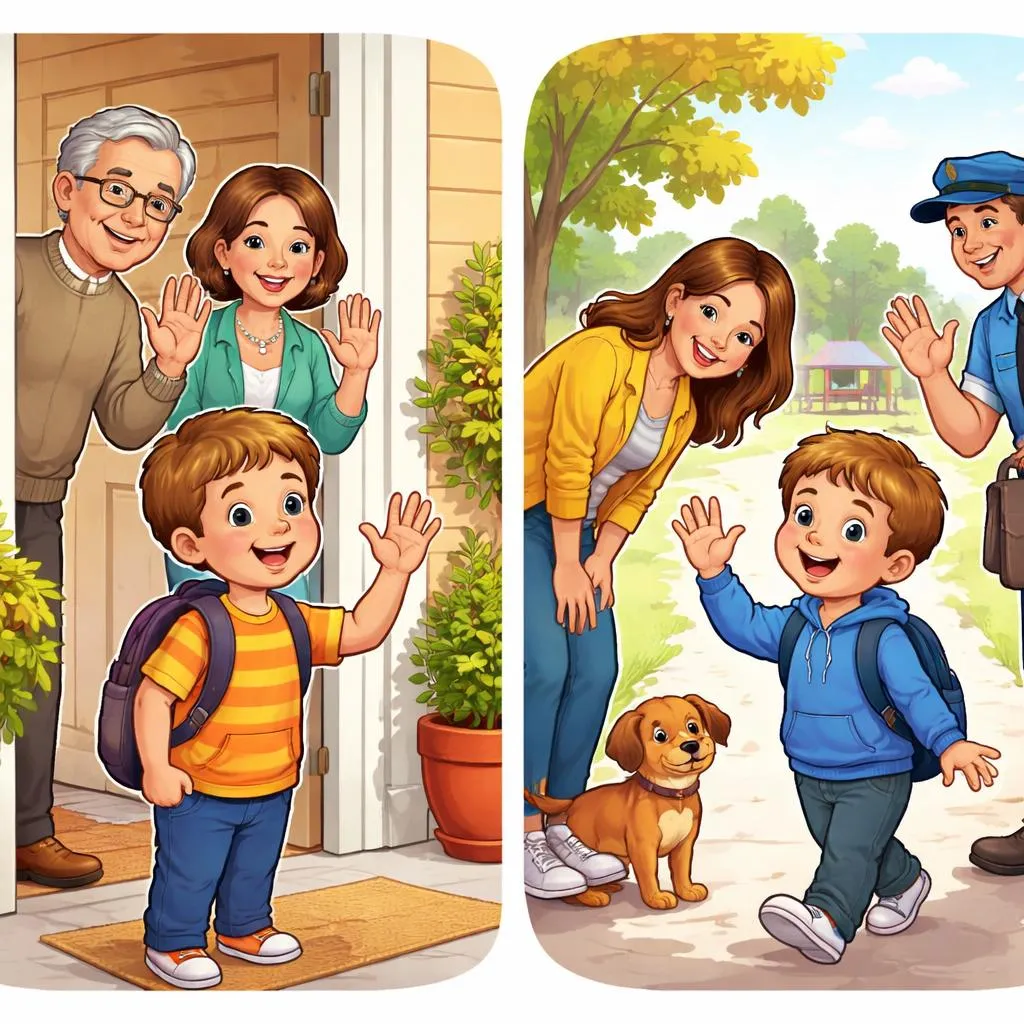

Every conversation starts with a greeting. Children meet new people every day. They see friends, teachers, and neighbors. Two common greetings help them begin. “Hello” and “Hi there.” Both open a talk. But they send different signals. Parents and kids can learn together. Choosing the right greeting shows respect. It also builds confidence. Let us explore these two friendly openers.
What Do These Expressions Mean? “Hello” is a standard greeting. People use it around the world. It means “I see you. I am ready to speak with you.”
For a child, think of knocking on a door. “Hello” is polite. It works for anyone. New friends. Old friends. Adults. Children.
“Hi there” is a warm, casual greeting. The word “there” points to the other person. It adds friendliness. It means “I notice you right now.”
For a child, think of a happy wave from across a room. “Hi there” feels like sunshine. It makes people smile. Both phrases say “I am starting a conversation.” Both are kind. They seem similar because people use them to greet others. Yet one feels more formal. The other feels like a hug in words.
What’s the Difference? The main difference is formality. “Hello” works in formal and serious settings. You say it to a principal. To a doctor. To a grandparent you do not see often.
“Hi there” feels casual and warm. You say it to close friends. To siblings. To a neighbor you see every day.
Another difference is distance. “Hello” works when you are farther away. On a phone call. In a large room. At the start of a presentation.
“Hi there” works when you are close. Standing next to someone. Sitting at the same table. Playing together.
One more difference is energy. “Hello” can be calm or serious. “Hi there” always sounds cheerful. It lifts the mood. It shows excitement.
Also, “hello” often comes first in very formal situations. You answer the phone with “Hello.” You start a speech with “Hello everyone.” “Hi there” does not fit these moments. It sounds too friendly for a formal speech.
Teach children that “hello” opens doors politely. “Hi there” opens them with a smile.
When Do We Use Each One? Use “Hello” when meeting someone for the first time. A new classmate. A friend’s parent. A store worker. Say “Hello, nice to meet you.”
Use “Hello” in formal places. At a school office. At a doctor’s waiting room. At a church or temple. “Hello” shows good manners.
Use “Hello” on the telephone. Even with family. “Hello, Grandma” sounds respectful. It follows phone etiquette.
Use “Hello” when you need attention. “Hello? Is anyone there?” This works in quiet settings.
Use “Hi there” with people you know well. Your best friend. Your brother or sister. Your favorite babysitter. “Hi there” feels easy and natural.
Use “Hi there” when you feel happy to see someone. A friend walks into the room. Say “Hi there” with a wave. A pet runs to you. Say “Hi there, puppy.”
Use “Hi there” to greet someone who is busy but friendly. A parent cooking dinner. A teacher helping another student. “Hi there” is short and kind.
Parents can model both. Say “hello” to a delivery person. Say “hi there” to your child in the morning. Children learn greetings by hearing them.
Example Sentences for Kids Here are simple sentences children can say.
Hello:
Hello. My name is Leo.
Hello, Mrs. Chen. How are you today?
Hello. Is this the library?
Hello, everyone. I am ready to play.
Hello. May I please have some water?
Hi there:
Hi there. Want to build a fort?
Hi there, little cat. You are soft.
Hi there. I saved you a seat.
Hi there. Long time no see.
Hi there. Nice shirt.
Read these aloud. Notice how “hello” feels polite and proper. Notice how “hi there” feels warm and close. Practice both with different voices.
Common Mistakes to Avoid Children often mix these greetings. Here are common errors.
Mistake 1: Using “hi there” with a new adult. Example: A child meets the school principal. They say “Hi there.” This sounds too casual. The principal may think the child lacks manners. Correct: Say “Hello, Mr. Principal. Nice to meet you.”
Mistake 2: Using “hello” with a close friend every time. Example: A child sees their best friend every morning. They say “Hello” coldly. The friend feels distance. It seems unfriendly. Correct: Say “Hi there” or “Hey” with a smile. Warm friends need warm greetings.
Mistake 3: Saying “hi there” on a serious phone call. Example: A child calls a doctor’s office. “Hi there, I need an appointment.” This sounds strange. The office expects “Hello.” Correct: Say “Hello. I need to make an appointment.”
Mistake 4: Forgetting to greet at all. Some children walk past people without speaking. This feels rude. Correct: Always greet when you enter a room or see someone you know.
Mistake 5: Using the wrong tone with “hi there.” A flat or bored voice kills the warmth. People think you are angry. Correct: Smile when you say “hi there.” Let your voice go up at the end.
Easy Memory Tips Here are simple memory tricks.
Memory tip 1: Think of a bell and a whistle. “Hello” is a doorbell. It rings clearly. It announces your presence. “Hi there” is a happy whistle. It sounds friendly and light.
Memory tip 2: Use your hand. A formal handshake = “hello.” A casual wave = “hi there.”
Memory tip 3: Think about new versus old. New person = “hello.” Old friend = “hi there.”
Memory tip 4: Draw two faces. One face with a polite, straight mouth. Write “hello” below. One face with a big smile and raised eyebrows. Write “hi there” below. The faces show the feeling.
Memory tip 5: Use the “who” rule. Ask yourself: “Who am I greeting?” If the person expects respect (teacher, elder, boss), say “hello.” If the person shares your toys, say “hi there.”
Practice these tips before school each day. Greet each family member with the right word.
Quick Practice Time Try these exercises. Parents read aloud. Children answer.
Exercise 1: Choose the best phrase.
You meet your new piano teacher for the first time. Do you say: a) Hello b) Hi there
You see your little brother after his nap. He loves you. Do you say: a) Hello b) Hi there
You answer a phone call from a number you do not know. Do you say: a) Hello b) Hi there
Answers: 1(a), 2(b), 3(a)
Exercise 2: Fill in the blank.
“__________, Dr. Adams. Thank you for seeing me.” (formal, first meeting)
“__________, sleepyhead. Time for breakfast.” (casual, family)
Answers: 1. Hello, 2. Hi there
Bonus: Play the “Greeting Circle.” Each family member takes a turn entering the room. The others greet them. Choose “hello” or “hi there.” Talk about why each greeting fits or does not fit. Make it a daily game.
Wrap-up Say “hello” in formal situations or with new people. Say “hi there” with close friends and family. Both greetings show kindness. Choose the one that matches your relationship and the setting.