
Leaving someone feels hard for children. They need kind words. Two common phrases help them say farewell. “Goodbye” and “See you later.” Both end a conversation. But they carry different feelings. Parents and kids can learn together. Choosing the right phrase shows care. It keeps friendships warm. Let us explore these two gentle exit lines.
What Do These Expressions Mean? “Goodbye” means “I am leaving now.” It signals an ending. The word comes from “God be with you.” People use it when they do not know when they will meet again.
For a child, think of closing a book. The story ends. “Goodbye” closes the visit. It feels complete.
“See you later” means “I expect to see you again.” It promises a future meeting. The phrase sounds open and hopeful.
For a child, think of a bookmark. You stop reading but will return. “See you later” keeps the door open. Both phrases say farewell. Both end a talk. They seem similar because people use them when leaving. Yet one feels final. The other feels temporary.
What’s the Difference? The main difference is finality. “Goodbye” feels more permanent. You say it when you will not see someone for a long time. Or when you may never see them again.
“See you later” feels temporary. You say it when you will meet the same person again soon. Later today. Tomorrow. Next week.
Another difference is emotion. “Goodbye” can feel sad or serious. It carries weight. “See you later” feels light and happy. It promises more fun.
One more difference is formality. “Goodbye” works in formal settings. You say it to a boss. To a teacher at the end of the school year. To a visitor from far away.
“See you later” feels casual. Friends use it. Family uses it. You would not say it to a king or a judge. It sounds too friendly.
Also, “see you later” can include a time. “See you later today.” “See you later this week.” “Goodbye” does not need a time. It stands alone.
Teach children that “goodbye” closes a chapter. “See you later” turns the page.
When Do We Use Each One? Use “Goodbye” when someone moves away. A friend moves to another city. Say “goodbye.” A grandparent goes home after a long visit. Say “goodbye.”
Use “Goodbye” for the end of a special time. The last day of summer camp. The final day of school. The end of a vacation. “Goodbye” honors the ending.
Use “Goodbye” on the phone. At the end of a call. Especially with adults. “Goodbye, Grandma.” This sounds polite and complete.
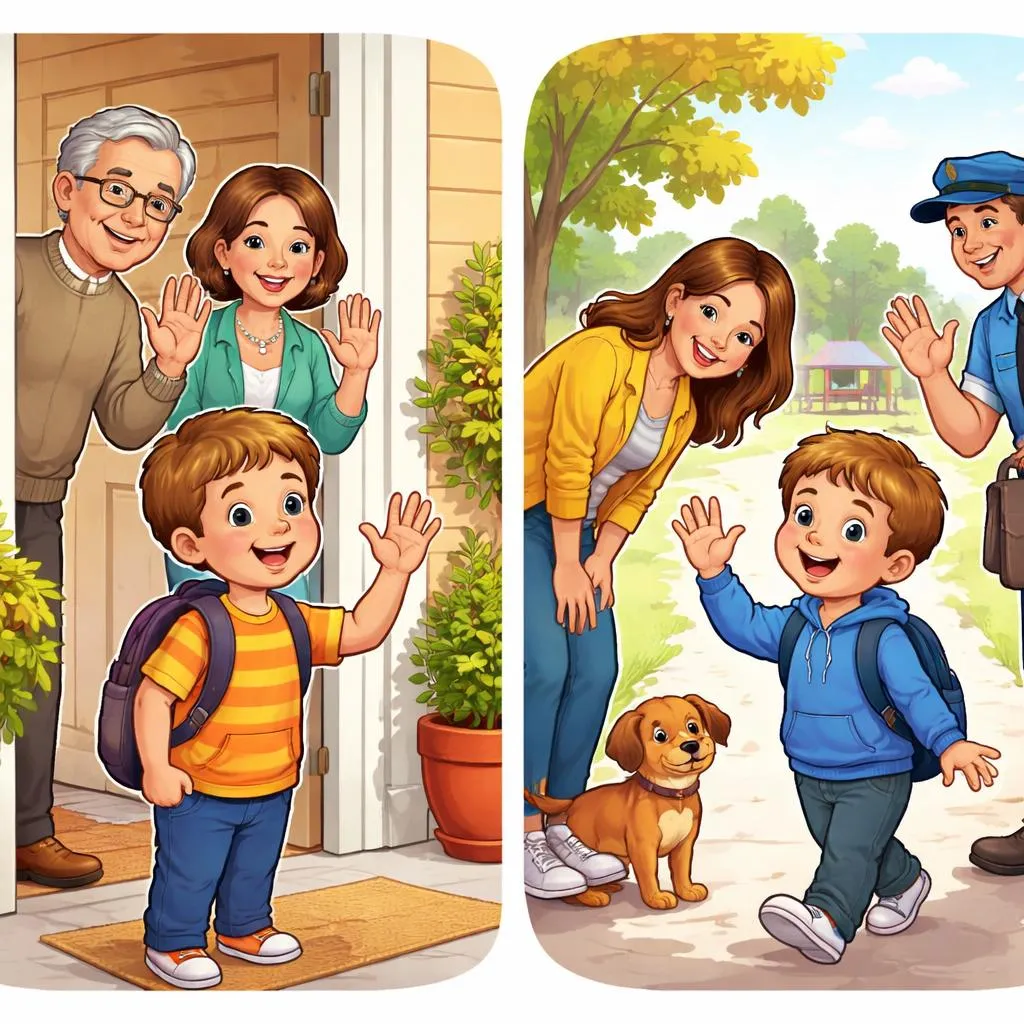
Use “See you later” for daily departures. Leaving for school. “See you later, Mom.” Leaving a friend’s house. “See you later.” Leaving a playdate. “See you later.”
Use “See you later” when you have plans. You will meet at lunch. You will play after homework. You will see each other tomorrow. The phrase keeps hope alive.
Use “See you later” among friends and siblings. It sounds friendly. It says “I like you. I want to see you again.”
Parents can model both. Say “goodbye” when leaving for a work trip. Say “see you later” when going to the store for ten minutes. Children learn the feeling behind each word.
Example Sentences for Kids Here are simple sentences children can say.
Goodbye:
Goodbye, Grandma. I will miss you.
Goodbye, my teacher. Thank you for a great year.
Goodbye, summer. Hello, school.
Goodbye to our old house. We made good memories.
Goodbye, friend. Write me letters.
See you later:
See you later, Dad. Have fun at work.
See you later at the park.
See you later. Save me a seat.
See you later, alligator. (a fun rhyme)
See you later. Do not forget our game.
Read these aloud. Notice how “goodbye” sounds more serious. Notice how “see you later” sounds playful and sure.
Common Mistakes to Avoid Children often mix these phrases. Here are common errors.
Mistake 1: Saying “goodbye” for a short separation. Example: A child goes to the bathroom. They say “goodbye.” That sounds strange. People think they are leaving for a long time. Correct: Say “see you later” or “be right back.”
Mistake 2: Saying “see you later” when you will not return. Example: A child moves to a new country. They say “see you later.” This gives false hope. The friend expects to see them again soon. Correct: Say “goodbye. I will remember you.”
Mistake 3: Using a sad voice for “see you later.” A flat or crying voice confuses people. They think something is wrong. Correct: Smile when you say “see you later.” Show you believe in the next meeting.
Mistake 4: Forgetting to say anything. Some children freeze. They just walk away. That feels rude. Correct: Always say a farewell word. Even a quick “bye” works.
Mistake 5: Mixing the phrases mid-sentence. “Goodbye, see you later” sounds messy. Choose one. Correct: Pick the phrase that matches your feeling. Say it clearly.
Easy Memory Tips Here are simple memory tricks.
Memory tip 1: Think of a door and a window. “Goodbye” is a closing door. You do not see the person. “See you later” is an open window. You wave and will return.
Memory tip 2: Use your hands. One hand waving with fingers together = “goodbye” (final). One hand waving with a pointing finger = “see you later” (pointing to the future).
Memory tip 3: Think about the next meeting. If you know when you will meet again, say “see you later.” If you do not know, say “goodbye.”
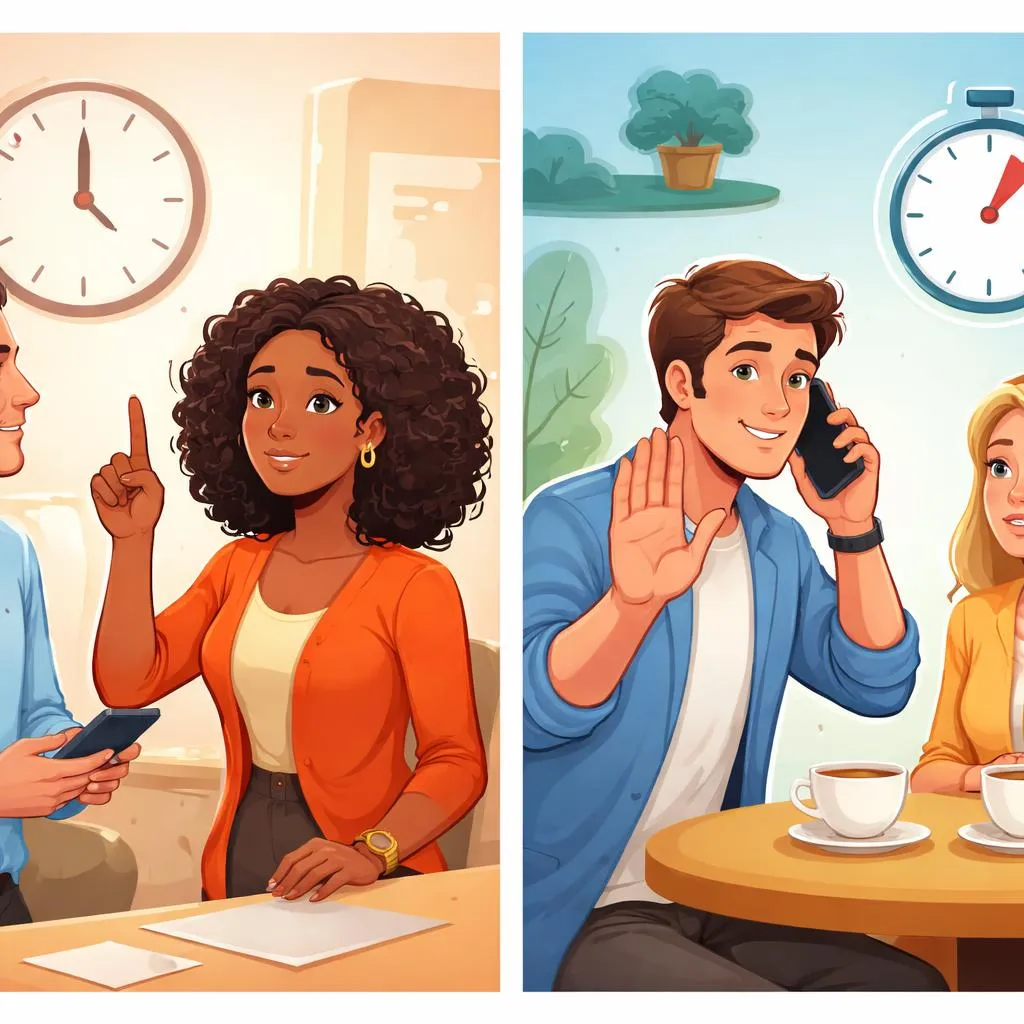
Memory tip 4: Draw two clocks. One clock shows a long time away. Write “goodbye.” One clock shows later today. Write “see you later.” The clocks help children see time.
Memory tip 5: Use the rhyme. “Goodbye for a long while. See you later with a smile.” This rhyme helps children remember the feeling.
Practice these tips before leaving the house. Choose the right phrase each time.
Quick Practice Time Try these exercises. Parents read aloud. Children answer.
Exercise 1: Choose the best phrase.
You finish the last day of summer camp. You may never see these friends again. Do you say: a) Goodbye b) See you later
You leave for school in the morning. You will see your mom after dinner. Do you say: a) Goodbye b) See you later
A cousin visits for the weekend. They leave on Sunday night. You will see them next month. Do you say: a) Goodbye b) See you later
Answers: 1(a), 2(b), 3(b — because you know you will meet again next month)
Exercise 2: Fill in the blank.
“__________, my pet fish. You were a good friend.” (the fish died)
“__________ at the library after lunch.” (you have a plan)
Answers: 1. Goodbye, 2. See you later
Bonus: Practice leaving the room. Say “goodbye” to a toy you will not play with today. Say “see you later” to a book you will read tonight. Feel the difference. Talk about which one feels kinder for each situation.
Wrap-up Say “goodbye” when you will not see someone for a long time or ever again. Say “see you later” when you expect to meet the same person soon. Both show respect. Choose the one that matches the time apart and your relationship.