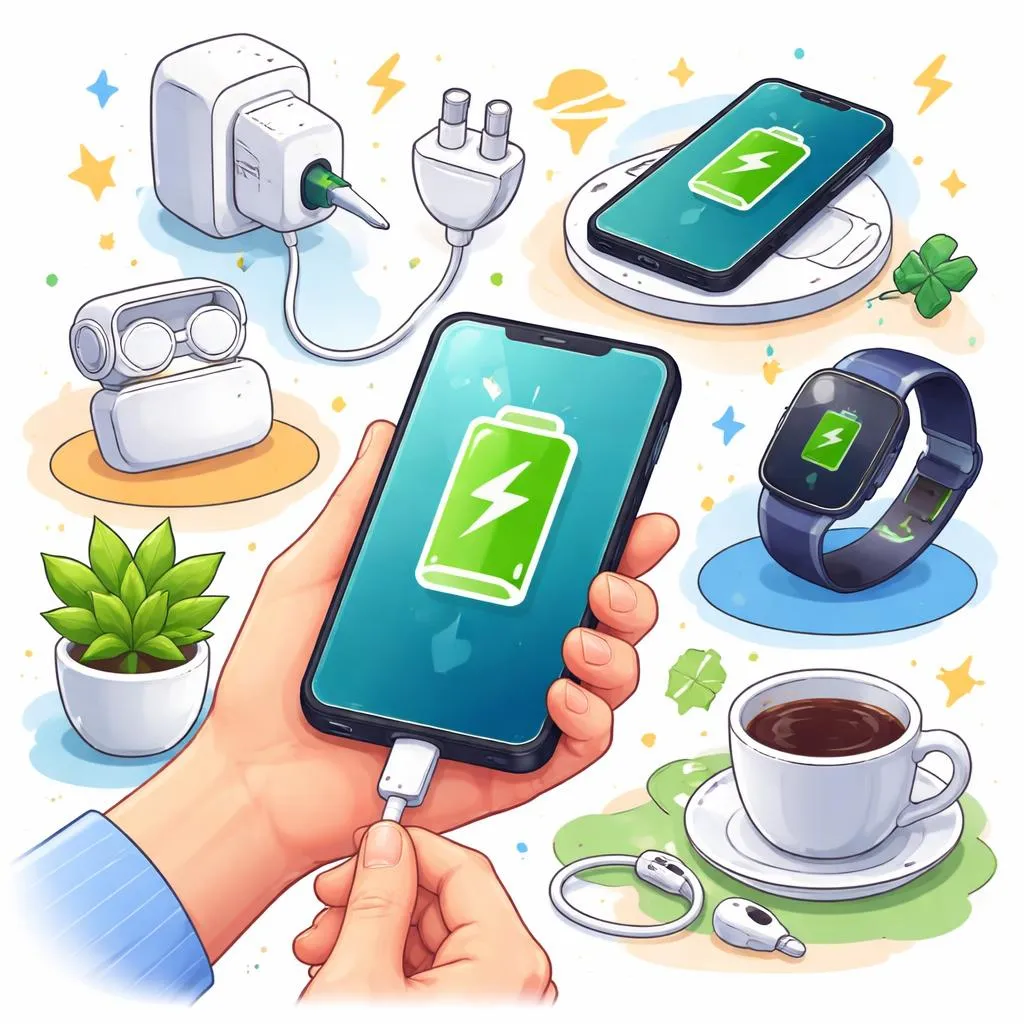

Your tablet battery gets low. You plug it into the wall. You give it power.
That is charging. Today we learn four words.
“Charge,” “charger,” “charging,” and “charged.”
Each word shares the idea of giving power or energy. Each does a different job.
Parents and children can learn these words together. They help with electronics and batteries.
What Does “Same Word, Different Forms” Mean?
One action takes different shapes. The action here is giving electrical energy to a device.
“Charge” is a verb. “Please charge your tablet before the trip.” Action.
“Charge” is also a noun. “Your tablet has a full charge.” Amount of power.
“Charger” is a noun. “The phone charger plugs into the wall.” Device.
“Charging” is a noun or verb part. “Charging takes two hours.” Activity. “I am charging my watch.” Verb part.
“Charged” is an adjective or past verb. “The battery is charged.” Full. “I charged my laptop yesterday.” Past action.
Same root. Different endings. Different jobs. The power stays the same.
Personal Pronouns Change Their Form
Pronouns change for grammar. “I” becomes “me.” “We” becomes “us.”
Our words change for role and time. “I charge my phone nightly.” Present.
“My charger is broken.” Device. “Charging takes patience.” Activity.
“The battery is charged.” Describes. “She charged it yesterday.” Past.
Pronouns help us speak faster. Word families help us talk about electronics clearly.
When children know these four words, they understand device care.
From Verb to Noun to Adjective to Adverb – One Family, Many Words
“Charge” works as a verb. “Charge the electric car overnight.” Action.
“Charge” also works as a noun. “The battery has no charge left.” Power.
“Charger” is a noun. “A wireless charger is very convenient.” Device.
“Charging” is a noun. “Charging your devices saves money on batteries.” Activity.
“Charged” is an adjective or past verb. “A charged battery is ready to use.” Adjective. “We charged the walkie-talkies.” Past verb.
We have no common adverb. “Chargingly” is very rare. Skip it.
Five members. One word has multiple meanings.
One Root, Many Roles – How Words Grow from Actions to Qualities
The root “charge” comes from Latin “carricare.” It meant to load a vehicle or pack.
Long ago, people charged a cart with goods. Later, it meant to load a weapon. Later still, to give electrical energy.
From that root, we add “-er” to name the device. “Charger” means the thing that charges.
We add “-ing” to name the activity. “Charging” is the process.
We add “-ed” for past tense or to describe something full. “Charged” means filled with power.
Help your child see this history. Loading a cart became charging a battery.
Same Meaning, Different Jobs – Is It a Verb or a Noun?
Look at “charge” in a sentence. Ask: Is it an action? Or is it power?
“Please charge my e-reader.” Action. Verb.
“My phone has 50% charge.” Power. Noun.
Same word. Two jobs. Context tells you.
Now look at “charger.” Always a noun. “The charger has a long cord.”
“Charging” is a noun or verb part. “Charging overnight is safe.” Noun. “I am charging my headphones.” Verb part.
“Charged” is adjective or past verb. “A charged phone lasts all day.” Adjective. “Mom charged her car.” Past verb.
Teach children to look at the word’s job. “Charger” is the device. “Charging” is the action or activity. “Charged” means full or already done.
Adjectives and Adverbs – When Do We Add -ly?
We do not add “-ly” to these words. No “chargedly.” No “chargingly” (rare, skip).
If you want to describe how someone charges something, use a separate adverb. “She charges quickly.” “He carefully charged the battery.”
This family stays simple. Focus on the noun and verb forms.
Children will use “charge,” “charger,” “charging,” and “charged” constantly with tablets and phones.
That is plenty for daily life.
Watch Out for Tricky Spelling Changes (Double Letters, y to i, and More)
Spelling has one small change. The final “e” drops before adding “-ing” and “-ed.”
“Charge” minus “e” plus “ing” = charging.
“Charge” minus “e” plus “ed” = charged.
For “charger,” keep the “e.” Charge + er = charger. Keep the “e” before “-er.”
So the rule: Drop “e” for “-ing” and “-ed.” Keep “e” for “-er.”
No double letters. No y to i. Just the silent “e” rule.
Practice with your child. Write “charge.” Cross out the “e.” Add “ing.” You get “charging.”
Write “charge.” Add “er.” Keep the “e.” You get “charger.”
Let’s Practice – Can You Choose the Right Form?
Try these sentences. Fill in the blank with charge, charger, charging, or charged.
Please _____ your smartwatch before the run. (action verb)
My phone battery is at 10% _____. (noun, power level)
I lost my laptop _____; can I borrow yours? (device)
_____ your devices overnight is very convenient. (activity, starts sentence)
The tablet is fully _____ now. (adjective, full)
She _____ her headphones yesterday morning. (past tense verb)
The wireless _____ sits on the nightstand. (device)
We are _____ the walkie-talkies for camping. (verb part with are)
Answers: 1 charge, 2 charge, 3 charger, 4 Charging, 5 charged, 6 charged, 7 charger, 8 charging.
Number 4 starts with a capital letter because it begins the sentence.
Number 2 uses “charge” as a noun meaning the amount of power in a battery.
Number 5 uses “charged” as an adjective meaning full of power.
Tips for Parents – Help Your Child Learn Word Families in a Fun Way
Charge devices together. “Let us charge your tablet now.”
Point to the charger. “This is the charger. Do not lose it.”
Talk about charging as an activity. “Charging takes time. Be patient.”
Show a fully charged device. “See, 100% charged.”
Use a power bank. “This is also a charger. It charges without a wall plug.”
Play a game. You pretend to have low battery. “I need a charge!” Your child pretends to plug you in.
Draw a battery with a charge meter. Label “empty” and “charged.”
Read the back of a charger. It says “output” and “input.” Show your child.
Do not correct every mistake. If your child says “charger” when they mean “charge,” gently repeat correctly.
Celebrate when your child uses “charged” as an adjective. “You said the battery is charged. Perfect!”
Explain that “charge” can also mean a rush or attack. “The lion’s charge was fast.” But for kids, focus on electricity first.
Tomorrow you will charge your phone. You will look for a charger. You will start charging before dinner. You will see a charged battery light turn green.
Your child might say “I charged my toy car all by myself.” You will feel proud.
Keep charging. Keep naming the charger. Keep talking about charging. Keep noticing charged devices.
Your child will grow in language and in responsibility for their electronics.