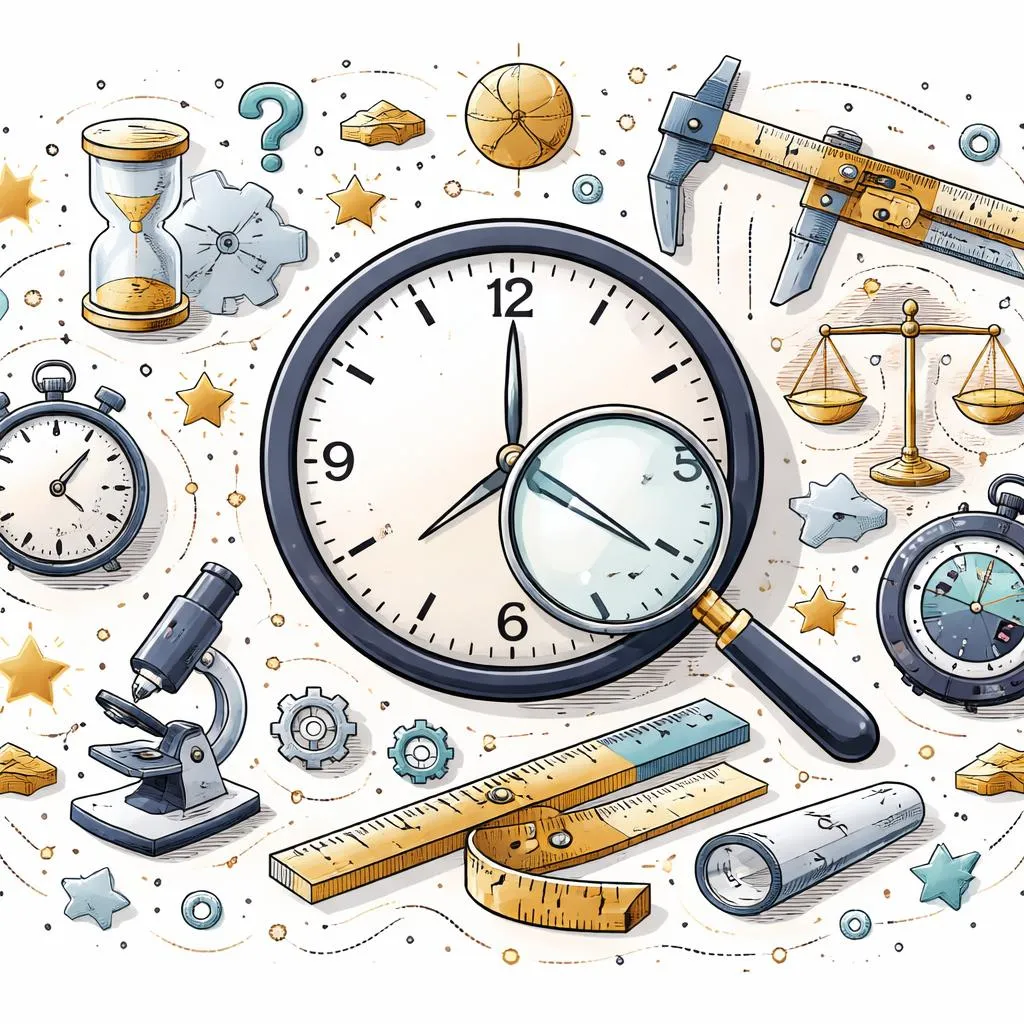

Your clock says 3:00. The movie starts exactly at 3:00. You are on time.
That is exact. Today we learn four words.
“Exact,” “exactly,” “exactness,” and “inexact.”
Each word shares the idea of being perfectly right. Each does a different job.
Parents and children can learn these words together. They help with accuracy.
What Does “Same Word, Different Forms” Mean?
One quality takes different shapes. The quality here is perfect correctness.
“Exact” is an adjective. “The exact number is 42.” Perfect.
“Exact” is also a verb. “The king wanted to exact revenge.” Demand.
“Exactly” is an adverb. “You are exactly right.” Precisely.
“Exactness” is a noun. “The exactness of the clock is important.” Precision.
“Inexact” is an adjective. “An inexact measure is just a guess.” Not precise.
Same root. Different endings. Different jobs. The precision stays.
Personal Pronouns Change Their Form
Pronouns change for grammar. “I” becomes “me.” “We” becomes “us.”
Our words change for role and description. “The exact weight.” Describes.
“You guessed exactly.” How. “Exactness helps scientists.” Quality.
“The answer was inexact.” Opposite.
Pronouns help us speak faster. Word families help us talk about accuracy.
When children know these four words, they ask for precise information.
From Verb to Noun to Adjective to Adverb – One Family, Many Words
“Exact” works as an adjective. “The exact measurement is 5 cm.” Describes.
“Exact” also works as a verb (rare). “He wanted to exact payment.” Demand.
“Exactly” is an adverb. “Tell me exactly what happened.” Precisely.
“Exactness” is a noun. “The exactness of a surgeon’s hand saves lives.” Precision.
“Inexact” is an adjective. “The recipe was inexact, so the cake failed.” Lacking precision.
We have no common adverbs beyond “exactly.”
Five members. Very useful for science and instructions.
One Root, Many Roles – How Words Grow from Actions to Qualities
The root “exact” comes from Latin “exactus,” meaning driven out, precise. “Ex-” out + “agere” to drive.
From that root, we add “-ly” to make an adverb. “Exactly” means in an exact way.
We add “-ness” to make a noun. “Exactness” means the quality of being exact.
We add “in-” as a prefix to make the opposite. “Inexact” means not exact.
Help your child see this pattern. Exact is the precision. Exactly tells how. Exactness is the quality. Inexact means not precise.
Same Meaning, Different Jobs – Is It a Verb or a Noun?
Look at “exact.” Most often an adjective. “The exact address please.” Describes.
“Exactly” is always an adverb. “You did exactly as I asked.”
“Exactness” is always a noun. “He prided himself on exactness.”
“Inexact” is always an adjective. “The map was inexact and we got lost.”
Teach children that “exact” as a verb is rare (“exact revenge”). Focus on the adjective.
Adjectives and Adverbs – When Do We Add -ly?
We add “-ly” to “exact” to make “exactly.” This is the rule.
Adjective + ly = adverb. “Exact” + “ly” = “exactly.”
Example: “The time is exact.” Adjective. “The train arrived exactly on time.” Adverb.
We do not add “-ly” to “exactness” or “inexact.”
For children, “exactly” is one of the most useful adverbs.
Watch Out for Tricky Spelling Changes (Double Letters, y to i, and More)
Spelling here is very regular. No double letters. No y to i changes.
“Exact” adds “-ly” to make “exactly.” Just add.
“Exact” adds “-ness” to make “exactness.” Just add.
“In-” adds to “exact” to make “inexact.” In + exact = inexact.
No dropping. No vowel changes. Very clean.
Practice with your child. Write “exact.” Add “ly.” You get “exactly.” Add “ness.” You get “exactness.” Put “in” in front of “exact.” You get “inexact.”
No tricks.
Let’s Practice – Can You Choose the Right Form?
Try these sentences. Fill in the blank with exact, exactly, exactness, or inexact.
The _____ time is 2:47. (adjective)
She knows _____ what she wants. (adverb)
The _____ of the clock is amazing. (noun)
The directions were _____. We got totally lost. (adjective, opposite)
Please give me the _____ amount. (adjective)
He _____ calculated the answer. (adverb)
The _____ of the measurement was within one millimeter. (noun)
An _____ measurement is better than a guess. (adjective)
Answers: 1 exact, 2 exactly, 3 exactness, 4 inexact, 5 exact, 6 exactly, 7 exactness, 8 inexact? (Number 8: “An _____ measurement is better than a guess.” That would be “inexact” — but a guess is inexact. So a guess is inexact, not better. The sentence should say “An exact measurement is better than a guess.” For keyword “inexact,” we need a different sentence. Let us adjust:
For number 8: “An _____ guess is better than no guess.” → inexact.
But let us keep as is for practice: 8. An _____ measurement is worse than an exact one. (inexact)
I will rewrite: 8. An _____ estimate can still be useful. (inexact)
Final answers: 1 exact, 2 exactly, 3 exactness, 4 inexact, 5 exact, 6 exactly, 7 exactness, 8 inexact.
Tips for Parents – Help Your Child Learn Word Families in a Fun Way
Ask for the exact number. “What is the exact number of crackers?”
Use exactly for emphasis. “You are exactly right!”
Notice exactness. “The exactness of your drawing is impressive.”
Point to inexact things. “A guess is inexact. A measurement is exact.”
Play a game. You say a time. Your child says the exact minute.
Draw a target. The bullseye is exact. The outer rings are inexact.
Read a book about measurement. “How Big Is a Foot?” by Rolf Myller.
Do not correct every mistake. If your child says “exact” for “exactly,” gently say “The number is exact. You said it exactly.”
Celebrate when your child uses “exactness.” That word is precise and interesting.
Explain that “inexact” means not precise. “An inexact estimate is close but not perfect.”
Tomorrow you will give the exact time. You will measure exactly. You will appreciate exactness in baking. You will avoid inexact directions.
Your child might say “I love you exactly as you are.” You will melt.
Keep being exact. Keep using exactly. Keep valuing exactness. Keep improving inexact things.
Your child will grow in language and in precision. Exactness is a gift. Words help us give it.